

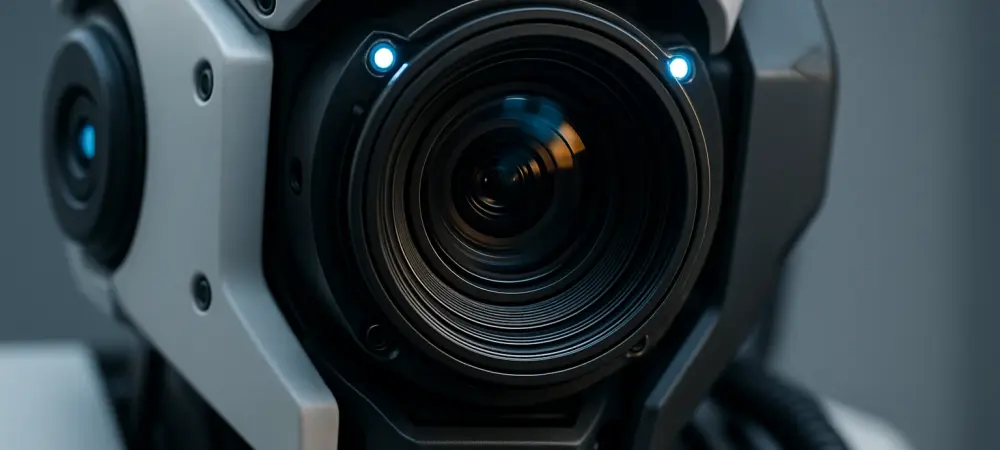
In the rapidly evolving landscape of industrial automation, the ability of robots to perceive and interact with their environment has long been a critical challenge, often limiting their effectiveness in complex manufacturing settings. Imagine a factory floor where robots operate with the precision of a skilled artisan, seamlessly adapting to unexpected changes and handling intricate tasks without error. This vision is becoming reality through a groundbreaking innovation from ABB Robotics. Known as OmniCore EyeMotion, this fully integrated vision system enhances the sensing capabilities of OmniCore-powered robots, transforming how they “see” and engage with the world around them. By equipping robots with advanced machine vision, this technology promises to redefine efficiency and adaptability in industrial applications. As manufacturing demands grow increasingly dynamic, such advancements signal a pivotal shift toward smarter, more responsive automation solutions that can keep pace with modern challenges.
Enhancing Perception Through Advanced Vision Technology
The cornerstone of this revolutionary system lies in its seamless integration of hardware and software, designed to elevate robotic perception to unprecedented levels. OmniCore EyeMotion supports a hardware-agnostic approach, allowing robots to connect with a wide range of sensors and third-party cameras. This flexibility ensures that as camera technology advances, upgrades can be incorporated without the need for extensive system redesigns or complex reprogramming. Moreover, the system’s software integrates effortlessly with ABB’s RobotStudio suite, offering an intuitive user interface complete with drag-and-drop functionality. This simplifies the configuration of sensors and cameras for both 2D and 3D vision applications, streamlining setup and commissioning processes. Such scalability makes the technology not only accessible for current needs but also adaptable for future manufacturing demands, positioning it as a forward-thinking solution in an industry where adaptability is paramount.
Beyond ease of integration, the system addresses a fundamental limitation in traditional robotics by providing a robust framework for visual interpretation. Unlike older systems that depended heavily on tactile feedback or rudimentary sensors, this technology equips robots with the ability to process visual data with remarkable precision. The incorporation of artificial intelligence further enhances this capability, enabling the detection of anomalies such as misaligned parts or human presence in a robot’s workspace. By mitigating potential errors before they escalate, the system fosters a safer and more reliable operational environment. This leap in perceptual accuracy allows robots to tackle tasks that were once deemed too intricate or unpredictable, opening new possibilities in sectors like assembly and packaging. The blend of user-friendly software and AI-driven adaptability underscores a significant stride toward creating robots that can truly “see” and respond to their surroundings with human-like acumen.
Boosting Efficiency and Productivity in Manufacturing
One of the most compelling advantages of OmniCore EyeMotion is its profound impact on operational efficiency, a critical metric in today’s competitive manufacturing landscape. Through its collaboration with RobotStudio, the system empowers robots to calculate optimal, collision-free paths for their tasks, slashing cycle times by up to 50% in testing conducted by ABB Robotics. This dramatic reduction in cycle times translates to higher throughput, enabling factories to produce more in less time while minimizing the risk of mishandled products. Such improvements are particularly valuable in high-speed environments where every second counts, and even minor delays can lead to significant losses. By optimizing movement and reducing downtime, this vision technology ensures that robots operate at peak performance, delivering tangible benefits to manufacturers striving to meet tight deadlines and maintain quality standards.
Equally important is the system’s role in enhancing overall productivity through intelligent adaptability. Traditional robotic systems often struggled with dynamic or unpredictable settings, requiring constant human oversight to address issues like deformed components or unexpected obstacles. OmniCore EyeMotion changes this paradigm by leveraging AI to anticipate and react to such challenges in real time. This means robots can adjust their actions on the fly, maintaining workflow continuity without the need for manual intervention. The result is a marked decrease in production errors and an increase in operational reliability, which is crucial for industries aiming to scale operations without compromising precision. This technology not only boosts immediate output but also lays the groundwork for more autonomous manufacturing processes, where robots can handle increasingly complex tasks with minimal supervision, redefining the potential of industrial automation.
Future-Proofing Robotics for Evolving Demands
Looking at the broader implications, OmniCore EyeMotion stands as a testament to the growing importance of modular and scalable solutions in robotics. Its ability to integrate with existing setups without necessitating a complete overhaul makes it a practical choice for manufacturers seeking to upgrade without disrupting current operations. This retrofitting capability is especially beneficial for industries hesitant to invest in entirely new systems due to cost or downtime concerns. From gripping and moving objects to precision tasks like welding and soldering, the versatility of this vision system spans a wide array of applications, demonstrating its relevance across diverse industrial contexts. As manufacturing needs evolve, having a system that can adapt to new challenges without requiring significant reinvestment offers a strategic advantage in maintaining competitiveness.
Reflecting on the strides made, it becomes evident that OmniCore EyeMotion has set a new benchmark for robotic perception in industrial settings. The system’s seamless integration with existing software and hardware has delivered reduced cycle times, enhanced safety, and greater adaptability to unforeseen challenges. Its user-friendly design, coupled with a focus on scalability, has proven instrumental in supporting long-term innovation in manufacturing. Moving forward, the emphasis should be on exploring how such vision technologies can be further refined to address niche industrial needs, potentially integrating with emerging tools like augmented reality for even greater precision. Additionally, fostering collaboration between technology developers and end-users could help tailor solutions to specific sector demands, ensuring that advancements remain both practical and impactful. This ongoing dialogue will be key to unlocking the full potential of vision-equipped robotics in shaping the future of automation.