

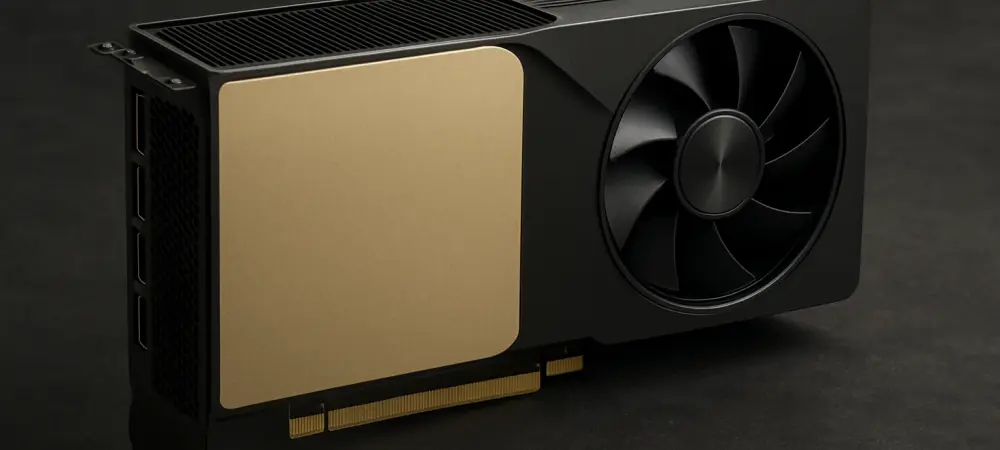
Revolutionizing Enterprise AI: Why GPU Acceleration Matters Now
In today’s rapidly evolving enterprise landscape, the demand for AI-driven solutions has surged, with data centers worldwide processing unprecedented volumes of data for applications ranging from predictive analytics to industrial simulations. Imagine a scenario where traditional CPU-based systems struggle to keep pace, resulting in bottlenecks that hinder innovation and inflate operational costs. This pressing challenge underscores the critical shift toward GPU-accelerated computing, a transformation epitomized by NVIDIA’s latest offering, the RTX PRO 6000 Blackwell Server Edition GPU. This market analysis delves into the profound impact of this technology on enterprise AI, examining current trends, performance metrics, and future projections. The purpose is to provide stakeholders with actionable insights into how this innovation is reshaping data center infrastructure and driving competitive advantage in an AI-centric economy.
Market Trends: GPU Acceleration as the New Standard in Enterprise Computing
Surging Demand for AI Workloads Fuels GPU Adoption
The enterprise computing market is witnessing a seismic shift as businesses increasingly rely on AI to optimize operations, with workloads spanning agentic AI, data analytics, and content creation. GPU-accelerated systems, unlike traditional CPU setups, offer parallel processing capabilities that excel in handling these data-intensive tasks. NVIDIA’s introduction of the RTX PRO 6000 in a versatile 2U server configuration aligns perfectly with this trend, catering to the growing need for high-performance computing in constrained data center environments. Market data indicates a significant uptick in GPU adoption, with enterprises refreshing millions of servers annually to meet escalating performance demands. This transition highlights a broader industry move toward accelerated computing as a cornerstone of modern infrastructure.
Strategic Partnerships Driving Market Accessibility
A defining feature of the current market landscape is the collaborative ecosystem surrounding GPU technologies. NVIDIA’s alliances with major system providers such as Cisco, Dell Technologies, HPE, Lenovo, and Supermicro have broadened the reach of the RTX PRO 6000, ensuring seamless integration into diverse enterprise setups. For instance, Dell’s incorporation of dual RTX PRO 6000 GPUs into its PowerEdge R7725 servers, paired with NVIDIA AI Enterprise software, showcases tailored solutions for AI workloads. These partnerships mitigate barriers to entry, making advanced computing accessible to businesses of varying scales. The trend of such collaborations signals a market shift toward customizable and scalable infrastructure, addressing unique spatial and power constraints in data centers globally.
Energy Efficiency as a Competitive Differentiator
Energy efficiency has emerged as a pivotal factor in the enterprise AI market, driven by rising operational costs and regulatory pressures for sustainable practices. The RTX PRO 6000 stands out with up to 18 times higher energy efficiency compared to traditional CPU-only 2U systems, translating into a lower total cost of ownership. This advantage resonates strongly with enterprises aiming to balance performance with environmental responsibility. Market analysis suggests that energy-efficient solutions are becoming a key differentiator, influencing purchasing decisions as companies seek to optimize budgets while meeting stringent sustainability goals. This focus on efficiency positions GPU-accelerated systems as not just a technological upgrade but a strategic imperative for cost-conscious organizations.
Performance Metrics: Quantifying the RTX PRO 6000 Impact
Unparalleled Performance Boosts Market Competitiveness
Delving into performance metrics, the RTX PRO 6000 delivers up to 45 times better performance than conventional CPU-based systems, a statistic that redefines market expectations for enterprise computing. This leap enables faster processing of complex AI tasks, such as scientific simulations and real-time analytics, giving businesses a competitive edge in time-sensitive industries. However, the high upfront costs of adopting such advanced infrastructure pose a challenge, particularly for smaller enterprises with limited budgets. Despite this, the long-term savings and productivity gains make a compelling case for investment, as companies can significantly reduce processing times and enhance output quality in AI-driven operations.
Scalability Options Catering to Diverse Market Needs
Scalability remains a critical consideration in the enterprise market, and the RTX PRO 6000 addresses this with configurations supporting two, four, or eight GPUs in a mainstream 2U rack-mounted design. This flexibility allows businesses to tailor infrastructure to specific performance and environmental needs, a feature that resonates across sectors from manufacturing to financial services. Market feedback highlights the value of such adaptability, though compatibility with legacy systems can present hurdles during integration. Nevertheless, the ability to scale GPU resources according to workload demands positions this technology as a versatile solution, appealing to a wide spectrum of enterprise buyers seeking customized computing power.
Future Projections: The Trajectory of GPU Acceleration in Enterprise AI
Anticipated Market Growth and Technological Advancements
Looking ahead, the enterprise AI market is poised for robust growth, with GPU acceleration expected to become the default for data centers within the next few years. Projections suggest a continued rise in demand for AI and data-intensive workloads, driving innovations in hardware and software ecosystems. NVIDIA’s Blackwell architecture, as seen in the RTX PRO 6000, is likely to evolve further, integrating more AI-specific optimizations. Market analysts anticipate that between 2025 and 2027, adoption rates for GPU-accelerated systems will accelerate, fueled by economic incentives for energy-efficient solutions and regulatory mandates for sustainable computing practices.
Emergence of AI Factories in Constrained Environments
Another forward-looking trend is the rise of “AI factories,” on-premises infrastructures designed to handle exponential data growth within spatial and environmental limitations. The RTX PRO 6000 serves as the backbone of the NVIDIA AI Data Platform, a customizable reference design for modern storage systems focused on agentic AI applications. This development is expected to gain traction in markets with stringent energy regulations, where compact and efficient systems are paramount. Future market dynamics will likely see smaller enterprises adopting these platforms, dispelling the notion that GPU acceleration is exclusive to large-scale operations, thus broadening the technology’s impact.
Economic and Regulatory Influences Shaping Adoption
Economic factors and regulatory frameworks will play a significant role in shaping the future of GPU acceleration in enterprise AI. Rising energy costs are pushing companies toward solutions that offer both performance and efficiency, aligning with the capabilities of the RTX PRO 6000. Additionally, global policies emphasizing carbon reduction are expected to incentivize the adoption of green technologies in data centers. Market forecasts indicate that these combined pressures will accelerate the shift from CPU to GPU systems, with NVIDIA likely to maintain leadership through continuous innovation and strategic partnerships that address evolving industry needs.
Reflecting on Market Insights: Strategic Implications for Enterprises
Looking back on this analysis, it is evident that NVIDIA’s RTX PRO 6000 Blackwell Server Edition GPU has redefined enterprise AI by delivering unmatched performance, scalability, and energy efficiency. The market trends of surging AI workload demand, strategic partnerships, and a focus on sustainability have positioned GPU acceleration as indispensable for competitive advantage. Key implications include the need for businesses to reassess infrastructure strategies, prioritizing investments in technologies that offer long-term cost savings and adaptability. As a next step, enterprises are encouraged to pilot smaller GPU configurations to evaluate compatibility and return on investment before full-scale deployment. Partnering with system providers for tailored solutions and upskilling IT teams to manage advanced systems emerge as critical actions. These considerations pave the way for navigating the evolving landscape of enterprise computing with confidence and foresight.