

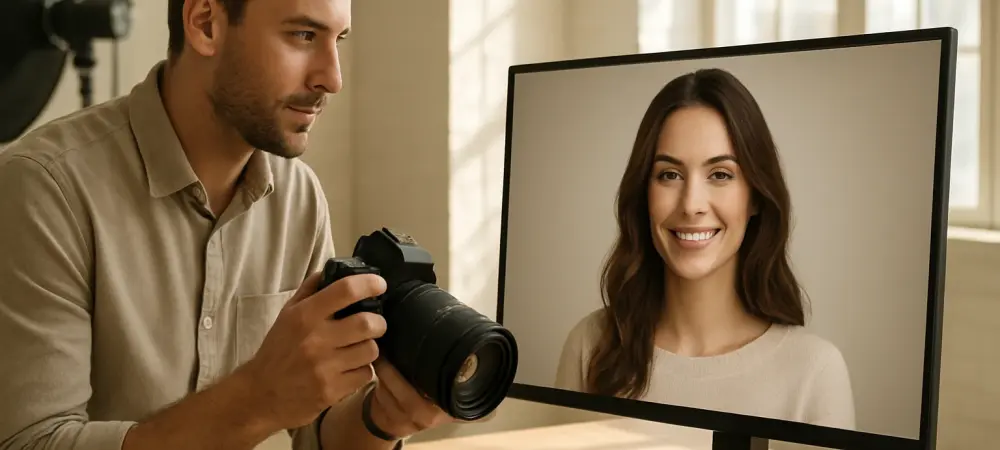
The once-impenetrable wall separating the static precision of a photographer from the temporal complexity of a cinematographer has been dismantled by algorithms capable of generating cinematic motion from a single pixel-dense file. In 2026, a high-resolution portrait is no longer a terminal product but a foundational seed for a dynamic performance that requires neither a dedicated soundstage nor a massive lighting crew. This technological leap has effectively democratized the director’s chair, allowing independent creators to manifest complex visual narratives that previously demanded the financial backing of a mid-sized studio. The transition from static imagery to fluid motion represents a fundamental reassessment of digital assets, where the focus has moved from capturing a single moment to synthesizing a continuous experience. Consequently, the boundary between various creative disciplines has evaporated, forcing a re-evaluation of what it means to produce professional visual content in a world where motion is as accessible as a still photograph. The shift toward motion-based storytelling has moved beyond a simple trend, evolving into the primary standard for audience engagement across every digital platform. Historically, the creation of motion graphics or short cinematic sequences required a sequence of specialized skills, including frame-by-frame manipulation and the expensive procurement of stock footage that rarely matched a specific creative vision. Today, the ability to breathe life into an image with a few keystrokes has eliminated these barriers, turning the traditional month-long animation cycle into a process that takes mere minutes. This democratization does not merely speed up production; it changes the nature of creativity by allowing for rapid experimentation and the exploration of “what if” scenarios that were once too costly to attempt. For the modern professional, the goal is no longer just to make things move but to master the subtle nuances of temporal physics to ensure that the generated motion feels purposeful and emotionally resonant.
The End of the Static Era in Digital Content
The traditional landscape of digital content was long characterized by a rigid separation between the still image and the moving frame, a divide that dictated everything from equipment budgets to project timelines. For decades, photographers focused on the perfection of a single instant, while cinematographers grappled with the complexities of 24 frames per second, each requiring its own lighting, focus, and continuity. This era of isolation has reached its conclusion as AI-driven Image-to-Video technology allows for the instant conversion of static pixels into high-fidelity performances. The realization that a single high-quality photograph can serve as the blueprint for an entire cinematic sequence has fundamentally altered the value proposition of still photography. Now, every captured frame is viewed as a potential story in motion, expanding the utility of archival images and brand photography into the realm of dynamic media.
Furthermore, the cessation of the static era has forced a major shift in how creative agencies and individual artists approach the concept of a “finished product.” In the current market, a static advertisement is often seen as incomplete or insufficient for the high-velocity requirements of modern social algorithms. The demand for constant visual stimulation has turned motion into the default expectation rather than a luxury add-on. This shift has eliminated the lag time between the conception of a visual idea and its execution as a video asset, enabling a more responsive and agile creative process. As creators move away from the constraints of static media, they are finding that the most valuable skill in 2026 is the ability to envision how a subject moves through space and time, rather than just how it looks under a single strobe light.
The removal of these technical barriers has also sparked a renaissance in visual experimentation, where the cost of failure has dropped to nearly zero. In the past, a director might hesitate to attempt a complex camera move or a surreal atmospheric effect due to the risk of wasting time and resources. With modern Image-to-Video tools, these ideas can be tested in real-time, allowing for a more iterative and daring creative culture. This environment rewards those who can think beyond the frame, considering the narrative possibilities of what happens the second after a photo is taken. The result is a richer, more diverse digital ecosystem where the limitations are no longer dictated by the capabilities of a camera lens, but by the breadth of the creator’s imagination and their ability to guide the AI through the temporal landscape.
Why the Workflow Shift Matters Today
The rise of generative video technology is a direct response to the insatiable demand for high-quality content that characterizes the current digital economy. As attention spans have shortened and the volume of available media has exploded, the “visual hook” has become the most valuable currency for brands and influencers alike. Traditional production pipelines, which relied on manual rotoscoping, keyframing, and complex temporal interpolation, are increasingly viewed as liabilities due to their inherent slowness. In a market where a topic can trend and vanish within 24 hours, the ability to produce a polished video asset instantly is a necessity for maintaining relevance. The traditional bottleneck of post-production has been bypassed, allowing creators to operate at the speed of culture without sacrificing the aesthetic quality that audiences expect from high-end productions.
Moreover, the integration of AI into the creative workflow is now a vital survival skill for professionals who must balance artistic integrity with the grueling pace of modern commerce. The pressure to produce “more with less” has never been greater, and those who resist the adoption of automated motion tools find themselves at a significant competitive disadvantage. This shift is not about replacing human creativity; rather, it is about offloading the mechanical and repetitive aspects of production to the machine so that the artist can focus on high-level direction and narrative strategy. The contemporary workflow prioritizes the “curatorial eye” over the “technical hand,” where the most successful creators are those who can effectively prompt, refine, and sequence AI-generated clips into a cohesive and compelling story.
Beyond the pursuit of efficiency, this workflow shift is crucial because it allows for a level of personalization and target-specific content that was previously impossible. Marketing teams can now take a single product image and generate dozens of different motion variations tailored to specific demographics or platforms within a single afternoon. This granular control over visual output ensures that the message remains consistent while the presentation adapts to the unique preferences of different audiences. By removing the friction associated with video production, AI tech has enabled a more democratic form of storytelling where even the smallest businesses can compete with global corporations in terms of visual sophistication and production value.
Deconstructing the New Creative Pipeline
The current AI landscape is broadly divided into two distinct philosophies that cater to different segments of the creative industry: frictionless speed and directorial depth. On one side, platforms like Vidou.ai represent the “direct route,” designed for environments where volume and speed are the primary objectives. These tools allow a user to upload a source image, provide a brief description of the desired movement, and receive a high-quality video file almost instantly. This streamlined approach is ideal for e-commerce, rapid-fire social media marketing, and educational content where the goal is to eliminate “camera math” and technical friction. In this model, the workflow is linear and highly automated, reducing the distance between an idea and its visual manifestation to the absolute minimum. Conversely, more advanced platforms such as Runway and Luma AI treat generative AI as a professional production suite, offering deep controls over camera behavior, physics, and scene progression. For these power users, the workflow is inherently iterative, moving away from “one-shot” generation toward a process of digital sculpting. The AI provides an initial motion pass, which the creator then refines through specific camera commands like panning, tilting, or zooming. This level of granular control allows for the creation of complex cinematic sequences that maintain subject consistency and environmental logic over several seconds. The shift transforms the creator from a passive recipient of AI output into an active director who shapes the temporal logic of the scene to fit a specific narrative requirement.
We are also witnessing the transition from standalone “magic boxes” to fully integrated creative ecosystems, with Adobe Firefly leading the way by embedding video generation directly into the existing software used by designers. This integration is a massive shift in workflow because it allows a creator to generate a video asset without ever leaving their primary editing environment, such as Photoshop or Premiere Pro. Meanwhile, other platforms are evolving into proprietary studios that handle everything from video extension to stylized transformations, ensuring that the creator stays within a single, cohesive interface from start to finish. This ecosystem-centric approach reduces the complexity of managing multiple file formats and ensures that the generated video fits seamlessly into a larger professional project, maintaining brand consistency and technical standards.
Insights from the Front Lines of AI Production
Expert analysis of the current market suggests that as the visual quality of AI-generated video begins to plateau across the industry, the real differentiator is becoming the “experience” of creation. Industry leaders have noted that while the technology can produce stunning visuals, the highest quality outputs still require a significant “human-in-the-loop” effort to achieve a professional finish. For instance, while Pika is frequently favored for its ability to create surreal and social-first “visual hooks” that grab attention on mobile devices, professional filmmakers often gravitate toward the specialized keyframing capabilities of Luma AI. This specialization allows them to ensure narrative consistency across multiple shots, a requirement that raw, unguided prompts often fail to meet. The takeaway from these professional use cases is that AI is evolving from a mere tool of labor replacement into a “digital brush” that requires a skilled hand to guide it effectively.
Furthermore, enterprise-level creators are increasingly prioritizing “brand trust” and legal reliability over raw creative power, leading to a rise in the use of tools like Adobe Firefly that offer commercial indemnity. In the corporate world, the fear of copyright infringement or the use of ethically questionable training data is a major barrier to the adoption of generative tech. Integrated solutions that prioritize transparency and ethical sourcing have become the standard for large-scale marketing and media organizations. This shift toward “responsible AI” is a critical component of the modern workflow, as it allows creative teams to leverage the power of automation without risking the reputation or legal standing of their clients. The industry consensus is that the tools that will win in the long run are those that offer a balance of creative flexibility and corporate-grade security. The most successful production houses are those that have adopted a “hybrid” approach, combining the speed of AI with the precision of traditional manual editing. Rather than attempting to generate a perfect five-minute video in a single prompt, these experts break the project down into dozens of smaller, high-fidelity AI clips that are then assembled, color-graded, and paced within traditional editing software like DaVinci Resolve. This method ensures that the final product maintains a level of intentionality and human craftsmanship that is still difficult for pure AI to replicate. It highlights a recurring theme in the 2026 creative landscape: the most powerful asset is not the AI itself, but the synergy between human narrative intuition and machine-driven execution.
Strategies for Integrating AI into Your Creative Process
To successfully integrate Image-to-Video technology into a professional workflow, the first step is a clear assessment of intent and output goals. Before selecting a tool, a creator must determine if the project requires high-volume assets with minimal oversight or if it is a narrative-driven piece that demands precise camera mastery. If the objective is to populate a social media feed with engaging, short-form content, the priority should be on frictionless, “one-shot” generation tools that emphasize speed. However, if the work is destined for a larger screen or a detailed brand campaign, the focus must shift to platforms that offer “video extension” and “frame guidance,” allowing for the maintenance of subject consistency across several sequential clips. Defining these requirements early prevents the frustration of using a tool that is either too complex for simple tasks or too limited for professional artistic needs.
Implementing an iterative feedback loop is also essential for maximizing the potential of these tools, moving away from the mindset of “generating” and toward a mindset of “sculpting.” Creators should treat the initial AI output as a rough draft or a “digital clay” that requires further refinement through multiple passes. By using advanced features like manual camera controls and structural blueprints, an editor can add a layer of intentionality that raw text prompts usually lack. This iterative process often involves generating several versions of the same motion and selecting the most successful elements from each to combine into a final composite. This approach not only improves the quality of the final video but also helps the creator develop a more intuitive understanding of how the AI responds to different visual cues and motion commands.
Finally, bridging the gap between generative AI and traditional editing remains the most efficient way to maintain professional standards in a fast-paced production environment. The most effective workflows are those that treat AI as a powerful component within a larger system, rather than a total replacement for the entire post-production suite. By generating core motion assets in specialized AI environments and then moving them into standard editors for final color correction, sound design, and pacing, creators can leverage the best of both worlds. This hybrid strategy allows for the unprecedented speed of generative technology while preserving the meticulous precision and stylistic control that only professional editing software can provide.
The shift toward Image-to-Video technology signaled a profound transformation in how the industry approached the concept of visual storytelling. It was observed that the most successful professionals were those who treated the AI as a sophisticated partner rather than a simple automation tool. By moving away from the “prompt-and-print” mentality, creators managed to reclaim their roles as directors and visionaries, using the technology to explore complex temporal ideas that were previously out of reach. The industry eventually reached a consensus that the true power of these tools lay in their ability to augment human intuition, allowing for a more fluid and responsive creative process. As the technology matured, it became clear that the ability to guide motion was becoming just as fundamental as the ability to compose a shot or light a scene. The focus transitioned from the technical novelty of moving pictures toward the meaningful application of that motion within a broader narrative context. In the end, the integration of AI into the creative pipeline did not diminish the value of human skill; instead, it elevated the importance of directorial intent and strategic thinking in an increasingly automated world.