

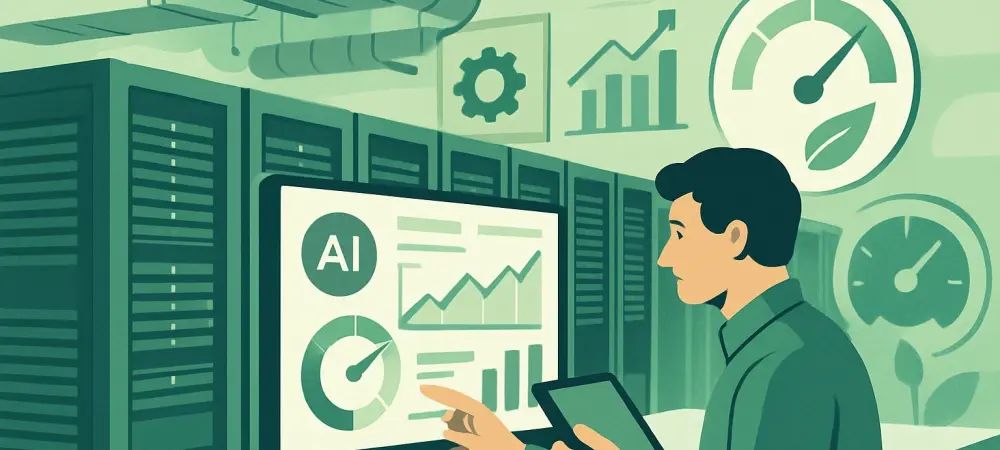
In an era where digital transformation drives unprecedented demand for computational power, large language models (LLMs) have emerged as both a technological marvel and a significant challenge for data center infrastructure. These powerful AI systems, capable of processing vast amounts of data and generating human-like responses, are pushing the limits of existing facilities, leading to concerns about energy consumption, scalability, and cost. Amid this strain, a promising solution has surfaced in the form of AI distillation, a technique that compresses massive AI models into smaller, more efficient versions without sacrificing performance. By tackling the dual issues of resource intensity and sustainability, this approach is redefining how data centers operate. It offers a pathway to manage the escalating demands of AI workloads while reducing operational overheads, making it a critical innovation for the industry. This discussion explores the mechanics of AI distillation, its impact on infrastructure, and its potential to reshape economic models for data centers worldwide.
1. Emergence of AI Model Distillation
AI distillation captured significant attention in January with the release of a cost-effective model by DeepSeek, a Chinese AI research company, marking a notable shift in the industry. This model stood out for requiring substantially less computing power compared to earlier LLMs developed by prominent AI research startups and major hyperscalers. While the benchmarks for DeepSeek remain a subject of ongoing debate, its introduction signaled a transformative moment for AI development. The focus on efficiency highlighted a growing recognition that raw computational power alone cannot sustain the future of AI. Key terms such as teacher model, student model, knowledge transfer, and quantization became central to understanding this process. These concepts underscore the innovative strategies employed to balance performance with resource constraints, setting a new benchmark for what is possible in AI deployment within constrained environments.
DeepSeek’s approach relied on a suite of techniques, including reduced floating-point precision and hand-optimized Nvidia GPU instruction set architecture, with AI distillation at the core of their strategy. What set their method apart was the effective use of selective parameter activation, a technique that dynamically engages fewer neural network weights and applies them to fewer tokens during specific operational phases. This allowed a smaller “student” model to replicate the capabilities of a much larger “teacher” model, demonstrating a practical application of efficiency-driven design. Such advancements suggest that distillation can significantly lower the barriers to entry for organizations seeking to leverage advanced AI without the prohibitive costs of massive infrastructure. The ripple effect of this development is already prompting industry players to rethink traditional approaches to model scaling and resource allocation in data centers.
2. Breaking Down AI Distillation
At its core, AI distillation enables smaller models to inherit the expertise of larger, more complex ones by transferring critical elements such as probabilistic outputs, intermediate features, and structural relationships. As articulated by an IBM fellow and CTO for software during a recent industry event, the essence of this technique lies in distilling the vast knowledge of a large model corpus into a compact, efficient version. This process is not merely about downsizing but about preserving the intricate decision-making abilities of the original system. It involves a meticulous approach to ensure that the smaller model, often termed the student, can perform tasks with comparable accuracy while demanding fewer resources. The implications for data centers are profound, as this method promises to alleviate the intense pressure on hardware and energy systems currently grappling with the demands of expansive AI models.
The process unfolds in three distinct steps, each critical to achieving the desired outcome. First, a large and intricate teacher model is trained on extensive datasets to attain high levels of performance and precision. Next, a smaller, resource-efficient student model is developed to mirror the teacher’s capabilities through targeted training. Finally, knowledge transfer occurs, a nuanced step where insights from the teacher are imparted to the student in a manner far more sophisticated than a mere data copy. During runtime, these distilled models operate with a reduced set of parameters, leading to more efficient processing and significantly lower resource demands. This efficiency translates into tangible relief for data centers struggling under the weight of AI workloads, offering a sustainable path forward for scaling operations without the need for constant infrastructure expansion or escalating costs.
3. Methods and Strategies in AI Distillation
The overarching objective of AI distillation is to minimize model size and complexity while maintaining exceptional performance, a goal pursued through a variety of sophisticated techniques. Response-based distillation focuses on the teacher model’s final output probabilities, enabling the student to predict similar likelihoods, such as the probability of a specific word in a sentence. Feature-based distillation, on the other hand, transfers knowledge from intermediate “hidden layers” of the teacher, where input data features are processed and refined. Relation-based distillation aims to replicate the structural and functional connections in the teacher’s reasoning, helping the student understand how information is interrelated. Additionally, mixed-methods distillation combines outputs and intermediate data for a comprehensive learning experience, while self-distillation allows a model to refine itself by analyzing its own processes, effectively serving as both teacher and student.
Each of these techniques offers unique advantages in optimizing AI models for efficiency, tailored to specific use cases and operational needs within data centers. For instance, response-based methods might suit applications requiring quick predictions, while feature-based approaches could be ideal for tasks needing deep contextual understanding. The diversity in strategies ensures that distillation can be adapted to various AI workloads, enhancing flexibility for data center operators. By reducing the computational footprint of models, these methods not only cut down on energy consumption but also lower the financial burden of maintaining high-performance systems. As a result, organizations can deploy advanced AI solutions without the prohibitive costs of scaling up hardware, making cutting-edge technology more accessible. This adaptability is key to addressing the diverse challenges faced by modern data centers in an era of rapid AI growth.
4. Infrastructure Hurdles for AI Implementation
Implementing AI distillation and other AI innovations requires diverse infrastructure configurations within data centers, a necessity driven by the initial surge of generative AI adoption. This wave introduced significant challenges, as the computational demands of AI workloads often outstrip existing capabilities, necessitating strategic planning. A senior vice president of product management at a leading data technology firm emphasized that infrastructure for AI has become a critical concern for planners and their clients. The focus is on ensuring cost-effectiveness and determining the need for dedicated capacity to support intensive operations. Balancing these factors is essential, as missteps in infrastructure investment can lead to inefficiencies or unsustainable expenses, hampering the ability to scale AI applications effectively in a competitive landscape.
Data center planners face complex decisions regarding whether to invest in shared or dedicated hardware, weighing workload utilization against capital expenditures. Shared cloud hardware might prove more economical for sporadic AI tasks, while dedicated systems are better suited for consistent, high-demand applications. Supply chain issues, such as shortages and delays for GPUs and supporting components, further complicate resource allocation and inflate costs. Moreover, AI workloads demand specialized infrastructure, including high-performance GPUs, fast memory, close colocation, low-latency networking, and tailored databases. These requirements underscore the need for meticulous planning to ensure that data centers can support distilled models and other AI technologies without overextending budgets or compromising on performance, highlighting a pivotal challenge in modern data center management.
5. Making AI Affordable and Accessible
AI distillation is playing a transformative role in reducing the financial barriers associated with advanced AI deployment, as smaller distilled models significantly lower computational costs per output token. A principal analyst at a prominent research firm noted that this approach is making AI more budget-friendly, paving the way for broader adoption across various sectors. By shrinking the resource demands of AI systems, distillation enables businesses with limited infrastructure budgets to access powerful tools that were once out of reach. This affordability is reshaping the competitive landscape, allowing smaller players to leverage technologies previously dominated by large corporations with extensive data center capabilities. The economic impact is clear, as reduced operational expenses democratize access to innovation, fostering a more inclusive technological ecosystem.
Beyond affordability, AI distillation is seen as a crucial step toward decentralizing AI processing, potentially shifting workloads from centralized data centers to personal devices like smartphones and PCs. A researcher in the field expressed optimism about the future, envisioning complex models becoming efficient enough to run locally, enhancing privacy, sustainability, and accessibility for users. Such a shift could decrease reliance on sprawling data center facilities, cut energy consumption, and empower individuals with greater control over their data. This democratization aligns with broader industry trends toward user-centric technology, where efficiency and accessibility are prioritized. As distillation techniques evolve, the potential for AI to integrate seamlessly into everyday devices grows, promising a future where advanced capabilities are no longer confined to specialized environments.
6. Paving the Way for Sustainable AI Growth
Reflecting on the strides made, AI distillation has proven to be a game-changer in managing the economic pressures faced by data centers. By enabling smaller, efficient models that retain high performance, this technique has alleviated the burden on infrastructure, offering a viable solution to the escalating demands of AI workloads. The reduction in resource consumption and operational costs marked a significant milestone, allowing facilities to scale operations without the constant need for expansive hardware upgrades. This shift not only addressed immediate scalability concerns but also set a precedent for sustainable practices within the industry, balancing technological advancement with environmental responsibility.
Looking ahead, the focus should be on further refining distillation techniques to enhance their applicability across diverse AI applications. Data center operators and technology providers must collaborate to develop standardized frameworks that streamline the integration of distilled models into existing systems. Additionally, investment in research for localized AI processing on personal devices could accelerate the move toward decentralized computing, reducing energy footprints further. Encouraging innovation in infrastructure design to support these efficient models will be crucial, ensuring that the benefits of distillation translate into long-term economic and ecological gains for the sector.