

The digital heartbeat of modern civilization resides within the heavily fortified yet increasingly vulnerable walls of data centers, sprawling complexes now facing a security paradigm shift of historic proportions. As the engines of artificial intelligence and cloud computing demand unprecedented computational power, the infrastructure supporting them is expanding at a breakneck pace. Projections indicate that demand for data centers will surge by 20 to 25 percent annually through 2030, a rate of growth that fundamentally challenges the very foundations of traditional security. This explosive expansion is not merely a matter of scale; it introduces a new dimension of complexity, forcing a critical reevaluation of whether the defenses of yesterday can protect the mission-critical assets of tomorrow.
As Demand Skyrockets, Are Current Defenses Already Obsolete?
The relentless proliferation of AI and cloud services is the primary catalyst behind this expansion. Each new AI model and cloud-based application requires immense processing power, fueling a construction boom for data centers across the globe. This growth, however, creates a paradox: as these facilities become more powerful and essential, their value as targets for malicious actors increases exponentially. The sheer volume of data and the intricacy of the systems managing it create a vastly expanded attack surface, rendering older security models insufficient.
This new environment demands a departure from legacy security postures, which were largely designed to protect static, on-premises environments. The modern data center is a dynamic, interconnected ecosystem, often distributed across multiple locations and integrated with countless third-party services. Consequently, relying on perimeter-based defenses is akin to building a fortress wall in an age of aerial assaults. The central question is no longer about strengthening existing walls but about developing an intelligent, adaptive defense system capable of evolving in lockstep with the threats it faces.
The New Reality of Proactive and Adaptive Defense
The fundamental shift required is from isolated, reactive security measures to a proactive and holistic defense ecosystem. Historically, security teams responded to alerts after a breach was detected, focusing on containment and recovery. In tomorrow’s data center, this approach is unacceptably slow. A proactive strategy leverages intelligence and analytics to anticipate potential threats, identifying vulnerabilities and neutralizing attack vectors before they can be exploited. This requires a security framework that is not just a collection of tools but a living system that continuously learns and adapts.
This urgency is compounded by the direct relationship between data processing complexity and security risk. The sophisticated, high-density computing required for AI workloads introduces new layers of hardware and software, each with its own potential vulnerabilities. The hyper-connectivity essential for cloud services means that a weakness in one part of the network can create a cascading failure across the entire infrastructure. The days of treating security as a separate, bolt-on function are over; it must be intrinsically woven into the design and operation of the data center itself.
A security failure in this new era carries consequences far beyond data loss. With essential services in finance, healthcare, and public infrastructure becoming entirely dependent on AI and cloud platforms, a successful attack on a major data center could trigger widespread societal disruption. The real-world impact moves from a corporate inconvenience to a potential public crisis, elevating the stakes for security professionals and demanding a new level of rigor and foresight in defensive planning.
A Hybrid Battlefield of Converging Physical and Cyber Threats
Modern security risks are no longer confined to neat, separate categories of “physical” or “cyber.” Instead, data centers face a blended threat landscape where digital intrusions can enable physical breaches, and physical access can create catastrophic digital vulnerabilities. The once-clear line separating a server rack from the building that houses it has effectively dissolved, creating a hybrid battlefield that requires a unified defense strategy.
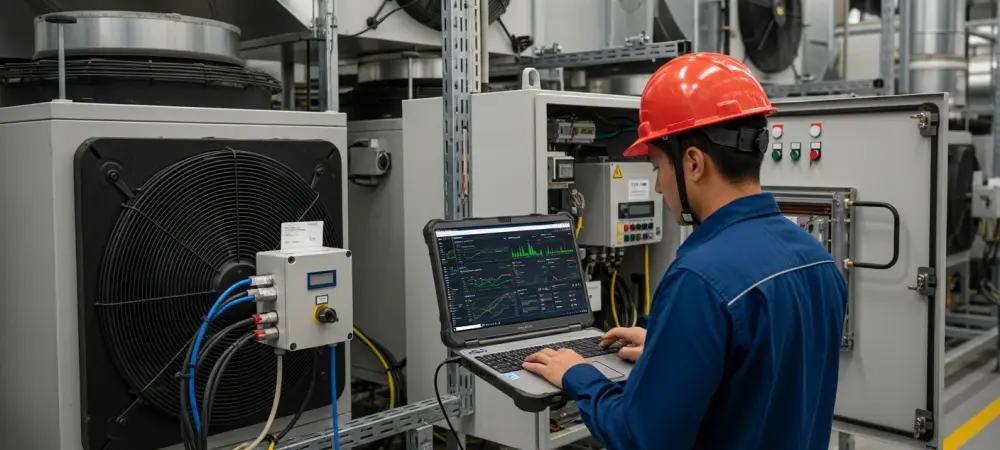
On the evolving cyber front, adversaries are leveraging AI to launch highly sophisticated phishing campaigns and devastating ransomware attacks that can cripple critical infrastructure. A particularly acute vulnerability arises from the convergence of Information Technology (IT) and Operational Technology (OT). Unsecured building management systems, HVAC controls, and internet-of-things (IoT) sensors, traditionally managed outside of core IT security, have become attractive backdoors for intruders seeking to gain a foothold in the network.
Simultaneously, the physical front is advancing. Technologies like drones provide adversaries with new tools for sophisticated surveillance and reconnaissance, potentially identifying weaknesses in physical perimeters from a safe distance. This is exacerbated by the trend of constructing massive data centers in rural areas. While these locations offer space and power advantages, they also introduce logistical risks, including greater distances from emergency services, reliance on limited utility infrastructure, and smaller local labor pools, all of which complicate security and response protocols.
From Silos to Synergy in an Integrated Defense Ecosystem
Expert consensus confirms that siloed security tools are fundamentally inadequate for this converged threat environment. A system where video surveillance, access control, and cybersecurity platforms operate independently creates dangerous blind spots that attackers are quick to exploit. An anomaly detected by a camera may not be correlated with a network intrusion alert, preventing a timely and effective response. This fragmentation of intelligence is one of the greatest weaknesses in traditional data center security. The necessary paradigm shift is toward a unified, cloud-based command center that integrates physical security, cybersecurity, and operational intelligence into a single, cohesive view. This model breaks down the walls between disparate systems, allowing data from every sensor—from a door reader to a network traffic analyzer—to be correlated in real time. Such a platform transforms security from a series of disconnected alarms into a source of holistic, actionable intelligence. The primary benefit of this integrated approach is the achievement of complete, end-to-end visibility of the facility’s risk profile. By eliminating information silos, operators can see the full picture of a potential incident as it unfolds, enabling a more streamlined and rapid response. For example, a cyber alert indicating a compromised OT device can automatically trigger a physical lockdown of the affected area and dispatch security personnel, all coordinated through one central platform.
The Technological Blueprint for a Proactive Defense
The foundation of a modern, integrated data center security system is built on a blueprint of key technologies working in concert. AI-powered situational awareness is a critical component, transforming video monitoring from a passive recording tool into an active threat detection system. AI-enabled cameras can automatically detect anomalies, such as an unauthorized individual in a restricted zone, and trigger intelligent alerts without human intervention.
This is complemented by next-generation access control. Vulnerable keycards are being replaced by mobile credentials with advanced biometric authentication, creating a more secure and completely traceable audit trail for every point of entry. In parallel, holistic operational technology security must be implemented. This involves comprehensive cybersecurity solutions that continuously monitor every connected OT device, from cooling systems to power distribution units, ensuring the entire facility network is protected against intrusion.
Ultimately, these systems are unified through cloud-based command and control platforms. Leveraging the cloud allows for remote security management and monitoring, empowering operators to respond to incidents from any location, at any time. When these technologies are combined, they created a powerful, layered defense that enhanced situational awareness, accelerated threat detection, and automated critical emergency responses, forming the resilient security architecture that tomorrow’s data centers demand.