

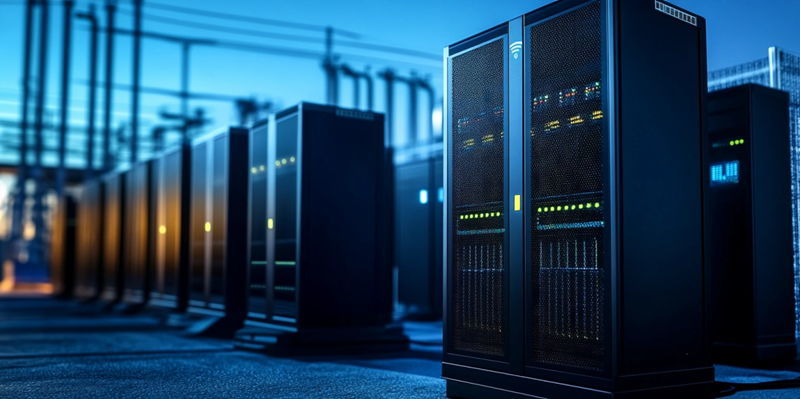
Edge computing has emerged as a pivotal technology in today’s digital ecosystem, promising to revolutionize how data is processed and managed. By bringing data processing closer to its origin, edge computing aims to reduce latency and enhance network performance for real-time applications. However, the successful implementation of edge computing hinges significantly on innovative and efficient power management solutions.
The Dynamics of Edge Computing
Bringing Data Processing to the Edge
Edge computing’s core principle is decentralizing data processing. Unlike traditional cloud computing, which often suffers from high latency due to its centralized nature, edge computing maximizes performance by situating resources closer to the data generation source. This approach dramatically reduces the time it takes for data to travel, facilitating quicker decision-making and improved responsiveness. For industries reliant on real-time data, such as autonomous vehicles and telehealth, this represents a game-changing advantage.
Deploying edge data centers strategically closer to data sources not only minimizes latency but also mitigates the risks associated with data bottlenecks. In industries like manufacturing, healthcare, and transportation, where split-second decisions are critical, the reduction in latency afforded by edge computing can significantly enhance operational efficiency and safety. Moreover, the ability to process information locally ensures that even if connectivity to the central data center is disrupted, essential applications can continue to function without interruption.
Power Challenges at the Edge
Despite these benefits, edge computing faces significant power challenges. Edge data centers, much like traditional data centers, consume vast amounts of energy. Depending on their size and scale, these centers can have energy requirements ranging from 500 kW to over 100 MW. Efficient power usage becomes essential not only for operational success but also for maintaining economic and environmental sustainability. Focusing on innovative power solutions can help mitigate these challenges and support the burgeoning growth of edge data centers.
One of the main challenges lies in the diverse and dispersed nature of edge data centers, which makes it difficult to manage power consumption uniformly. Traditional power solutions often lack the flexibility required for the varying scales and environments of edge data centers. To address these challenges, new technologies that optimize energy efficiency and reduce power wastage are being developed. These include high-density servers and power architectures that minimize power conversion steps, significantly enhancing energy efficiency. In addition, renewable energy sources and energy storage systems are being explored to further enhance the sustainability and reliability of edge data centers.
Technological Drivers of Edge Computing
The Role of AI, IoT, and 5G
The rapid advancement of technologies such as artificial intelligence (AI), the Internet of Things (IoT), and the rollout of 5G networks are significant drivers of edge computing. AI, particularly in the form of generative AI and large language models (LLMs), requires substantial computing power and benefits greatly from localized data processing. Similarly, IoT devices generate enormous amounts of data that need to be processed efficiently. The advent of 5G further accelerates this trend by enabling high-speed, low-latency communication, making edge computing more viable and necessary.
AI applications such as real-time analytics, video processing, and machine learning models benefit immensely from the reduced latency and improved bandwidth provided by edge computing. The sheer volume of data generated by IoT devices, from smart home systems to industrial sensors, requires immediate processing to be useful. Edge computing offers the necessary infrastructure to handle this data locally, reducing the load on central data centers and ensuring timely insights and actions. The deployment of 5G networks enhances these capabilities by providing faster and more reliable connections, crucial for systems that demand consistent, high-speed data transmission.
Market Growth and Projections
The market for edge computing is poised for exponential growth. According to Fortune Business Insights, the global edge computing market is expected to grow at a compound annual growth rate of 33.6% from 2024 to 2032, reaching around $217 billion by 2032. By 2025, it is estimated that as much as 75% of data will be generated outside central data centers. These projections underscore the increasing importance of edge computing, driven by the escalating demand for real-time data processing.
This explosion in market growth is propelled by various sectors that are adopting edge computing to enhance their operational capabilities. From retail and healthcare to energy and entertainment, edge computing enables industries to leverage real-time data analytics, delivering faster and more precise services. Retailers, for example, can use edge computing to offer personalized customer experiences through real-time data analysis, while the healthcare sector relies on it for critical applications like remote patient monitoring. As the adoption of edge computing continues to rise, the need for advanced power management solutions becomes even more pressing, ensuring that these systems can operate efficiently and sustainably.
Applications and Benefits
Autonomous Vehicles and Industrial IoT
One of the most compelling applications of edge computing is in autonomous vehicles (AVs). AVs require real-time data processing to make instantaneous decisions, which is feasible only through edge computing. Similarly, industrial IoT applications benefit substantially from localized data processing. Factories equipped with IoT devices can analyze data on-site, optimizing efficiency and reducing downtime.
In the realm of autonomous vehicles, the ability to process data at the edge means that vehicles can respond to their environment in real-time without reliance on distant central servers. This reduces the lag time significantly and can be the difference between a safe journey and a fatal accident. Industrial IoT applications, on the other hand, utilize edge computing to monitor and control production processes in real-time. By processing data locally, factories can quickly identify and rectify issues, leading to greater efficiency and lower operational costs. These benefits underscore the transformative potential of edge computing across various industries.
Remote Patient Monitoring and Telecom
In healthcare, edge computing facilitates remote patient monitoring by enabling real-time data analysis, which is crucial for timely medical interventions. The telecom industry also stands to gain, as edge computing helps manage network traffic and provides robust 5G support. By processing data closer to where it is generated, edge computing can enhance network performance and reliability, accommodating the ever-increasing data traffic.
Remote patient monitoring systems can benefit from edge computing by analyzing vital signs and other health metrics in real-time, alerting medical professionals to any abnormalities quickly. This can be lifesaving in scenarios where immediate medical response is required. Meanwhile, in the telecom sector, edge computing can optimize network performance by handling data processing closer to the user, which is particularly beneficial in managing the heavy data loads associated with the rollout of 5G networks. The reduced latency and increased reliability contribute to a more seamless and efficient user experience, proving advantageous for both service providers and consumers.
The Impact of AI on Power Demands
Increasing Financial Commitments to AI
The integration of AI into various applications significantly boosts power demands. A report by Ernst & Young highlights the increasing financial commitments of U.S. companies to AI, with the number of firms investing $10 million or more in AI expected to double by 2025. This surge in AI adoption not only elevates the need for edge computing but also intensifies the power requirements of data centers.
The burgeoning field of AI involves complex computations and significant data processing, necessitating more power-intensive hardware such as GPUs and TPUs. As companies increasingly integrate AI into their operations, the power demands of the underlying infrastructure grow correspondingly. This situation creates a pressing need for more efficient power management solutions to manage these heightened demands without escalating operational costs. Addressing this need effectively can enable businesses to scale their AI initiatives sustainably and competitively.
Efficient Power Management Solutions
To meet these escalating power demands, innovative power management solutions are indispensable. Modern high-density servers and advanced power architectures that minimize conversion steps are crucial. These technologies enhance efficiency, reduce operational costs, and ensure that data centers can scale effectively. Modular power solutions offer the flexibility to adapt to changing demands, making them an ideal choice for edge data centers.
Innovative power management solutions are designed to handle the unique challenges presented by edge data centers efficiently. These solutions incorporate advanced cooling technologies, power conversion optimization, and energy-efficient hardware to reduce overall power consumption. Additionally, scalable modular power systems ensure that edge data centers can expand their capabilities without compromising on energy efficiency or incurring prohibitive costs. As the demand for edge computing continues to grow, these power management solutions will be critical in maintaining sustainability and operational viability.
Sustainability and Future Connectivity
Transforming Network Integration
Edge computing is set to transform network integration and connectivity. By efficiently collecting, processing, and distributing data locally, edge computing reduces the dependency on centralized data centers and traditional internet connections. This capability is particularly beneficial for linking distributed energy grids, enabling more resilient and sustainable energy management.
Enhanced network integration through edge computing allows for seamless data exchange across various sectors, from smart cities and intelligent transportation systems to energy management and telecommunications. The decentralization of data processing ensures that critical services remain operational even during network disruptions. This level of resilience is crucial for applications that require uninterrupted operation and real-time response, such as emergency services and automated industrial processes.
The Path to Sustainable Growth
Edge computing has rapidly become a cornerstone technology in our digital landscape, fundamentally reimagining the way data is processed and managed. By shifting data processing closer to its source, edge computing aims to significantly reduce latency, thereby enhancing network performance—especially crucial for real-time applications like autonomous vehicles, smart cities, and industrial automation. This technology allows for more immediate and localized data analysis, which can lead to quicker decision-making processes and improved user experiences.
However, the broader success and scalability of edge computing depend heavily on innovative and efficient power management solutions. These solutions are essential to ensure that the devices and infrastructures involved can operate sustainably and reliably. Without effective power management, the potential benefits of edge computing could be undermined by increased energy consumption and costs, as well as potential downtime and inefficiency. Therefore, as we continue to advance and deploy edge computing technologies, equal emphasis must be placed on developing robust power management systems to support this revolutionary shift in data processing paradigms.