

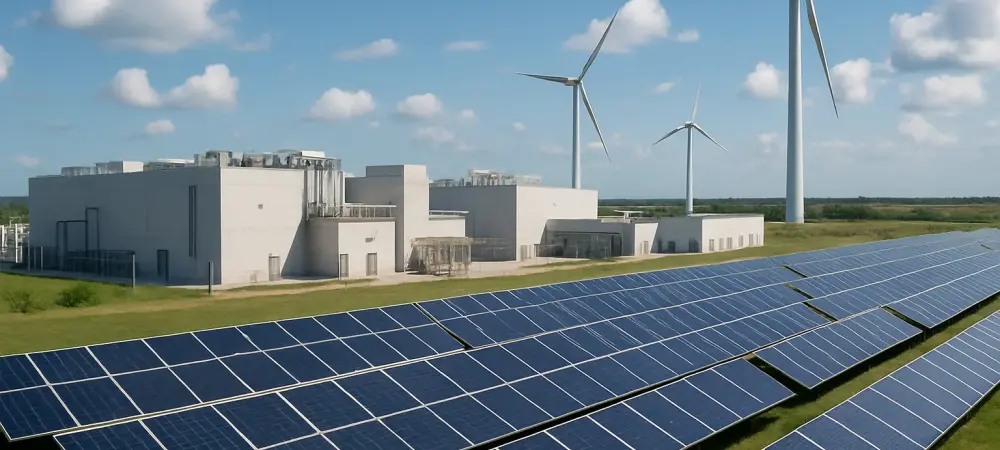
What happens when the digital world’s insatiable hunger for power meets the urgent need for a greener planet? In Dallas, Texas, an ambitious partnership is tackling this challenge head-on, blending cutting-edge technology with renewable energy to redefine how data centers operate. This collaboration between Prometheus Hyperscale and Engie North America isn’t just about meeting today’s demands—it’s about building a sustainable foundation for tomorrow’s AI-driven landscape. Dive into a story where innovation and environmental responsibility collide, sparking hope for a cleaner tech future.
The stakes couldn’t be higher. Data centers, the unseen engines of the internet and artificial intelligence, consume vast amounts of energy—often from fossil fuel-heavy grids—accounting for about 1-2% of global electricity use, according to the International Energy Agency. With AI workloads projected to double data center power needs by 2030, the pressure to curb carbon footprints is intense. This partnership stands as a beacon of change, proving that high-performance computing and sustainability can coexist, and it’s happening right now along Texas’s I-35 corridor.
A Bold Vision for Digital Infrastructure
At the heart of this initiative lies a mission to revolutionize how data centers are powered. Prometheus Hyperscale, a leader in AI-ready infrastructure, has joined forces with Engie North America, a heavyweight in renewable energy, to colocate advanced data facilities with clean power sources. Their focus on liquid-cooled systems paired with wind, solar, and battery storage showcases a forward-thinking approach to meeting the tech industry’s escalating energy demands without sacrificing environmental goals.
This isn’t a small-scale experiment. The collaboration leverages Engie’s robust portfolio, including projects like the 200MW Sun Valley Solar facility, to ensure a steady supply of renewable energy. By situating these centers near Dallas, a hub for tech growth, the partnership taps into a region ripe with both opportunity and energy challenges, setting a precedent for others to follow in balancing progress with planet-friendly practices.
The Urgent Need for Greener Tech Solutions
Data centers are indispensable to modern life, supporting everything from cloud storage to machine learning algorithms, yet their environmental toll is staggering. Studies estimate that a single large data center can emit as much carbon as a small town, with global emissions from the sector rivaling those of the airline industry. As businesses and consumers push for eco-conscious operations, the tech world faces a reckoning—sustainability is no longer optional but a core requirement.
This shift in mindset is evident in Texas, where renewable energy resources are abundant, yet the grid often struggles with reliability. The Prometheus-Engie alliance addresses this dual challenge by prioritizing clean power integration, ensuring that the backbone of digital innovation doesn’t come at the cost of ecological harm. Their work reflects a broader industry trend toward accountability, where energy efficiency becomes as critical as processing speed.
Inside the Groundbreaking Collaboration
The nuts and bolts of this partnership reveal a meticulously planned strategy. Prometheus is deploying state-of-the-art, liquid-cooled data centers alongside Engie’s renewable assets, strategically positioned along key infrastructure routes near Dallas. The timeline is aggressive yet achievable, with initial facilities expected to launch next year and further expansions planned through 2027, creating a network designed to handle AI’s intensive power needs with minimal environmental impact.
Beyond traditional renewables, the approach incorporates diverse energy innovations. A 100MW agreement with Oklo for small modular nuclear reactors and a deal with XL Batteries for long-duration storage using organic flow batteries highlight a commitment to exploring every avenue for clean power. Additionally, a temporary backup solution through Conduit, likely involving natural gas engines, ensures reliability during the transition, demonstrating a pragmatic balance between immediate needs and long-term ideals.
This multifaceted effort isn’t just about technology—it’s about scalability. By combining Engie’s 11GW renewable portfolio with Prometheus’s ambitious goal to grow from a 120MW campus to a 1.2GW network, the partnership is crafting a blueprint for resilient, eco-friendly digital hubs. Each element, from solar farms to nuclear options, plays a role in addressing the complex energy puzzle facing today’s tech infrastructure.
Voices Shaping the Sustainable Shift
Industry leaders behind this venture are vocal about its significance. A representative from Engie North America emphasized, “With our extensive renewable and battery assets, we’re uniquely positioned to support power-intensive sectors like data centers in transitioning to cleaner energy.” This perspective aligns with Engie’s recent partnerships with tech giants like Meta and Google for solar projects in Texas, underscoring their growing influence in the space.
Prometheus Hyperscale, having rebranded from its earlier identity as Wyoming Hyperscale Whitebox, is equally driven. Their focus on next-generation infrastructure reflects a belief that sustainable data centers are not just feasible but essential. Industry observers note that such collaborations signal a turning point, where environmental responsibility becomes a competitive edge, inspiring other firms to rethink their energy strategies in light of rising public and corporate expectations.
Lessons for Building a Cleaner Tech Landscape
The model forged by this partnership offers practical insights for others aiming to merge technology with sustainability. One key takeaway is the importance of integrating data facilities with nearby renewable sources, such as wind farms or solar arrays, especially in regions like Texas with established clean energy infrastructure. This proximity reduces transmission losses and maximizes efficiency, paving the way for broader adoption.
Another lesson lies in diversifying power options. Incorporating emerging solutions like modular nuclear reactors or advanced battery systems can complement renewables, ensuring stability for high-demand applications. Meanwhile, strategic alliances between tech innovators and energy providers can pool expertise and resources, amplifying impact. These steps, grounded in real-world application, provide a roadmap for scaling sustainable practices without compromising performance.
Finally, balancing short-term reliability with long-term goals is critical. Temporary backup systems can bridge gaps during development phases, allowing projects to stay on track while cleaner solutions mature. This pragmatic approach ensures that the pursuit of sustainability doesn’t derail operational needs, offering a replicable framework for businesses and policymakers eager to align with global energy transition targets.
Reflecting on a Milestone in Tech Sustainability
Looking back, the alliance between Prometheus Hyperscale and Engie North America marked a pivotal moment in addressing the dual demands of digital expansion and environmental stewardship. Their efforts in Dallas demonstrated that even the most power-hungry technologies could be powered by the sun, wind, and innovative storage, reducing reliance on fossil fuels. This wasn’t merely a local achievement but a signal to the global tech community that change was possible.
The next steps were clear: industry players needed to prioritize similar integrations, investing in regions with renewable potential and fostering partnerships that blend expertise across sectors. Policymakers, too, had a role in incentivizing clean energy adoption through grants or streamlined regulations. Above all, the success in Texas underscored that sustainability in tech required collective action—every stakeholder had to commit to pushing boundaries.
As the digital era continued to evolve, the challenge remained to scale these solutions globally, adapting them to diverse energy landscapes. The groundwork laid by this collaboration offered a starting point, but the journey ahead demanded innovation, investment, and unwavering resolve to ensure that the infrastructure of tomorrow didn’t burden the planet of today.