

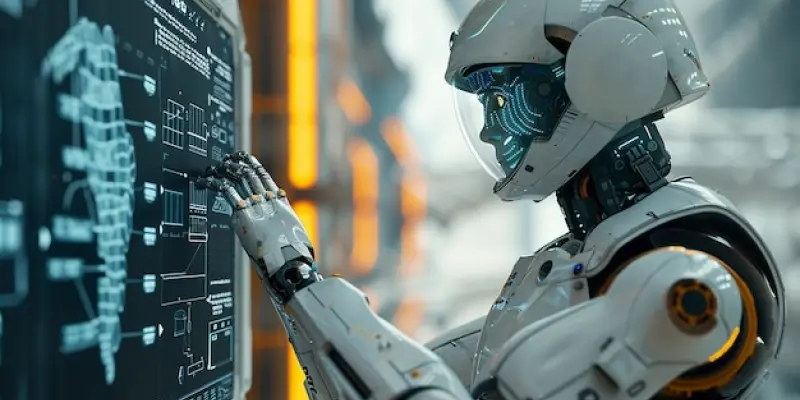
The evolution of low-power GPU architectures marks a pivotal shift in the technology landscape, especially for robotics and autonomous systems. Recent advancements in low-power GPUs are not only enhancing the capabilities of AI but are also making these technologies more energy efficient and accessible for various applications. This article explores how these innovations are reshaping different industries, optimizing energy consumption, and boosting AI-driven automation.
Transitioning from Data Centers to Mobile AI
Traditionally, AI workloads have relied heavily on high-performance computing (HPC) environments within datacenters. These environments, while powerful, are notorious for their substantial power consumption, often operating at levels up to 1000W. The advent of low-power GPUs, however, has initiated a paradigm shift, enabling mobile and autonomous systems to handle these workloads more efficiently. By leveraging GPUs that consume considerably less power, ranging from 5W to 200W, AI technologies can now be deployed in real-world applications more sustainably. This shift not only reduces energy consumption but also democratizes AI, making it accessible for a broader range of applications.
One key advantage of transitioning from power-hungry datacenters to mobile AI systems is the improved power efficiency it brings along. Low-power GPUs allow applications that previously relied on centralized, energy-intensive infrastructure to operate on more modest, distributed systems. This evolution also opens up new avenues for AI deployment in areas where high power consumption would have been prohibitive. Mobile GPUs can be integrated into devices such as drones, wearables, and edge computing devices, expanding the reach of AI technologies and enabling real-time processing in various scenarios.
The Role of AI in Logistics and Automation
One of the most prominent areas benefiting from low-power GPUs is logistics and warehouse automation. Autonomous mobile robots (AMRs), enhanced by advanced GPU architectures, are revolutionizing these sectors by increasing operational efficiency and precision. AMRs equipped with AI capabilities can navigate, perceive, and execute tasks more intelligently, reducing the need for human intervention. This automation leads to scalable and cost-effective logistics operations, driving significant improvements in productivity and accuracy.
The integration of AI into AMRs enables these robots to perform complex tasks such as picking, sorting, and transporting goods with minimal human oversight. Advanced GPU architectures enhance their ability to process sensor data in real-time, making them adept at navigating dynamic and unpredictable environments. This capability is crucial in warehouse settings where layouts and inventory positions may change frequently. As a result, AI-powered AMRs support higher throughput, decrease operational costs, and minimize errors in logistics processes.
Advancements in GPU Architectures for Scalability
The development of modern GPU architectures, particularly streaming multiprocessor (SM) designs, has been instrumental in delivering scalable solutions across varying power levels. These architectures ensure that software developed for one platform can be reused across multiple applications, enhancing development efficiency. Such scalable designs also involve AI-optimized memory solutions and unified frameworks. These features foster a seamless bridge between datacenters and mobile robotics, streamlining the development process and optimizing performance across diverse platforms.
Scalable SM designs accommodate a range of power requirements, making it feasible to deploy GPUs in both high-performance computing environments and low-power, mobile applications. This versatility is fundamental for developing technologies that need to operate across different settings, such as cloud servers, edge devices, and embedded systems. AI-optimized memory solutions ensure that data is processed rapidly and efficiently, reducing latency and improving overall system performance. Unified frameworks further facilitate the deployment of AI algorithms, allowing developers to transition smoothly between different hardware configurations and power levels without significant modifications to their codebase.
Enhancing Autonomous Vehicles through AI
Low-power GPUs play a crucial role in the advancement of autonomous vehicles. AI-driven solutions are essential for managing sensor fusion, real-time navigation, and obstacle avoidance, which are vital for safe and efficient operation. These GPUs enable the high-speed processing required by autonomous vehicles while maintaining energy efficiency. By ensuring that data from various sensors is accurately analyzed and acted upon in real time, low-power GPUs contribute to safer and more reliable autonomous driving systems.
The processing power of low-power GPUs allows autonomous vehicles to evaluate their surroundings quickly and make informed decisions even in complex and fast-changing environments. These GPUs can process high-resolution images, LIDAR data, and other sensor inputs to create a comprehensive understanding of the vehicle’s surroundings. This information is critical for executing precise maneuvers, maintaining safe distances from other objects, and adhering to traffic regulations. Furthermore, the energy efficiency of low-power GPUs ensures that autonomous vehicles can operate for extended periods without excessive battery drain, which is a key factor in the viability of electric and hybrid autonomous vehicles.
Software Reusability between Robotics and Transportation
Cross-functional software reusability is another major advantage of low-power GPU innovations. AI algorithms developed for warehouse robotics can be effectively utilized in autonomous vehicles, streamlining development cycles and reducing redundancy. Standardized AI models and processing frameworks enhance performance across varied dynamic environments. This convergence between robotics and transportation systems fosters innovation and cuts down the time required to bring new technologies to market.
The ability to reuse software between different applications not only accelerates development but also ensures consistency and reliability across platforms. For example, computer vision algorithms designed for robotic arms in warehouses can be adapted to analyze road conditions and detect obstacles in autonomous vehicles. This standardization reduces development costs and minimizes the duplication of effort, allowing companies to invest more resources into refining and expanding their AI capabilities. In addition, shared frameworks enable collaborative advancements between sectors, promoting a holistic approach to innovation with benefits spanning across multiple industries.
Safety and Performance Validation in AI Systems
A key concern in AI-led autonomous systems is ensuring their safety and reliability. Robust validation frameworks to meet industry standards for real-world deployments are essential. High-fidelity simulations powered by GPUs enable comprehensive testing across numerous scenarios, including varying traffic conditions and weather variables. This thorough validation process identifies potential risks and improves decision-making, enhancing the overall robustness and trustworthiness of autonomous systems.
Simulation environments allow developers to test AI algorithms in controlled yet diverse conditions, ensuring that systems can handle an array of real-world challenges. By simulating millions of scenarios, GPUs help identify edge cases and potential failures that may not be evident during live testing. This rigorous approach to validation is crucial for refining AI models and making necessary adjustments before systems are deployed in the field. Enhanced decision-making accuracy, fostered through extensive simulations, increases the reliability of autonomous systems, thereby boosting user confidence and accelerating broader adoption.
The Path Forward
The evolution of low-power GPU architectures signifies a key transformation in the technology landscape, particularly benefiting robotics and autonomous systems. Recent developments in low-power GPUs are not only pushing the boundaries of AI capabilities but are also making these technologies more energy-efficient and accessible across a range of applications. This article delves into how these technological advancements are revolutionizing various industries, from optimizing energy consumption to fostering AI-driven automation. Low-power GPUs are now instrumental in enabling complex computations without requiring extensive energy resources, which is crucial for mobile and edge devices. As a result, industries such as healthcare, automotive, and manufacturing are witnessing a surge in AI-powered solutions that are both powerful and sustainable. By reducing power requirements, these GPUs support greater mobility and longer operational times, further extending the reach and impact of AI technologies. Consequently, the shift towards energy-efficient GPU architectures is setting the stage for innovative, sustainable advancements across numerous sectors.