

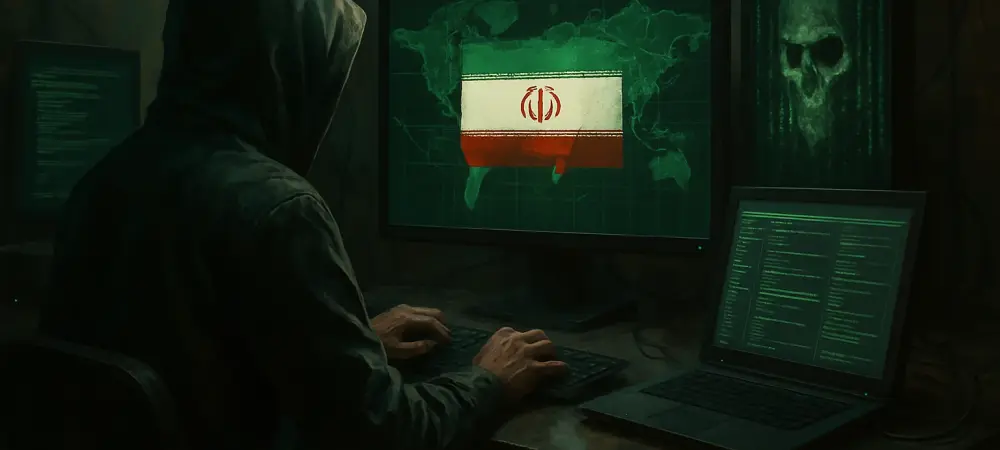
In a disturbing trend within the cybersecurity landscape, a newly identified Iranian cyber threat actor, dubbed UNK_SmudgedSerpent, has emerged as a sophisticated player targeting academics and foreign policy experts across the United States. This state-sponsored operation, active during a specific window earlier this year, showcases an alarming blend of social engineering and technical prowess, exploiting legitimate remote management and monitoring (RMM) tools to penetrate high-value targets. The campaign’s focus on individuals with deep ties to Iranian affairs reveals a calculated effort to gather sensitive intelligence or shape critical narratives. By leveraging trusted software and meticulously crafted psychological tactics, these attackers have managed to blur the lines between legitimate activity and malicious intent, posing a significant challenge to traditional security measures. This development signals a pressing need to understand the mechanisms behind such threats and to fortify defenses against an evolving enemy in the digital realm.
Unveiling the Social Engineering Tactics
The initial approach of UNK_SmudgedSerpent hinges on expertly designed social engineering strategies aimed at building trust with unsuspecting targets. Emails, often posing as correspondence from well-known figures in the academic and policy spheres, broach sensitive topics like Iran’s economic struggles or the role of the Islamic Revolutionary Guard Corps. These messages, sent from free email accounts with subtle misspellings to evade scrutiny, propose collaborative research or discussions on pressing political issues. Such tactics are crafted to lower defenses, making recipients more likely to engage with the content. This method exemplifies a broader shift in state-sponsored cyber operations where psychological manipulation is as critical as technical exploits, highlighting how attackers prey on human curiosity and professional courtesy to initiate contact and pave the way for deeper infiltration.
Beyond the initial outreach, the campaign’s persistence in personalizing interactions sets it apart as particularly insidious. Once a target responds, the attackers adapt their messaging to maintain the illusion of legitimacy, often tailoring follow-up emails to reflect the recipient’s specific interests or ongoing projects related to Iranian policy. This level of customization demonstrates a commitment to reconnaissance, ensuring that each interaction feels genuine and relevant. The use of impersonated identities, such as prominent scholars from respected institutions, adds another layer of deception, exploiting the inherent trust within academic and policy circles. This calculated approach not only increases the likelihood of success but also underscores the patience and resources behind the operation, marking it as a significant concern for those in targeted professional communities who must now navigate an environment where even seemingly benign correspondence could harbor malicious intent.
Technical Sophistication in Tool Exploitation
At the heart of this Iranian cyber campaign lies a multi-stage infection process that cleverly misuses legitimate RMM tools to gain unauthorized access. After luring targets through phishing emails, the attackers direct them to spoofed platforms mimicking trusted services like OnlyOffice or Microsoft 365 login pages, pre-populated with victim-specific details to harvest credentials. If initial attempts falter, the threat actors adapt by simplifying access, sometimes removing password barriers to present fraudulent portals. Once inside, targets encounter document repositories with seemingly innocuous PDFs alongside malicious ZIP archives containing MSI files. Executing these files installs PDQConnect, a legitimate RMM tool, granting attackers a foothold for reconnaissance. This exploitation of trusted software illustrates a growing trend in cyber espionage where blending into routine IT traffic offers a shield against detection.
Further deepening their technical arsenal, the attackers deploy a second RMM tool, ISL Online, potentially as a backup mechanism or for distinct operational phases. This dual-tool strategy enhances their ability to maintain persistent access while evading traditional security solutions that often overlook legitimate software activity. The choice of commercial tools over custom malware reflects a deliberate effort to minimize suspicion, as their usage aligns with standard administrative functions. Such innovation poses unique challenges for cybersecurity professionals tasked with distinguishing between benign and malicious behavior in network environments. The intricate design of this infection chain, from credential theft to sustained system access, underscores the advanced capabilities of UNK_SmudgedSerpent and signals a need for updated detection mechanisms that can identify the abuse of trusted tools in real-time, protecting critical sectors from covert infiltration.
Challenges in Attribution and Ongoing Risks
Determining the exact origins of this campaign presents a complex puzzle due to overlapping tactics with known Iranian threat groups like TA455, TA453, and TA450. Security researchers have noted similarities in infrastructure, such as health-themed domains used as redirection points masquerading as legitimate cloud services, alongside server configurations tied to earlier operations by these groups. Additional connections emerge through related domains hosting fake Microsoft Teams portals and files associated with custom backdoors like MiniJunk. While these overlaps complicate definitive attribution, they suggest a shared ecosystem of tools and methods among Iranian cyber actors, pointing to a collaborative or derivative nature of such campaigns. This ambiguity challenges the cybersecurity community to refine attribution models while maintaining focus on mitigating the immediate threats posed by these sophisticated operations.
The strategic patience and adaptability of UNK_SmudgedSerpent further amplify the risks, reflecting a shift toward long-term, low-profile campaigns targeting specialized communities. The emphasis on academics and foreign policy experts indicates a deliberate intent to extract intelligence or influence discourse in specific domains. Although activity appeared to cease after early August, the persistence of related infrastructure suggests that future campaigns remain a distinct possibility. This ongoing threat necessitates continuous vigilance among vulnerable sectors, as attackers may simply be lying in wait for the opportune moment to strike again. The evolving nature of these operations highlights the importance of proactive defense strategies, including enhanced monitoring for legitimate tool abuse and cross-sector collaboration to share threat intelligence, ensuring that potential targets are better equipped to recognize and resist such covert tactics.
Strengthening Defenses Against Evolving Threats
Reflecting on the UNK_SmudgedSerpent campaign, it becomes evident that the intersection of state-sponsored espionage and advanced cyber techniques poses a formidable challenge to targeted communities in the United States. The intricate blend of social engineering and technical exploitation through RMM tools like PDQConnect and ISL Online reveals a calculated approach that evades conventional safeguards. Looking ahead, organizations and individuals must prioritize actionable steps to bolster their resilience. Implementing advanced threat detection systems capable of identifying anomalous use of legitimate software stands as a critical measure. Additionally, raising awareness through targeted training on recognizing sophisticated phishing attempts can empower potential victims to act as the first line of defense against such deceptive tactics.
Beyond immediate protective measures, fostering collaboration across academic, policy, and cybersecurity sectors emerges as a vital strategy in the aftermath of this campaign. Sharing detailed threat intelligence and best practices can help build a collective shield against future iterations of these attacks. Governments and private entities should also consider investing in research to develop innovative tools that differentiate between legitimate and malicious use of RMM software, closing gaps that attackers exploit. As these threats continue to evolve, staying ahead requires a commitment to adaptive security frameworks and international cooperation to track and disrupt state-sponsored cyber operations. By taking these steps, the targeted communities can transform past vulnerabilities into a foundation for stronger, more informed defenses against the persistent shadow of cyber espionage.