

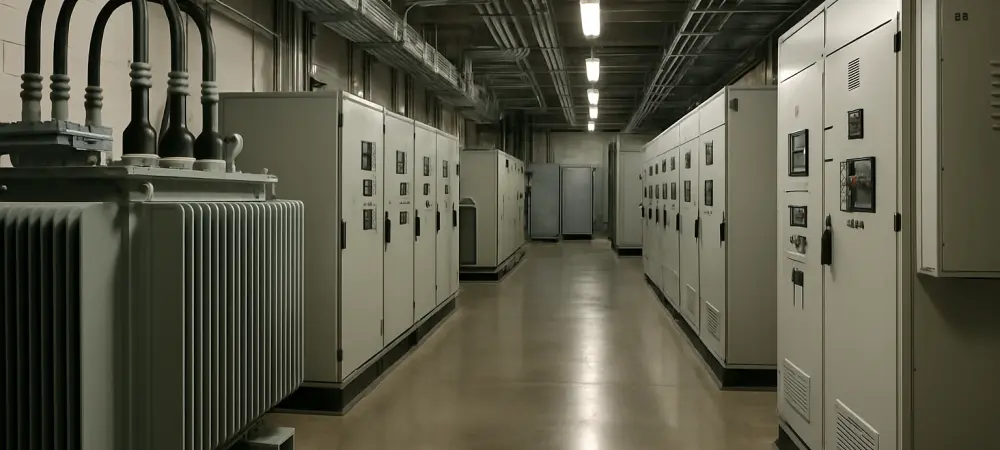
The digital backbone of modern society is under immense pressure as data centers, the critical hubs powering cloud computing and artificial intelligence, face an unprecedented surge in demand across North America. This boom, driven by technological advancements and the insatiable need for digital infrastructure, is colliding head-on with significant obstacles, including prolonged grid connection delays and severe power constraints. As businesses and hyperscalers race to expand capacity, the industry grapples with a supply crunch that threatens to hinder growth. Vacancy rates have plummeted to historic lows, while the wait for power connections stretches into years, creating a bottleneck that challenges even the most ambitious expansion plans. This complex scenario sets the stage for a deeper exploration into how the sector is navigating these turbulent waters, balancing immediate needs with long-term innovation to sustain the digital economy.
Tackling the Supply and Demand Imbalance
Unpacking Record-Low Vacancy and Construction Booms
The data center market is experiencing a supply shortage of staggering proportions, with vacancy rates dropping to a mere 2.3%, as reported in recent industry analyses. This figure reflects intense competition for space, where 73% of new construction is already pre-leased before completion, leaving little room for speculative builds. The scale of development is equally striking, with 7.8 gigawatts of capacity currently under construction—a figure that dwarfs previous records by a factor of ten. Moreover, an additional 31.6 gigawatts are in the planning stages, signaling a massive wave of investment aimed at meeting escalating demand. This frenzy is largely fueled by hyperscalers and AI training needs, which require vast computational power. Yet, despite this aggressive push, the industry faces a critical limitation: grid connection delays averaging four years, which prevent rapid scaling and create a frustrating paradox of growth potential stifled by infrastructure lag.
Regional Growth Patterns and Market Diversification
Beyond the raw numbers, the geographic landscape of data centers is shifting to accommodate demand, with established hubs and emerging markets playing distinct roles. Northern Virginia continues to dominate as the largest market, outpacing secondary hubs like Dallas-Fort Worth by more than three times in size. Meanwhile, core markets such as Chicago and Dallas are expanding into adjacent regions like Northwest Indiana and West Texas, seeking to leverage available space and lower costs. Emerging markets are also gaining traction, particularly for AI-driven workloads, with hyperscalers leading the charge and colocation providers expected to follow. This diversification reflects a maturing industry adapting to capacity constraints in traditional strongholds. However, regional expansion brings its own set of challenges, including varying grid reliability and power costs, which influence where new facilities are built and how quickly they can become operational in a highly competitive environment.
Exploring Solutions to Power and Grid Constraints
Immediate Fixes for Power Bottlenecks
Addressing the urgent power shortages facing data centers requires innovative short-term strategies that can bypass the lengthy grid connection timelines. One viable approach is the adoption of behind-the-meter power solutions, such as natural gas turbines, which can be deployed in a matter of months rather than years. These options provide a temporary lifeline for operators desperate to bring capacity online. Additionally, powered-land sites, though costly, offer a faster path to development by eliminating initial infrastructure delays. For tenants, alternatives like securing capacity from cloud providers or investing in self-built facilities present feasible, albeit expensive, stopgaps. Another often-overlooked opportunity lies in retrofitting existing facilities with stranded power—unused electrical capacity that can be tapped to meet immediate needs. These tactical measures, while not permanent, offer critical breathing room for an industry under pressure to keep pace with digital transformation.
Long-Term Innovations and Sustainable Energy Prospects
Looking beyond immediate fixes, the data center sector is investing in long-term solutions to address power constraints with a focus on sustainability and scalability. One promising avenue is the development of nuclear-powered small modular reactors, which could provide a reliable and clean energy source by the end of this decade. While still in early stages, this technology holds potential to revolutionize how data centers meet their enormous energy demands. Other options, such as fuel cells and hydrogen-based power, are being explored, though their current impact remains limited due to scalability and cost issues. Industry experts emphasize the importance of aligning these innovations with broader environmental goals, as rising electricity costs—up 30% over recent years—push new projects toward low-cost power markets. Between now and 2030, projections suggest up to $1 trillion in development, underscoring the financial commitment to building a future where power supply matches the relentless growth of data needs.
Reflecting on Industry Resilience and Future Pathways
Balancing Growth with Systemic Barriers
Reflecting on the journey, the data center industry has demonstrated remarkable resilience amidst a landscape defined by record-breaking demand and formidable systemic barriers. The utilization of 2.2 gigawatts of power capacity in just the first half of the year highlighted the sector’s critical role in the digital economy, while simultaneously exposing the fragility caused by grid delays and power shortages. Financially, the market saw robust investor interest, with debt activity reaching $13.4 billion in asset-backed securities and loans during the same period, even as direct investment sales remained subdued at $754 million. These figures paint a picture of an industry buoyed by confidence in its long-term value, yet constrained by immediate operational hurdles. The push into low-cost power regions, driven by escalating electricity prices, further shapes strategic decisions, ensuring that growth is not just ambitious but also pragmatic in addressing cost pressures.
Charting a Course for Sustainable Expansion
As the industry moves forward, the focus shifts to actionable steps that can bridge current gaps and pave the way for sustainable expansion. Prioritizing short-term solutions like natural gas turbines and powered-land sites provides essential relief, while investments in retrofitting stranded power assets maximize existing resources. Simultaneously, the commitment to long-term innovations, such as nuclear small modular reactors, signals a forward-thinking approach to energy challenges. Stakeholders also recognize the importance of geographic diversification, balancing growth between established hubs and emerging markets to distribute demand pressures. Encouraging collaboration between operators, energy providers, and policymakers emerges as a vital strategy to streamline grid connections and reduce wait times. Ultimately, the path ahead demands a blend of tactical agility and visionary planning to ensure that data centers can continue to support the digital infrastructure without succumbing to the weight of their own success.