

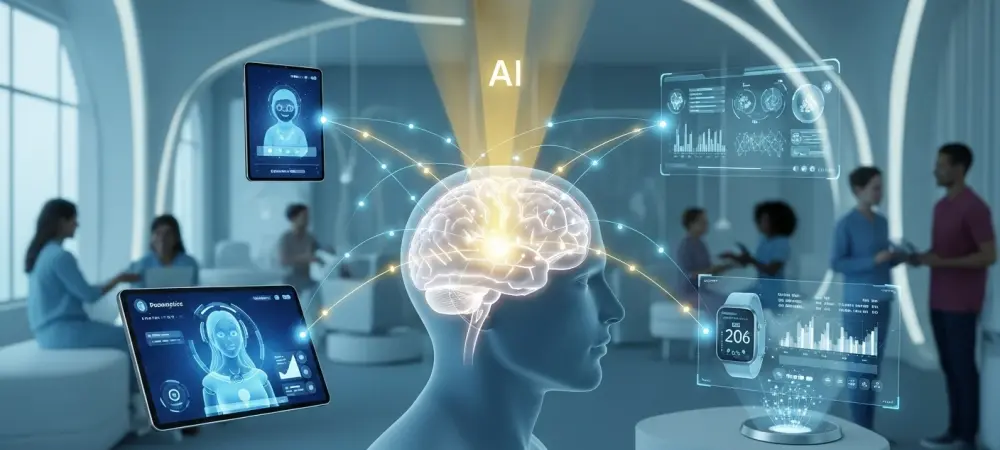
The global landscape of psychological support has undergone a radical shift as sophisticated algorithms now serve as a primary layer of defense against a burgeoning mental health crisis. With approximately one in eight individuals worldwide currently managing a mental health condition, the traditional reliance on a limited pool of human clinicians became an unsustainable strategy for the modern world. Today, the integration of artificial intelligence into healthcare infrastructure represents a transition from reactive, episodic treatment to a proactive, continuous model of care. This evolution ensures that psychological resources are no longer a luxury for the few but an accessible utility for the many, as machine learning models bridge the gap between soaring patient needs and the physical limits of human providers.
This analysis explores the practical applications and ethical frameworks of these technologies as they exist in the current year. By examining how digital interfaces provide immediate triage, personalized therapy, and data-driven diagnostic insights, readers will gain a comprehensive understanding of the hybrid care model. The goal is to address the most pressing questions regarding the efficacy, safety, and future trajectory of AI in psychology. As the digital mental health market continues its rapid expansion, understanding these tools becomes essential for patients, practitioners, and policymakers navigating a world where technology and human empathy are increasingly intertwined.
Addressing the Core Innovations: How Technology Supports the Mind
Why Is AI Necessary for Modern Mental Health Infrastructure?
The primary catalyst for the widespread adoption of artificial intelligence in this sector is the historical imbalance between the demand for services and the availability of licensed professionals. For years, patients in many regions faced daunting wait times that stretched into several months, a delay that often allowed manageable symptoms to spiral into acute crises. Human-led therapy, while effective, is inherently restricted by the number of hours a therapist can work and the high cost associated with one-on-one sessions. Consequently, a massive segment of the population remained underserved, creating a systemic vulnerability that required a scalable technological solution. In the current environment, AI acts as a vital bridge to manage this capacity by providing an immediate point of contact for anyone seeking help. Industry data reveals that over 40% of digital health platforms now utilize AI-driven assessment tools to ensure that individuals are not left in a clinical vacuum while awaiting a human appointment. This shift has fundamentally altered the patient journey, moving away from a rigid, appointment-only system toward a more fluid and accessible architecture. By automating the initial stages of interaction, the healthcare system can now provide a safety net that operates around the clock, regardless of geographic location or socioeconomic status.
How Does AI Function as a Frontline Support Tool?
One of the most transformative developments in recent years is the role of AI-powered chat platforms as the initial entry point for mental healthcare. These systems are not intended to replace the human connection but to offer immediate, low-stakes engagement for those who might otherwise avoid seeking help due to stigma or logistical hurdles. Statistics show that nearly 85% of first-time users of these AI tools had never previously consulted a mental health professional, suggesting that digital interfaces serve as a crucial “gateway” to the broader healthcare system. These platforms provide a space where individuals can express their concerns without the fear of immediate judgment.
Furthermore, these tools provide critical temporal accessibility that human clinics simply cannot match. Over 60% of user engagement occurs outside of standard business hours, particularly during late-night hours when traditional support is unavailable. In emergency settings, AI-driven assessment tools have reduced patient evaluation times by up to 30% by analyzing speech patterns and behavioral data in real-time. This allows high-risk cases to be flagged for immediate human intervention, ensuring that clinicians can prioritize the most severe crises while the AI manages routine check-ins and stabilizing exercises.
What Is Personalized Digital Therapeutics?
Modern digital therapy has evolved far beyond the static, one-size-fits-all modules of the past, moving toward highly adaptive machine learning models. These contemporary systems utilize real-time data to monitor a user’s inputs and behaviors, adjusting the therapeutic curriculum on the fly to match their current emotional state. For example, if a user’s behavioral markers indicate a sudden spike in stress or a decline in sleep quality, the algorithm automatically prioritizes targeted relaxation techniques or insomnia-focused cognitive exercises. This level of customization ensures that the intervention remains relevant and effective for the individual’s specific needs at that moment. Moreover, these platforms facilitate a “blended” care model that enhances the effectiveness of human therapists rather than marginalizing them. The AI handles the repetitive aspects of treatment, such as habit tracking and skill-building exercises, while generating summarized reports that highlight significant shifts in the patient’s mood or behavior. This allows a single clinician to manage a larger caseload more effectively, as they can enter each session with a data-backed understanding of the patient’s progress over the preceding week. The technology serves as a force multiplier, allowing for more focused and meaningful human interactions.
How Does AI Assist in Early Diagnosis and Research?
The ability of machine learning to process and analyze massive, anonymized datasets has provided the psychological community with unprecedented insights into human behavior. Models can now detect subtle patterns or behavioral abnormalities that are often invisible to the human eye, especially when spread across thousands of patient records. This capability is instrumental in identifying emerging mental health trends within specific demographics before they escalate into larger public health issues. By recognizing the early markers of conditions like depression or anxiety through linguistic shifts or activity changes, AI enables a shift toward preventative care.
These advancements also support more rigorous evaluation of therapeutic outcomes. By analyzing which specific approaches yield the highest engagement for certain personality types, researchers can refine treatment protocols with a level of precision that was previously unattainable. This data-driven approach removes much of the guesswork from clinical practice, allowing for the development of highly specialized interventions. As the system gathers more information, the accuracy of its predictive models continues to improve, offering a roadmap for early intervention that could potentially save lives by identifying risk factors long before a crisis occurs.
What Are the Ethical Guardrails for AI in Psychology?
Despite the undeniable benefits, the integration of technology into such a sensitive field necessitates rigorous ethical standards and constant human oversight. Professional bodies have reached a strong consensus that AI must remain a supportive instrument, as it lacks the nuanced empathy and ethical judgment required for complex clinical decisions. Privacy remains a paramount concern, as the collection of highly sensitive psychological data requires advanced encryption and strict regulations regarding who can access this information. Ensuring that this data is never used to the detriment of the patient by third parties is a cornerstone of current healthcare policy.
In addition to privacy, the issue of algorithmic bias is a central focus for developers and ethicists. If the data used to train these models is not sufficiently diverse, the resulting tools may offer less effective or culturally insensitive care to marginalized groups. Consequently, there is an ongoing effort to ensure that AI systems are inclusive and representative of the global population. Human professionals must remain the final authority on diagnosis and treatment plans, using the AI’s output as one piece of a broader clinical puzzle. Maintaining this balance ensures that the efficiency of technology never comes at the cost of the fundamental human rights of the patient.
Summary of the Technological Shift
The landscape of mental healthcare has been permanently altered by the synthesis of artificial intelligence and clinical expertise. These tools have successfully reduced administrative burdens and expanded access to millions who were previously locked out of the system. From the initial triage of patients to the delivery of personalized digital therapy, AI has proven to be an indispensable asset in managing the complexities of human psychology. The data-driven insights provided by machine learning have not only improved individual outcomes but have also enhanced the collective understanding of mental health trends across the globe. The transition toward a hybrid model of care highlights the necessity of balancing high-speed efficiency with the irreplaceable value of human empathy. While the AI manages the heavy lifting of data processing and routine monitoring, the role of the therapist has become more specialized, focusing on deep emotional work and complex ethical navigation. For those interested in deeper exploration, the latest clinical guidelines on digital therapeutics and white papers on algorithmic fairness provide a wealth of information on how these systems are continuously refined to serve the public good.
Final Reflections on the Hybrid Model
The evolution of psychological practice through technology reflected a broader societal shift toward embracing data as a means to enhance human well-being. By 2026, the integration of these tools moved past the stage of skepticism, proving that a well-regulated digital layer could save lives and alleviate suffering on a massive scale. The focus shifted away from the fear of replacement and toward the optimization of the human-machine partnership. This era demonstrated that the most effective healthcare is not found in a choice between man or machine, but in the intelligent application of both to solve the most intimate challenges of the human mind.
As individuals continue to navigate their personal mental health journeys, the next logical step involves a deeper personal audit of the digital tools available to them. It is encouraged to consult with primary care providers about integrating validated AI-supported platforms into existing treatment plans to maximize the benefits of continuous monitoring. Moving forward, the priority must remain on refining these algorithms to be more culturally aware and ethically sound. The goal is a future where no individual has to face a psychological crisis alone, supported by a system that is as compassionate as it is technologically advanced.