

Dominic Jainy is a seasoned IT professional with deep technical roots in artificial intelligence, machine learning, and blockchain technology. His work focuses on bridging the gap between complex digital innovations and practical, real-world applications across various industrial sectors. With a keen interest in how data-driven insights can transform traditional operations, he offers a unique perspective on integrating smart technology into the demanding environment of commercial kitchens.
In this discussion, we explore the significant impact of energy consumption in foodservice, where catering activities often account for nearly two-thirds of total utility usage. Dominic explains how AI-driven sensors and submetering provide granular visibility into appliance performance, allowing managers to move beyond guesswork. We cover the transition from reactive maintenance to proactive anomaly detection, the financial benefits of right-sizing equipment based on actual volume, and how tracking specific performance metrics can foster a culture of efficiency among staff.
Catering activities often represent over 60% of a restaurant’s total energy use. How do high-heat appliances and water-intensive systems drive these costs, and what specific steps can managers take to optimize ventilation and drainage systems to lower those expenses?
The reality is that catering activities account for a staggering 63% of energy use in restaurant premises, primarily because of the extreme heat emissions generated by ovens, stoves, and high-temperature dishwashers. These appliances require advanced ventilation systems to run constantly to maintain a safe and comfortable working environment, which in turn consumes massive amounts of electricity. Furthermore, the constant need to pump, heat, and drain water adds a heavy load to the utility bill that many managers overlook until they see the monthly statement. To combat these costs, managers should implement smart sensors that adjust ventilation speeds based on actual cooking loads rather than leaving fans at full power. Ensuring that drainage systems are clear and heat-recovery units are installed on water lines can also recapture energy that would otherwise literally be washed down the drain.
AI sensors can track fridge temperatures and monitor oven usage in real-time. Could you explain the process for setting up these alerts to prevent food spoilage, and what specific metrics should a kitchen manager look for to identify excessive idling or unnecessary preheating?
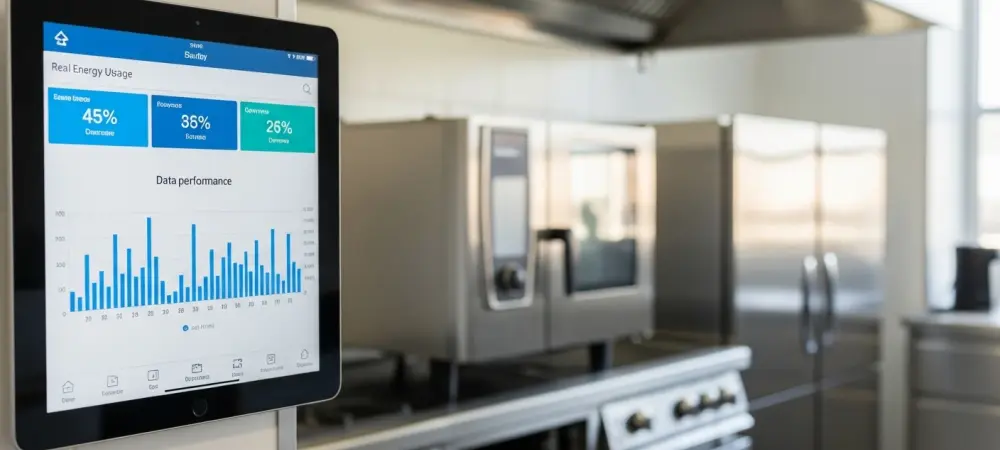
Setting up a robust alert system begins with installing hardware sensors directly onto refrigeration units and cooking gear to establish a baseline of “normal” operational behavior. Once the sensors are synced with a central AI dashboard, managers should configure threshold alerts that trigger a mobile notification the moment a fridge temperature drifts outside of the safe zone, preventing costly food spoilage. For cooking equipment, the primary metrics to watch are the “time-to-temp” and the duration of idle periods between peak service hours. By analyzing these data points, a manager can identify if an oven is being preheated 45 minutes earlier than necessary or if a range is left on high during a mid-afternoon lull. This step-by-step visibility transforms the kitchen from a “set it and forget it” mindset to a precision-managed operation.
Submetering involves placing sensors on individual appliances to find hidden waste. What are some common anomalies, such as faulty dishwasher timers or open cooler doors, that this data uncovers, and how should a team respond when they receive a mobile energy alert?
Submetering is like giving each appliance its own voice, and often those voices reveal that equipment is malfunctioning in ways the human eye can’t see. For instance, the data might show a dishwasher is drawing power for twenty minutes longer than its cycle should last, signaling a faulty timer or a sticking valve. It can also catch a cooler door that didn’t seal properly overnight, which would otherwise result in a massive spike in energy use and potential inventory loss. When a team receives a mobile alert, the response should be immediate and documented: first, verify the physical state of the machine, then check the dashboard to see if the power draw returns to zero or a baseline level. This proactive approach ensures that minor mechanical glitches don’t turn into catastrophic equipment failures or five-figure energy bills.
Many kitchens waste energy by idling equipment during slow periods. How can AI analyze sales patterns and customer trends to automate preheat schedules for a lunch rush, and what are the long-term benefits for the equipment’s lifespan when these systems power down?
AI is incredibly adept at recognizing that a lunch rush might consistently start at 11:30 a.m., allowing it to automate the startup of heavy-duty equipment so it is ready exactly when the first ticket prints. By syncing with Point of Sale (POS) data, the AI learns when to power down systems during the afternoon slump, saving both gas and electricity that would otherwise be wasted on an empty kitchen. Beyond the immediate utility savings, these automated power-down cycles significantly reduce the wear and tear on heating elements, fans, and compressors. By avoiding unnecessary hours of operation, you effectively extend the lifespan of your gear, delaying the need for expensive capital replacements and reducing the frequency of emergency repairs. It turns energy management into a long-term asset protection strategy.
High-capacity gear is not always necessary for every operation. How does analyzing past volume and covers help in right-sizing new equipment like convection ovens, and what role do utility rebates play in making these high-efficiency upgrades more affordable?
Analyzing historical data on covers and sales volume allows an operator to see if they are actually utilizing the full capacity of their high-output gear, or if a smaller, more efficient model would suffice. For a bakery, this might mean realizing that a smaller convection oven with smarter settings can handle the same volume as a massive, aging unit while drawing half the power. Right-sizing is the most effective way to ensure you aren’t paying to heat empty space, and AI makes these calculations incredibly accurate by looking at peak versus average demand. Furthermore, many utility companies offer substantial rebates for upgrading to energy-efficient appliances, which can offset the higher initial cost of smart technology. These financial incentives, combined with the lower operating costs, usually result in a very short payback period for the investment.
Tracking KPIs like kilowatt-hours per meal served can motivate a team to save energy. How can managers use these analytics to set targets or compare different locations, and what are the best ways to train staff to move more efficiently?
By establishing a KPI like kilowatt-hours per meal served, managers turn invisible energy waste into a tangible number that the whole team can understand and improve upon. You can use these analytics to run friendly competitions between different locations or shifts, setting monthly targets for energy reduction and sharing the results on a digital leaderboard. Training staff becomes much easier when you can show them a graph of how a simple habit, like closing the walk-in door immediately, directly impacts the kitchen’s performance metrics. Anecdotally, when staff see that their efforts lead to a “greener” operation, it often boosts morale and encourages them to find other ways to move more efficiently through their prep routines. Data provides the objective proof needed to turn a vague request to “save power” into a focused, team-wide mission.
What is your forecast for the role of AI in commercial kitchens?
I believe AI will move from being a specialized “add-on” to becoming the central nervous system of every modern commercial kitchen. We are heading toward a future where the kitchen environment is fully autonomous, where appliances communicate with each other to load-balance power draw and prevent surges that hike up peak-demand charges. Beyond just saving energy, AI will integrate food waste tracking, automated inventory ordering, and predictive maintenance into a single interface that allows chefs to focus entirely on the culinary art. Eventually, a kitchen that isn’t running on an AI-driven efficiency platform will find it nearly impossible to remain profitable in an industry with such razor-thin margins and rising utility costs. It won’t just be about being “high-tech”—it will be about operational survival.