

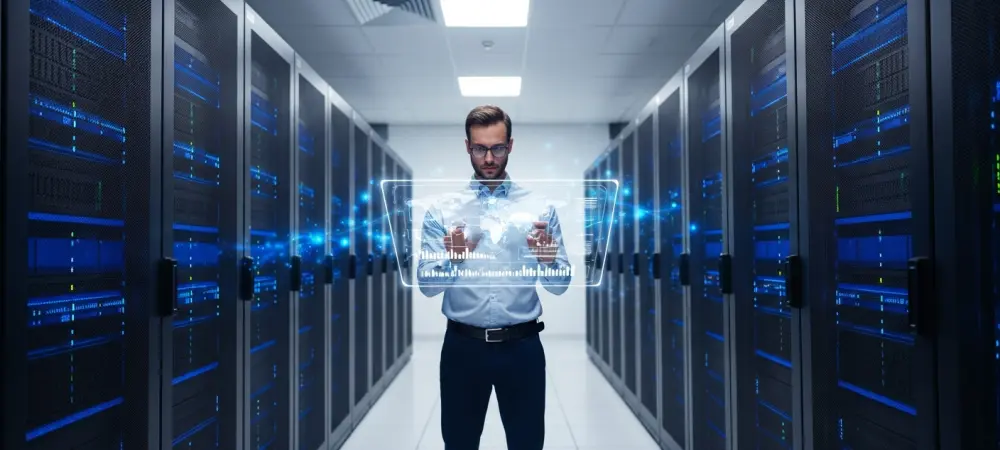
The transition from traditional IT help desks to sophisticated agentic frameworks represents a fundamental reimagining of how digital infrastructure maintains its health and reliability without constant manual oversight. In the previous era, artificial intelligence functioned primarily as a sophisticated suggestion engine, where basic chatbots could identify a problem but lacked the permission or capability to fix it. This required a human technician to interpret the data and execute the necessary repairs, creating a bottleneck that slowed down enterprise productivity. Today, the rise of agentic AI has introduced a high degree of agency, allowing systems to act independently to resolve complex issues across a wide range of software environments. This shift marks the end of the purely reactive help desk, as organizations transition toward a self-healing model where technical glitches are addressed before the end-user even notices a performance drop. Consequently, the role of IT support has evolved from fire-fighting to strategic orchestration.
Structural Shifts: Understanding User-Facing and Technician-Facing Agents
Modern agentic systems operate through a bifurcated approach that addresses both the immediate needs of the end-user and the underlying health of the network. User-facing agents serve as the primary point of contact, utilizing advanced natural language processing to understand nuanced employee requests and perform live system diagnostics. These agents do not merely provide a link to a knowledge base article; they possess the authorization to manipulate local settings, update drivers, and reconfigure application permissions on the fly. This level of autonomy ensures that common issues, such as credential synchronization or software installation errors, are resolved in real-time. By acting as a digital concierge, these agents eliminate the friction of ticket submission and waiting periods, maintaining a seamless workflow for the workforce. The technology has matured to a point where the distinction between a human specialist and a digital agent is increasingly defined by the complexity of the judgment required. Complementing these frontline tools are technician-facing agents that monitor the broader enterprise ecosystem from the background. These systems are designed to analyze massive datasets across thousands of endpoints to identify emerging patterns that might indicate a systemic failure or a security vulnerability. Instead of simply alerting a human to a problem, technician-facing agents prepare and test executable scripts to rectify the issue across the entire fleet of devices. This “human-in-the-loop” architecture ensures that while the AI performs the exhaustive labor of scanning and patching, a human expert retains final oversight for high-risk operations. This partnership allows for a scale of maintenance that was previously impossible, as a single technician can now manage a fleet that would have formerly required an entire department. The synergy between these two types of agents creates a comprehensive support layer that is both deep in its technical execution and broad in its operational coverage.
Economic Impact: Labor Recalibration and Operational Speed
The integration of autonomous support agents has fundamentally altered the economic landscape of managed IT services by drastically reducing the time and labor required for maintenance. In the current market, speed is the primary metric of success, and agentic AI provides an immediate response capability that human-led teams cannot match. When a system can detect and repair a corrupted database file or a failing network connection in seconds, the cost of employee downtime is virtually eliminated. Businesses that have fully embraced these autonomous workflows report that nearly half of their historical service volume is now handled without any human intervention. The focus has shifted from the number of problems solved to the total uptime maintained, rewarding providers for creating stable environments rather than just reacting to failures as they occur.
Furthermore, the labor costs associated with large-scale IT contracts are being redirected toward high-value strategic initiatives and cybersecurity hardening. Instead of paying for a large tier-one support staff to reset passwords and troubleshoot basic connectivity, companies are reinvesting those savings into senior architects who can design more resilient digital infrastructures. This recalibration of the workforce does not necessarily lead to a reduction in headcount, but rather a significant elevation of the technical bar. Human experts are now tasked with supervising AI performance, managing complex integrations, and ensuring that automated processes align with the long-term business goals of the enterprise. This shift has turned IT support from a cost center into a strategic asset that directly contributes to the agility and competitiveness of the firm. As these systems continue to evolve through 2027 and 2028, the gap between automated and manual organizations will likely become an insurmountable competitive divide.
Strategic Integration: Navigating Risks and Governance
While the advantages of agentic AI are undeniable, the transition involves navigating significant implementation risks that can undermine the perceived value of the technology. Many enterprises have historically struggled when they attempted to “bolt” AI onto existing, inefficient workflows rather than redesigning those processes from the ground up. If an organization applies a high-speed autonomous agent to a broken or redundant procedure, the result is often a faster execution of errors rather than a resolution of the core problem. The most successful implementations have focused on cleaning and standardizing technical workflows before introducing agentic tools. This ensures that the AI has a clear, logical path to follow and that the data it uses for decision-making is accurate and reliable. Stakeholders must prioritize process integrity over the mere acquisition of new software, as the quality of the underlying logic is what determines the ultimate success of the automation. To maintain a secure and compliant environment, business leaders also developed rigorous protocols for strategic oversight and human intervention. In industries with high regulatory burdens, such as finance or healthcare, the risks of an automated error carry heavy legal and operational consequences. Therefore, organizations must demand transparency in how AI agents make decisions and provide clear “kill-switch” mechanisms for human technicians to take control during critical failures. Evaluating IT providers now requires a focus on the AI’s ability to act within defined boundaries rather than just its ability to offer recommendations. This approach has led to the development of sophisticated governance frameworks where automated actions are logged, audited, and reviewed for continuous improvement. By establishing these guardrails, companies ensured that their pursuit of efficiency did not come at the expense of security or accountability. The focus remained on building a partnership where software managed the volume while human insight drove the strategy.
Optimized Results: Lessons From the Transition to Autonomous Support
The adoption of agentic AI within the IT sector proved to be a pivotal shift that rewarded those who prioritized action over simple automation. Organizations that successfully integrated these systems moved beyond the pilot phase by focusing on measurable outcomes like mean time to resolution and total cost of ownership. These leaders recognized that the value of an AI agent was not in its conversational ability, but in its capacity to execute technical fixes without human prompts. They also established clear career paths for their IT staff, transitioning them from manual troubleshooters to systems orchestrators who managed the digital agents. The transition demonstrated that technology was most effective when it augmented human expertise rather than merely attempting to simulate it through basic scripts. This transformation allowed the human workforce to engage in more creative and complex problem-solving, which improved both job satisfaction and the overall quality of service. Moving forward, the primary challenge shifted from technical feasibility to the continuous optimization of the agent-human partnership. Businesses discovered that maintaining an edge required constant refinement of the data sets that fueled their AI models. They also realized that the most effective next step was to expand agentic capabilities into more specialized domains, such as cloud resource management and predictive security analytics. The historical data collected from these early implementations served as a roadmap for future scaling, highlighting where automation provided the highest return on investment. By looking back at the initial hurdles of integration, companies identified that clear communication and rigorous testing protocols were the most critical factors for long-term success. The resulting environment was one where IT support became a silent, highly efficient engine that powered business growth with minimal friction. This evolution set a new standard for operational excellence that continued to shape the industry landscape.