

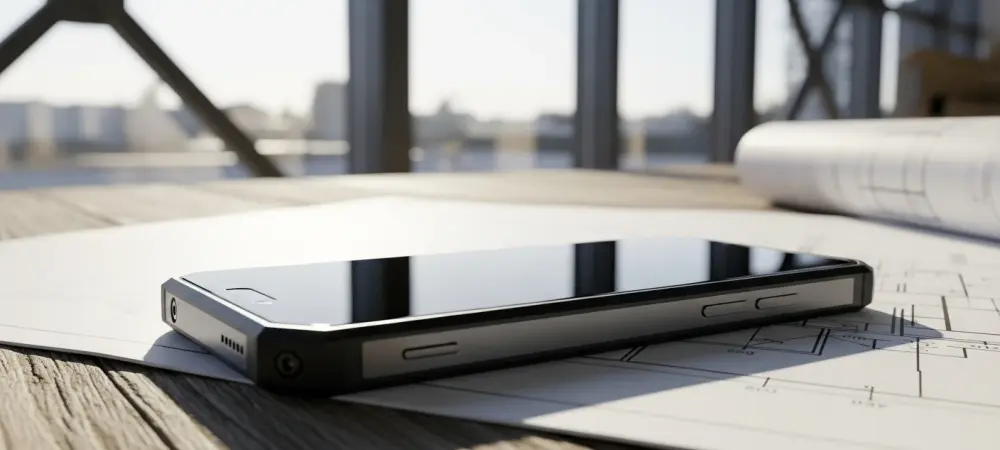
Most modern consumers are tired of the daily ritual of hunting for a charger before dinner, but the latest release from Honor aims to break that cycle entirely by prioritizing endurance over aesthetics. This shift toward ruggedized utility represents a pivotal moment for the European mid-range market, which typically favors slim profiles over physical durability.
By focusing on a specialized hardware suite, the device addresses the growing demand for reliability in harsh environments. This strategy distinguishes it from competitors that prioritize high-speed processing but fail under physical stress or heavy battery drain.
Introduction to the Honor 600 Smart and the Ruggedized Mid-Range Segment
The device introduces a design philosophy centered on structural integrity and long-term mobile autonomy. While many smartphones struggle to survive a single workday, this model aims for nearly a week of standby performance.
Its arrival in the European landscape signals a move away from the frequent replacement cycles found in flagship categories. This trend emphasizes the importance of hardware that can withstand environmental challenges without sacrificing modern connectivity.
Core Technical Specifications and Hardware Components
The internal architecture balances energy efficiency with the physical demands of outdoor use. Every component is chosen to minimize power draw while maintaining the steady performance required for modern communication. Integrating high-performance sensors with a reinforced chassis allows for a unique blend of safety and productivity. This duality ensures that the phone serves as both a communication hub and a resilient tool.
High-Capacity Battery Engineering and Power Management
A massive 7,700mAh battery provides up to 93 hours of use, setting a new standard for mid-range longevity. The 45W fast-charging system allows users to recover significant power quickly despite the cell’s vast capacity.
Sophisticated power management software further extends life by optimizing background tasks. This engineering reduces the frequency of charging cycles, ultimately preserving the chemical health of the battery over several years.
Structural Resilience and Industrial Certification
Swiss SGS certification guarantees the device can survive drops from 2.5 meters onto hard surfaces. Such resilience is rare for a device that maintains an 8.3mm thickness, proving that durability does not require excessive bulk. The IP-rated submersion protection further safeguards the internal electronics against water damage. This level of protection makes the hardware suitable for professional settings where traditional smartphones would likely fail.
Processing Architecture and Memory Configuration
The Snapdragon 4 Gen 4 chipset provides efficient 5G connectivity while managing thermal output. Although the physical RAM is limited, “RAM Turbo” technology utilizes internal storage to expand multitasking capabilities during heavy workloads.
This configuration ensures that sub-6GHz speeds are accessible without draining the high-capacity battery. The result is a consistent user experience that prioritizes uptime and network stability over peak gaming benchmarks.
Display Technology and Audio Integration
A 6.87-inch LCD offers high visibility with a peak brightness of 1,020 nits for outdoor legibility. However, the 720p resolution is a notable trade-off, prioritizing energy savings over the pixel density found in premium displays. To complement the large screen, stereo speakers provide a 400% volume boost for clear communication in noisy environments. This audio capability is essential for users in industrial or emergency service sectors who rely on voice clarity.
Emerging Trends in Mobile Utility and User Accessibility
The inclusion of a dedicated physical AI button reflects a trend toward immediate hardware-level accessibility for digital assistants. This allows for hands-free operation in scenarios where screen interaction is difficult or impractical. Furthermore, the “quiet launch” strategy in regional markets like France highlights a shift toward targeted hardware deployment. Manufacturers are increasingly catering to specific professional demographics rather than pursuing a one-size-fits-all global approach.
Real-World Applications and Targeted Industry Deployment
In sectors like outdoor construction and logistics, the device functions as a critical piece of equipment. Workers benefit from a handset that survives accidental drops on-site while maintaining constant 5G contact with dispatch centers.
Emergency services and remote fieldwork also find value in the extreme battery endurance during long shifts. These applications prove that specialized hardware can solve logistical problems that standard consumer phones cannot.
Technical Constraints and Market Adoption Challenges
Despite its strengths, the 720p display resolution remains a hurdle for users accustomed to sharper visuals. This lower pixel density, combined with non-expandable 128GB storage, may limit its appeal to the general consumer market.
Engineers must continue to refine the balance between battery size and ergonomic comfort to avoid making the device feel cumbersome. Overcoming these limitations is necessary to transition rugged technology from a niche tool to a mainstream choice.
Future Outlook for Durable Mobile Technology
The next generation of durable devices will likely adopt 4nm chipsets to further enhance efficiency and thermal management. Future displays may also integrate high-refresh-rate panels that do not compromise the ruggedized nature of the glass. Advancements in battery chemistry will eventually allow for even higher capacities in thinner form factors. These developments suggest a future where high-endurance devices could significantly extend the standard consumer electronics replacement cycle.
Summary and Final Assessment
The evaluation of this hardware revealed a successful prioritization of endurance over traditional aesthetic benchmarks. It proved that a specialized mid-range tool could offer unique value by focusing on battery life and physical toughness.
The analysis suggested that the industry moved toward sustainable usage models where reliability was the primary selling point. Organizations looking to deploy mobile fleets should have prioritized these durable specifications to minimize long-term maintenance and replacement costs.