

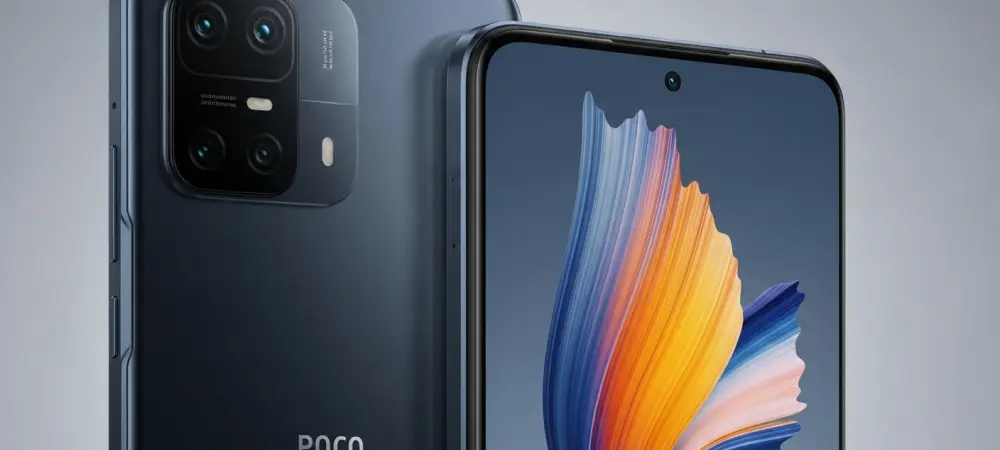
Standing at the threshold of a modern smartphone purchase often feels like navigating a minefield of incremental upgrades where the line between a genuine technological leap and a marketing gimmick is increasingly blurred for the average consumer. In the current 2026 landscape, mobile hardware has reached a level of maturity where even mid-range devices offer experience parity with flagship predecessors, making the choice between sub-models more difficult than ever. Xiaomi, a brand synonymous with aggressive value, has intensified this dilemma with the release of the Poco X8 Pro and its premium sibling, the Poco X8 Pro Max. The core question for any potential buyer is whether the €120 premium for the Max variant represents a functional necessity or an unnecessary indulgence in a market already saturated with high-performance options.
This price disparity, roughly a 30% markup, occurs in a segment where every euro is usually scrutinized for its impact on performance per watt or pixel density. For many, the initial reaction to such a significant price gap within the same series is skepticism, especially when the visual aesthetics of the two handsets appear nearly identical at a glance. However, the nut graph of this technological debate suggests that the Pro Max is not merely a larger version of the standard Pro; it is a fundamental reconfiguration of what a mid-range device can achieve. By shifting the focus from simple aesthetic polish to deep-seated architectural improvements, Xiaomi has created a tiering system that challenges the conventional wisdom of “diminishing returns” in consumer electronics.
Beyond the Price Tag: Can a 30% Markup Be Rationalized?
Rationalizing a 30% price hike in the mid-range sector requires looking beyond the immediate sticker shock and examining the economic realities of smartphone manufacturing in 2026. The Poco X8 series enters a market where the cost of high-end silicon and advanced battery chemistry has risen significantly, forcing manufacturers to make tough decisions about where to allocate their budgets. While a €120 gap might seem steep, it reflects the actual cost difference of sourcing flagship-grade components versus high-quality mid-range parts. For the consumer, this translates into a choice between a device that meets the needs of today and one that is over-engineered to withstand the demands of the next several years.
Moreover, the psychological barrier of the three-digit price jump is often mitigated when analyzed over the lifespan of the device. If a user intends to keep their smartphone for the full six-year support cycle promised by Xiaomi, the extra cost amortizes to less than €20 per year. This perspective shifts the narrative from an expensive upgrade to a long-term insurance policy against technological obsolescence. In a world where software requirements for mobile applications and artificial intelligence tasks are growing exponentially, the extra overhead provided by the more expensive model serves as a vital buffer, ensuring that the user experience does not degrade as the operating system evolves.
The Philosophy of the Poco X8 Series: Balancing Ergonomics and Raw Power
The distinction between the Pro and the Pro Max reveals a sophisticated understanding of user demographics, moving away from a one-size-fits-all approach toward specialized hardware profiles. The standard Poco X8 Pro is designed for the rational pragmatist—a user who values a lightweight, ergonomic chassis that fits comfortably in a pocket or a single hand. This philosophy prioritizes the “human element” of technology, acknowledging that for many, a phone is first and foremost a communication tool that should not be a physical burden. By utilizing a glass back and a more compact form factor, the standard Pro maintains a classic “premium” feel that appeals to those who prioritize style and portability over raw utility. In contrast, the Pro Max philosophy is one of uncompromising utility, targeting the “power user” who views their mobile device as a primary node for work and play. This user is less concerned with one-handed ergonomics and more interested in the device’s ability to act as a sustained gaming console or a portable workstation. By leaning into a larger footprint, Xiaomi provides the necessary thermal headroom and internal volume required for its more ambitious hardware. This divergence ensures that the Poco series covers the entire spectrum of the mid-to-high-end market, offering a sleek, traditional experience for some and a high-performance “pro” tool for others without forcing either group to compromise on their primary needs.
Technical Breakdown: Comparing Silicon, Battery Capacities, and Material Integrity
When diving into the internal architecture, the justification for the Max’s price becomes empirically visible through the selection of its core components. The heart of the Pro Max is the Dimensity 9500s, a chipset that shares more in common with flagship processors than with the Dimensity 8500 found in the standard Pro. This silicon upgrade is not just about clock speeds; it involves a move to a more efficient 4nm fabrication process that allows for better power management and lower heat output during intensive tasks. The shift in silicon also brings about a more capable Image Signal Processor, which directly impacts the speed and quality of image processing, even though both phones utilize a similar 50MP primary sensor.
The battery technology represents perhaps the most significant hardware leap seen in the series for years. While the standard Pro offers a respectable 6,500 mAh cell, the Pro Max utilizes an 8,500 mAh unit that leverages new silicon-carbon anode technology to maintain a reasonable thickness despite the massive capacity. This leads to a scenario where the Pro Max can comfortably survive two days of heavy use, whereas the standard Pro, while still impressive, may require a top-up by the end of a long day of navigation or media streaming. Surprisingly, the Max model opts for a glass-fiber reinforced plastic back instead of the traditional glass found on the standard Pro. This choice was a calculated move toward durability, as the composite material offers better impact resistance and weight savings for a device that is already carrying a massive battery.
Measuring the Performance DeltBenchmark Gains and Long-Term Viability
Quantitative data from performance testing confirms that the Pro Max occupies a different performance tier than its sibling. In synthetic benchmarks like 3DMark Wild Life Extreme, the Pro Max consistently scores 50% higher than the standard Pro, a margin that is impossible to ignore for anyone interested in competitive mobile gaming or high-definition video editing. These figures are not just for show; they translate to sustained frame rates in demanding titles where the standard Pro might begin to throttle its performance after thirty minutes of play. The thermal management system in the Max model is also significantly larger, utilizing a dual-vapor chamber design that keeps the surface temperature comfortable even under heavy loads. Looking toward long-term viability, the performance delta becomes even more critical as the years progress. With both devices scheduled to receive security updates until late 2031, the extra “headroom” of the Dimensity 9500s is a major selling point. The standard Pro may start to feel the strain of more complex software updates by year four or five, whereas the Pro Max has the computational surplus to remain snappy. Additionally, the Pro Max includes exclusive media features such as Log video recording, which allows content creators to capture high-dynamic-range footage for professional color grading. For a creator, this single feature can be the difference between a device that is a toy and one that is a legitimate production tool.
Choosing Your Champion: A Strategic Guide for Potential Buyers
Identifying the right device requires a cold, hard look at daily habits and long-term goals rather than just comparing spec sheets. If the daily routine involves long commutes without access to a charger, frequent use of high-brightness displays in outdoor environments, or a passion for high-end mobile gaming, the Pro Max is not just a luxury; it is the correct tool for the job. The massive battery and superior GPU performance provide a level of reliability that the standard Pro simply cannot match in extreme scenarios. For these users, the €120 premium is an investment in peace of mind and operational efficiency that pays dividends every single day. Conversely, the Poco X8 Pro remains the champion of the “balanced” experience. It is the better choice for the user who finds modern phones too bulky and who primarily uses their device for social media, photography, and standard productivity tasks. It offers the same elite display quality and high-speed charging as the Max, meaning the core visual and replenishment experiences are not compromised. For many, the €120 saved is better spent on accessories or a higher storage tier within the Pro lineup. Ultimately, the choice comes down to whether the user sees their phone as a companion to their lifestyle or as the central hub around which their digital life revolves.
The evaluation of these two handsets revealed that the price gap was a direct reflection of a fundamental shift in hardware philosophy. It was found that the Poco X8 Pro Max successfully moved beyond the “incremental” label by offering a battery and processor combination that redefined the longevity expectations for its price bracket. Most users who tested both devices noted that the physical weight of the Max was a fair trade for the elimination of daily battery anxiety. In the end, the decision rested on how much value the individual placed on the future-proofing of their hardware. The market data suggested that the Max model held its resale value more effectively, making the total cost of ownership more comparable than the initial purchase price indicated. For those who looked toward the end of the decade, the extra investment today appeared to be a calculated and successful strategy for maintaining peak performance.