

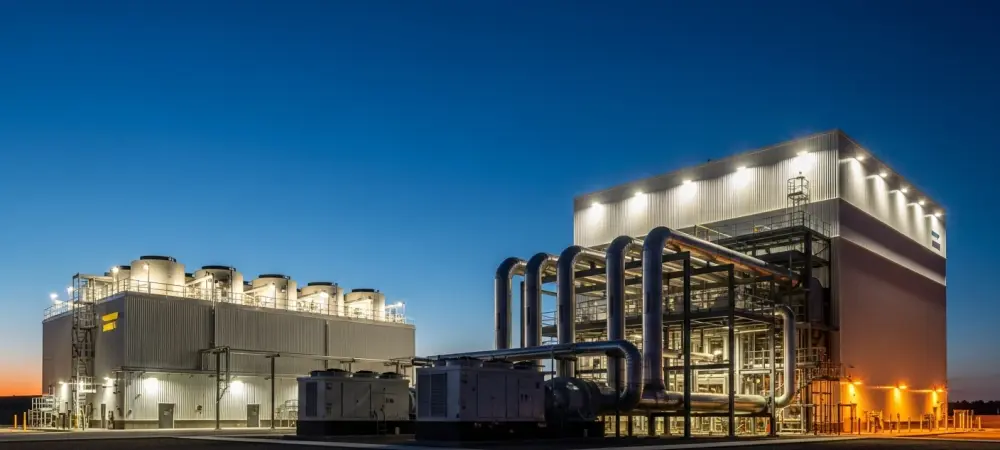
In the sprawling plains of North Texas, a new kind of power plant is rising from the ground, one designed not to light up cities but to illuminate the future of artificial intelligence. As the digital world races to build ever more powerful AI systems, the physical infrastructure supporting them is straining under the load. This has given rise to an audacious solution from Houston-based GridFree AI: a massive data center campus that generates its own power, completely severing its dependence on an already overburdened public electrical grid. The launch of its first site marks a pivotal moment, signaling a fundamental shift in how the industry will fuel the next technological revolution.
When the Public Power Grid Can No Longer Keep Up
The unprecedented energy demand of artificial intelligence has created a direct conflict with the inherent limitations of traditional power infrastructure. The complex models underpinning modern AI require vast amounts of computational power, which in turn consumes electricity on a scale previously unseen. This insatiable appetite is pushing public utility grids, many of which were designed decades ago, to their breaking point. The result is a growing chokepoint that threatens to slow the pace of technological advancement.
In response to this looming crisis, a new breed of data center is emerging. These facilities are not merely consumers of energy but are designed as self-sufficient ecosystems, generating their own power on-site. By operating “behind the meter,” they bypass the public grid entirely, creating a resilient and scalable power source dedicated solely to their computational needs. This strategy of energy independence is rapidly moving from a niche concept to a mainstream solution for hyperscalers and cloud providers seeking to secure their future growth.
The Power Dilemma of AI’s Insatiable Growth
The primary obstacle stifling AI expansion is an energy bottleneck. Public grids are constrained, and the process for securing new, large-scale power connections can take multiple years, creating untenable delays for companies eager to deploy new AI infrastructure. This waiting game has forced a paradigm shift within the data center industry, compelling it to evolve from being a passive energy consumer to an active and strategic energy producer.
This evolution is not just a matter of convenience but of necessity. The consequences of the power shortage are tangible, threatening to slow the development of cutting-edge AI technologies that industries from healthcare to finance increasingly rely on. Moreover, the strain that massive data centers place on public utilities can lead to increased electricity costs for surrounding residential and commercial communities, making privately powered solutions a more sustainable long-term option.
Inside the Power Foundry at South Dallas One
GridFree AI’s answer to this challenge is its first “Power Foundry,” a grid-independent site named South Dallas One located in Hill County, Texas. This facility represents the first phase of a much larger vision: the South Dallas Cluster, a planned three-site campus projected to command a staggering gross power capacity of nearly 5 GW. Each site is engineered to deliver over 1.5 GW, specifically designed to support the high-density computing workloads that modern AI demands.
The facility’s “behind-the-meter” strategy is powered by US-produced natural gas, which fuels on-site generators to create a private, resilient energy source. This approach not only guarantees uninterrupted power but also addresses environmental concerns through innovative engineering. The campus utilizes an industrial-grade chilled water cooling system, a closed-loop design that efficiently dissipates heat without depleting precious local water resources, a critical consideration in a state like Texas.
Texas as the New Epicenter for Data Center Innovation
The decision to build such an ambitious project in Texas is no coincidence. As highlighted by market data from VoltaGrid’s Dave Bell at the recent Data Center World conference, the state has rapidly become the new epicenter for data center development. Texas now accounts for 15% of all U.S. data center connectivity and a remarkable 24% of all projects currently in the development pipeline, firmly establishing its dominance in the sector.
This data-driven shift is supported by staggering projections, with experts anticipating that Texas will add between 20 and 40 GW of data center load by 2035, an expansion that dwarfs the 5 to 10 GW projected for traditional hubs like Virginia. This explosive growth has captured the attention of industry leaders and investors alike. As Adam Doneger of Newmark, the project’s exclusive marketer, noted, GridFree’s model directly answers the market’s core needs for “speed, power, and reliability.” The involvement of Goldman Sachs Group as a co-leader for financing further signals strong institutional confidence in this grid-independent approach.
A New Blueprint for Powering Artificial Intelligence
The grid-independent blueprint pioneered by facilities like South Dallas One offers a strategic advantage by dramatically accelerating deployment. By generating power on-site, the model slashes project timelines to just 24 months from lease signing, a fraction of the time required for traditional grid-connected sites that face lengthy approval and construction queues. This speed is a critical differentiator in the fast-paced world of AI development.
Beyond speed, this model provides unparalleled resilience and reliability. Decoupling from the public grid grants immunity to blackouts, brownouts, and other forms of grid instability, ensuring that mission-critical AI operations can run continuously without interruption. This level of dependability is essential for the hyperscalers and cloud providers that power the global digital economy.
Finally, the framework presents a scalable and community-friendly path forward. The Power Foundry concept is a repeatable solution that can be deployed wherever AI capacity is needed, without placing an additional burden on public utilities. By creating its own energy, the facility helps prevent strain that could lead to electricity price hikes for local residents and businesses, positioning it as a responsible partner in community growth. This model established a new standard for powering the future of computation, proving that the immense energy needs of AI could be met without compromising public resources.