

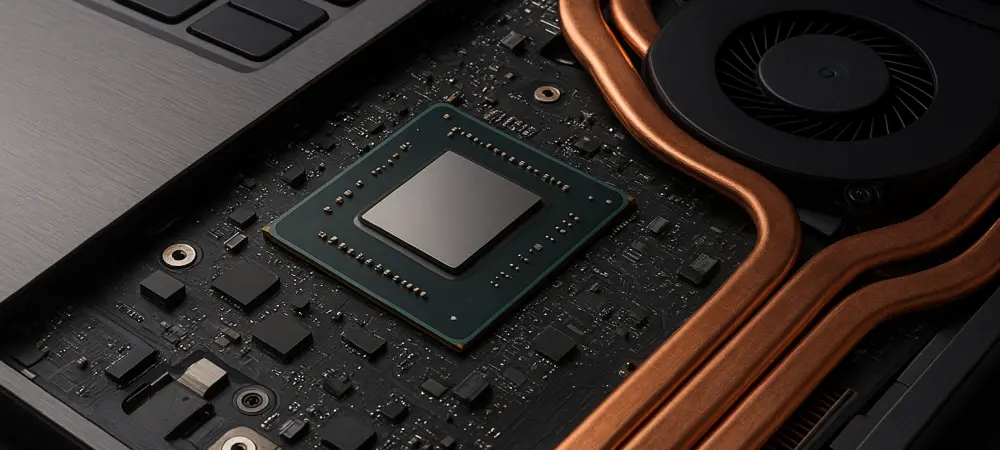
Software developers currently face significant hurdles due to a lack of standardization across different AI hardware platforms, requiring custom code for various chipsets. As computing demand shifts from massive data centers to local devices, this friction has ignited a high-stakes competition between the established power of Graphics Processing Units (GPUs) and the lean efficiency of Neural Processing Units (NPUs). The global technology sector stands at a crossroads where every millisecond of latency and every milliwatt of power consumption determines the market viability of a product. In the current 2026 cycle, users no longer accept delayed cloud-based responses; they expect immediate intelligence embedded within their smartphones, vehicles, and smart home ecosystems. This evolution necessitates a deep dive into the underlying silicon that drives these experiences. While the GPU has long been the backbone of generative AI models, the NPU is rapidly becoming the silent architect of personal user experiences in this modern landscape.
The Role of High-Performance Parallelism
The Foundational Strength of Graphics Hardware
The historical dominance of the Graphics Processing Unit stems from its accidental alignment with the mathematical requirements of neural networks. Originally designed to calculate millions of pixel coordinates for three-dimensional video games, the GPU architecture excels at parallel processing, a feat that traditional central processors struggle to replicate. Instead of executing one instruction at a time with extreme speed, a GPU breaks down massive datasets into smaller chunks and processes them simultaneously across thousands of smaller, more efficient cores. This capability proved revolutionary for the training of deep learning models, where billions of parameters must be adjusted through repetitive matrix multiplications. Today, leading manufacturers have refined this parallel architecture into specialized tensor cores that specifically accelerate the mathematical operations required for modern generative AI and computer vision. This legacy of performance ensures that the GPU remains the primary choice for any complex training environment.
Ecosystem Barriers and Market Dominance
Beyond individual hardware performance, the ecosystem surrounding the GPU has created a significant moat for established silicon giants. The development of robust software frameworks has allowed researchers to fine-tune their algorithms to exploit every cycle of GPU power, making it the default environment for large-scale AI research. In the current market, spanning from 2026 to 2028, data center demand for these high-throughput processors continues to surge as companies aim to build increasingly sophisticated large language models. These server-side environments prioritize raw performance and memory bandwidth over energy conservation, allowing the GPU to flex its muscles without the constraints of a battery. This scalability is vital for enterprise-level applications where throughput is the ultimate metric for success. However, as the focus shifts toward the consumer edge, the sheer power requirement of these massive chips has become a bottleneck that researchers are forced to address through constant architectural innovation.
The Rise of Specialized Efficiency
Strategic Specialization in Neural Processing
The Neural Processing Unit represents a radical departure from the general-purpose design philosophy, focusing exclusively on the specific math of artificial intelligence. While a GPU is a versatile athlete capable of many sports, an NPU is a specialized sprinter designed for one task: the efficient execution of pre-trained models. This specialization allows the hardware to bypass the overhead associated with general graphics rendering or logic management, focusing entirely on multiplying matrices and applying activation functions. By optimizing the data pathways for these specific operations, NPUs achieve an efficiency rating that GPUs cannot match in mobile environments. This architectural focus is particularly evident in the current generation of mobile silicon, where the NPU handles tasks like real-time video bokeh and voice synthesis with minimal thermal impact. This efficiency is the cornerstone of Edge AI, enabling sophisticated features to run locally without tethering the user to a cloud server or a heavy battery.
Transforming Privacy in Consumer Electronics
Integrating NPUs into consumer electronics has fundamentally changed the relationship between user data and artificial intelligence. By performing inference—the process of running an AI model—directly on the device, these chips eliminate the need to transmit sensitive personal information to remote data centers. This local processing loop enhances privacy while drastically reducing latency, as there is no round-trip delay to a server thousands of miles away. In 2026, features like on-device translation and biometric security rely almost entirely on this dedicated hardware to provide a seamless experience. Furthermore, the low power profile of the NPU allows these features to remain always-on, constantly listening for wake words or scanning for environmental changes without significantly impacting the device’s operational life. This persistent intelligence is a key differentiator in the modern hardware market, where the ability to offer proactive assistance without sacrificing longevity is the new gold standard for general satisfaction.
Navigating the Future of Hardware
Operational Trade-offs and Performance Metrics
Understanding the distinction between these two processors requires a look at the trade-off between precision and throughput. GPUs typically offer higher theoretical performance for broad, unoptimized tasks, making them the superior choice for the discovery and refinement of new AI techniques. In contrast, the NPU is designed to run specific, quantized models that have already been optimized for efficiency. This difference in application means that while a GPU might be faster at building an AI from scratch, the NPU is often more effective at using that AI in a real-world scenario. The industry has observed that for most daily tasks, the extreme performance of a GPU is not only unnecessary but detrimental to the device’s thermal profile. Consequently, silicon designers are increasingly prioritizing the integration of high-performance NPUs to handle the last mile of AI delivery. This strategic shift ensures that the heaviest computational loads remain in the cloud while the most interactive elements are handled locally.
The Integration of Hybrid Silicon Architectures
The convergence of these technologies has led to the rise of sophisticated System on a Chip architectures that utilize a hybrid processing strategy. In this model, the CPU, GPU, and NPU operate as a coordinated team, with a central scheduler delegating tasks to the unit best equipped to handle them. For example, during a high-end mobile gaming session, the GPU manages the complex lighting and textures, while the NPU simultaneously cleans up the voice chat audio and tracks user gestures. This collaborative approach maximizes the strengths of each processor while mitigating their individual weaknesses. As we look at the development roadmap for 2026 and beyond, it is clear that the future does not belong to a single processor type but to this intelligent orchestration of silicon resources. This synergy allows for a new class of ultra-portable devices that possess the power of a workstation and the battery life of a traditional mobile phone, bridging the gap between performance and portability in ways once thought impossible.
The Path Toward Integrated Intelligence
Stabilizing the Silicon Market Through Synergy
The transition toward a multi-processor ecosystem established a new paradigm for the technology industry, where specialization became the primary driver of innovation. Developers and engineers recognized that the sheer diversity of AI applications required a more nuanced approach than the one-size-fits-all model of the past. As these hardware platforms matured, the focus shifted from raw clock speeds to the intelligent distribution of workloads across various specialized units. This evolution helped stabilize the market, providing a clearer path for software designers to optimize their products for both power and performance. The synergy between the massive training capacity of the GPU and the efficient, localized inference of the NPU successfully bridged the gap between cloud intelligence and personal convenience. This historical adjustment allowed the tech sector to move past the initial growing pains of the AI era into a more mature development cycle that benefited both creators and the global consumer base.
Future Considerations for Pervasive Artificial Intelligence
Looking ahead, the industry shifted toward a landscape where hardware was no longer a limitation but an enabler of truly pervasive and invisible artificial intelligence. This shift ensured that every device became a high-performance assistant capable of meeting the complex needs of the modern digital landscape. Manufacturers focused on refining the interconnects between these specialized units to reduce data transfer bottlenecks, which further improved real-time responsiveness. The successful deployment of these hybrid systems meant that advanced neural networks could operate seamlessly in the background of everyday tasks. This progress underscored the importance of hardware diversity in achieving a more responsive and intelligent digital experience for global users. Ultimately, the coordinated evolution of the CPU, GPU, and NPU provided a robust foundation for the next generation of computing excellence that defined the logic of modern engineering and user interaction.