

Financial markets are closely watching the collaboration between HPE and NVIDIA to see if specialized orchestration hardware can justify the premium costs associated with AI factory deployments. The global push toward autonomous digital agents has exposed a critical flaw in traditional data center design: the speed of thought is currently limited by the speed of the bus. For the past several years, the industry narrative was dominated by the hunt for raw floating-point performance, leading to a massive over-investment in standalone GPU clusters. However, as 2026 progresses, the focus has shifted toward the efficiency of the entire system. Generative AI is transitioning from a passive tool into active agentic AI—systems capable of reasoning, utilizing external tools, and executing complex, multi-step workflows. This evolution requires a fundamental rethink of server architecture, as the bottleneck is no longer just how fast a model can calculate, but how quickly data can move between the various components. The HPE ProLiant Compute DL394 Gen12 represents the first major response to this reality, prioritizing orchestration over brute force math. By integrating the NVIDIA Vera CPU, HPE is signaling that the era of general-purpose x86 domination in the AI data center is coming to an end, replaced by specialized silicon designed to manage the chaos of agentic workloads.
The Architecture: NVIDIA Vera CPU
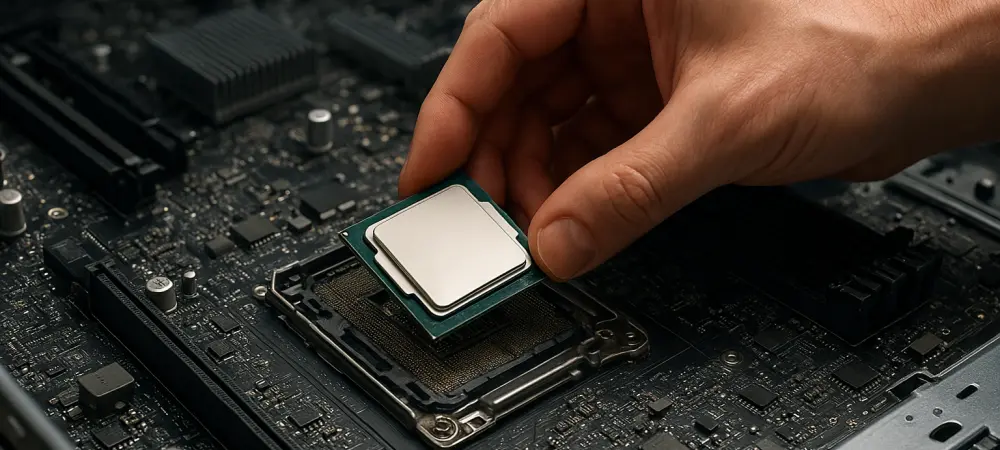
The heart of the DL394 Gen12 is the NVIDIA Vera CPU, a processor that fundamentally challenges the prevailing philosophy of server chip design. While the industry has recently gravitated toward chiplet architectures—where multiple small dies are interconnected to form a single processor—NVIDIA has opted for a monolithic design. This choice is deliberate and specifically targets the latency issues that plague agentic AI workloads. In a chiplet system, data often has to travel across internal interconnects that can introduce micro-delays or non-uniform memory access problems. For high-frequency trading or real-time autonomous reasoning, these nanosecond variances are unacceptable. The monolithic approach ensures that every core has predictable, equal access to the chip’s resources, providing the deterministic performance that mission-critical AI applications require. This architectural decision emphasizes consistency over the theoretical peak performance numbers that often look good on paper but fail to deliver in complex, real-world execution environments where every millisecond counts toward a final decision.
Beyond the core structure, the memory subsystem of the Vera CPU is arguably its most transformative feature. The system boasts an aggregate memory bandwidth of 1.2 terabytes per second, achieved through the use of high-efficiency LPDDR5X memory. This provides roughly 14 gigabytes per second for each of the 88 cores, a figure that dwarfs traditional x86 server configurations that rely on standard DDR5 modules. This massive throughput is designed to solve the problem of data starvation, where advanced processor cores sit idle while waiting for the memory controller to deliver the next block of information. In the context of 2026, where model sizes continue to expand and the complexity of retrieval-augmented generation increases, having a memory pipe this wide is no longer a luxury. It is the primary requirement for maintaining the fluidity of AI agents. By integrating this level of bandwidth directly into the CPU layer, the DL394 Gen12 ensures that the orchestration of data between the storage layer and the GPU accelerators remains seamless and uninterrupted.
How Agentic AI Redefines Server Performance
To understand the shift in hardware priorities, one must distinguish between traditional AI training and the modern requirements of agentic AI. Training is essentially a massive batch process where huge amounts of static data are processed to build a mathematical model. This is where high-density GPU racks thrive. Agentic AI, however, is a dynamic and iterative process. An agent receives a goal, breaks it down into steps, queries a database, runs a snippet of code, and then updates its internal state based on those results. This creates what engineers call a shuttling problem. The processor is constantly moving small, heterogeneous packets of data in and out of memory while switching between entirely different types of computational tasks. A general-purpose CPU, designed for legacy virtualization and standard web hosting, lacks the specific optimization needed for this type of rapid, context-heavy task switching. The Vera CPU addresses this by acting as the conductor of the system, managing these high-velocity data movements without the overhead typically associated with traditional server processors.
Furthermore, the transition to agentic systems means that the CPU’s role has expanded from simple housekeeping to active intelligence management. In previous server generations, the CPU was often just a gateway that handed off work to the GPU. In the 2026 landscape, the CPU must be able to perform complex reasoning tasks independently or in tight coordination with the accelerator. This orchestration layer is what allows an AI agent to handle multi-modal inputs, such as video and text simultaneously, without creating a processing queue that ruins the user experience. The DL394 Gen12 is built around this idea of a unified compute fabric where the distinction between the processor and the accelerator begins to blur. For the enterprise, this translates to faster response times for internal AI agents and more reliable performance in automated customer service or logistics management. The focus has moved from how many parameters a model has to how many actions an agent can take per second, a metric that the Vera architecture is uniquely positioned to maximize.
Managing the New AI Infrastructure
One of the most significant challenges for enterprises in 2026 is the operational complexity of managing specialized AI hardware. HPE has addressed this by integrating the DL394 Gen12 into its established management ecosystem, utilizing the seventh generation of its Integrated Lights Out technology. This is a critical development because it allows IT teams to treat these highly advanced AI nodes with the same level of administrative rigor they apply to their standard web and database servers. Rather than requiring a separate, specialized team to manage the AI infrastructure, the existing data center staff can use familiar tools like HPE Compute Ops Management to monitor thermals, power consumption, and firmware health. This reduction in the “management tax” is essential for companies that are trying to scale their AI operations from small pilot projects to enterprise-wide deployments. It effectively normalizes the presence of high-end AI silicon within the traditional corporate data center, reducing the friction usually associated with adopting cutting-edge technology.
The focus on operational integration also extends to the way these servers are deployed within private cloud environments. HPE is positioning the DL394 Gen12 as the foundation for its Private Cloud AI initiative, which aims to provide a turnkey solution for businesses that want the power of agentic AI without the security concerns of the public cloud. By providing a pre-validated stack of hardware and software, HPE is attempting to eliminate the months of integration work that typically accompany new AI builds. This strategy is particularly relevant for sectors like healthcare and legal services, where data sovereignty and privacy are paramount. The ability to manage these systems remotely and securely through a single pane of glass ensures that the focus remains on the output of the AI agents rather than the maintenance of the hardware. This holistic approach to management is what separates an enterprise-grade server from the specialized research clusters found in academic or laboratory settings, making it a more viable long-term investment for the average Fortune 500 company.
Competitive Strategies: A Divided Market
The server market in 2026 has fragmented into several distinct philosophical camps, each offering a different solution to the AI infrastructure puzzle. AMD has doubled down on its reputation for high-density compute with the Helios platform. This strategy focuses on packing the maximum number of GPUs—up to 72 in some configurations—into a single rack. This approach assumes that for hyperscalers like Meta or Google, raw power and density are the only metrics that matter. By utilizing their high-core-count EPYC processors as the supporting structure, AMD is targeting organizations that are still focused on massive model training and large-scale batch inference. While this delivers incredible throughput, it often comes at the cost of higher power consumption and the need for advanced liquid cooling systems, which can be a barrier for smaller or more traditional enterprises that do not have the facilities to support such intense hardware.
In contrast, Intel is attempting to dominate the inference market with its Crescent Island discrete GPUs and a more traditional component-based upgrade path. Intel’s strategy is built around the idea that most enterprises do not need to build their own models from scratch but instead need to run existing models as efficiently as possible. By offering GPUs that can be easily added to existing server designs, Intel provides a lower-cost, more flexible entry point for AI adoption. However, this component-focused model often struggles to overcome the data bottlenecks that occur when a traditional CPU and a discrete GPU are connected via standard PCIe lanes. This is precisely the gap that the HPE and NVIDIA partnership is exploiting with the Vera CPU. While Intel and AMD are refining existing concepts of density and modularity, the DL394 Gen12 represents a move toward a more integrated, purpose-built architecture that prioritizes the movement of data above all else, creating a clear dividing line in the 2026 competitive landscape.
Real-World Validation: The New York Stock Exchange Implementation
The most prominent validation of the DL394 Gen12’s architecture has come from the NYSE Group, which has integrated these servers into its massive data processing pipeline. For an organization that handles over 1.1 trillion messages every day, the primary challenge is not generating text or images, but managing a tidal wave of real-time streaming data. In this environment, latency is the ultimate enemy. Working in conjunction with Redpanda, a leading streaming data platform, the NYSE has utilized the Vera CPU’s massive memory bandwidth to ensure that messages are processed and routed with nanosecond precision. This implementation proves that the benefits of the Gen12 platform extend far beyond the narrow scope of generative AI. It is a high-performance engine for any workload where the speed of data orchestration and message throughput are the defining constraints of the system’s success.
The NYSE case study highlights the shift from experimental AI to industrial AI. When an agent is tasked with analyzing market movements and executing trades, the underlying hardware must be unfailingly consistent. The deterministic nature of the monolithic Vera CPU ensures that there are no unexpected “hiccups” in processing time that could lead to financial loss or regulatory issues. By moving away from general-purpose hardware that was never intended for this level of high-velocity orchestration, the NYSE has set a new benchmark for what modern financial infrastructure should look like. This deployment serves as a beacon for other industries—such as telecommunications and global logistics—that deal with similar data volumes and require the same level of reliability. It demonstrates that the investment in specialized AI-centric hardware provides tangible returns in the form of increased system resilience and the ability to handle larger data loads without a corresponding increase in infrastructure footprint.
Investor Sentiment: The Fall 2026 Horizon
The financial markets have responded with considerable enthusiasm to the HPE and NVIDIA collaboration, viewing the DL394 Gen12 as a potential catalyst for long-term growth. Throughout 2026, HPE’s stock has seen increased volatility as investors try to price in the success of the Vera CPU. Analysts have noted that while the initial excitement is high, the true test will be the widespread adoption of these systems across different vertical markets. There is a general consensus that the orchestration-first narrative is compelling, but the premium price point of the Gen12 servers means that the value proposition must be clearly demonstrated through operational savings and performance gains. Stocktwits and other financial platforms have become hubs for debating whether HPE can maintain its first-mover advantage or if competitors will quickly bridge the gap with their own specialized silicon.
However, a more nuanced look at the 2026 timeline suggests that the full financial impact of this partnership will not be realized until the next fiscal cycle. While the bare server hardware began shipping in late 2026, the complete Private Cloud AI software stack is not expected to reach full maturity until 2027. This creates a strategic gap where early adopters are currently building the foundation, but the mass-market “turnkey” revenue has yet to hit the balance sheet. For long-term investors, the focus is on the multi-year trajectory of the “AI Factory” concept. If HPE can successfully transition from being a hardware vendor to a platform provider, the margins associated with the Gen12 line could be significantly higher than those of previous server generations. The partnership with NVIDIA also provides a level of brand prestige that is difficult to quantify but essential for winning large-scale enterprise contracts in a market that is increasingly crowded with low-cost alternatives.
The Evolution: From Servers to AI Factories
A clear consensus has emerged among industry leaders that the era of purchasing servers as individual, disconnected components is ending. In 2026, the industry is moving toward the AI Factory model, where compute, storage, networking, and software are designed as a single, vertically integrated unit. This shift is driven by the fact that as AI models become more complex, the interactions between different parts of the stack become the primary source of inefficiency. By owning the entire ecosystem—from the Vera CPU and NVLink interconnects to the HPE management software—NVIDIA and HPE can optimize every step of the data’s journey through the system. This verticalization allows for levels of performance and energy efficiency that are simply impossible to achieve with a “mix-and-match” approach using components from different vendors.
This movement toward integrated factories also reflects a change in how businesses view their technology investments. In the past, servers were seen as a cost center, but in the era of agentic AI, they are viewed as a production facility for intelligence. The DL394 Gen12 is the flagship for this new era, designed to be the core engine of an enterprise’s intellectual output. This requires a shift in mindset for IT procurement teams, who must now evaluate hardware based on its ability to support an entire lifecycle of AI development and deployment. The “factory” approach simplifies this by providing a standardized, scalable architecture that can grow with the needs of the business. As more companies realize that the complexity of managing disparate AI systems is unsustainable, the demand for these integrated, purpose-built platforms is expected to accelerate, fundamentally changing the landscape of the global server market from 2026 onward.
Anticipating the Response: Market Shifts in 2027
As the industry prepares for 2027, the pressure on competitors to respond to the high-bandwidth orchestration narrative is mounting. AMD and Intel cannot afford to let the HPE-NVIDIA alliance define the standards for agentic AI hardware. It is highly likely that the next twelve to eighteen months will see the release of “bandwidth-first” processors from these traditional giants, as they scramble to match the 1.2 TB/s benchmark set by the Vera CPU. This competition is beneficial for the market as a whole, as it will drive down costs and accelerate the pace of innovation. However, the first-mover advantage held by HPE is significant, as they have already begun the long process of certifying and deploying these systems in high-stakes environments like the NYSE. The data gathered from these early installations will provide a crucial feedback loop that competitors will find difficult to replicate in the short term.
Furthermore, there is growing speculation regarding whether NVIDIA will eventually make the Vera CPU available to other server manufacturers like Dell or Supermicro. Currently, the exclusivity of the Vera chip within the HPE lineup gives the company a unique competitive edge that has allowed it to recapture market share in the high-performance segment. If this exclusivity continues into 2027, it could lead to a permanent shift in the hierarchy of server vendors. On the other hand, if NVIDIA chooses to broaden its distribution, it would signal a move toward becoming a primary CPU vendor for the entire data center industry, directly challenging Intel and AMD’s core business. Regardless of the outcome, the success of the DL394 Gen12 has already forced every major player in the industry to rethink their roadmap, ensuring that the focus on orchestration and memory bandwidth will remain the dominant theme for the foreseeable future.
Decision Framework: Choosing the Correct Path
Decision-makers who prioritized architectural flexibility over raw density in 2026 often found themselves better prepared for the surge in autonomous agent deployments. Those who successfully implemented the DL394 Gen12 recognized that the immediate need shifted from simply running models to orchestrating complex, multi-modal chains of thought. By focusing on the memory-to-CPU interface, these early adopters bypassed the latency walls that hindered their competitors. For infrastructure teams, the focus was no longer about hardware acquisition, but about optimizing the interplay between Vera-based orchestration and existing GPU training clusters. This strategic separation allowed for a more modular data center where individual components were upgraded based on their specific utility in the AI lifecycle. It was a year defined by the realization that the most powerful processor was useless if it spent half its time waiting for data to arrive.
Enterprises that chose the orchestration path essentially future-proofed their operations against the next wave of agentic software updates. The primary lesson from the 2026 rollout was that data center efficiency was not measured by peak flops, but by the absence of idle cycles. As 2027 approached, the integration of these systems into AI Factories became the industry standard, forcing a re-evaluation of every legacy server in the fleet. For organizations currently evaluating their next hardware refresh, the recommendation remained clear: assess the workflow requirements before the specs. If the workload involved high-frequency decision-making and real-time data streaming, the investment in a dedicated orchestration layer justified itself through vastly improved throughput. Conversely, for those still deep in the model-building phase, the density of traditional GPU racks remained the logical, albeit more rigid, choice for scaling operations effectively.