

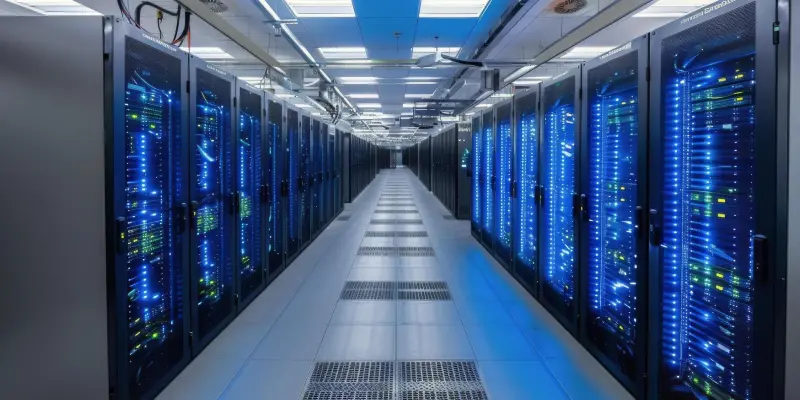
Over the next two years, Google is set to make a significant $7 billion investment in Iowa, marking a major development in the state’s technological and economic landscape. This substantial investment is aimed at expanding Google’s data center operations in both Cedar Rapids and Council Bluffs, with the prime objective of enhancing its cloud and AI infrastructure. Such a move is expected not only to bolster existing facilities but also to establish a new data center in Cedar Rapids, a location historically not known for significant data center developments. This investment highlights an intersection of technological advancement and economic stimulus, poised to bring significant benefits to the region.
Investment in Infrastructure and Workforce Development
Enhancing Technological Capabilities
Google’s decision to expand its infrastructure in Iowa reflects its broader strategic goal of staying competitive in the fast-growing cloud services and AI sectors. By investing in data centers, the company aims to modernize its technological offerings, ensuring that its infrastructure remains cutting-edge and capable of meeting increasing demands. The new Cedar Rapids facility is set to start construction in 2024, with completion projected by 2026. The site, known as the Big Cedar Industrial Center, currently has a capacity of 85MW, with potential expansion scaling up to 1.2GW. This growth will facilitate not only greater technological reach but also sustainability in operations. Such infrastructure improvements are central to enhancing both Google’s service capabilities and its long-term market presence.
Workforce Development Initiatives
A critical component of Google’s expansion strategy is its focus on workforce development, reflecting its commitment to community engagement and economic enhancement. Partnering with local electrical training programs, the aim is to intervene directly in workforce enrichment. By 2030, Google’s collaboration expects to train approximately 700 apprentices, increasing the workforce by 95 percent. This initiative signals a considerable investment in human capital, promising to equip locals with skills crucial for thriving in technology-driven job markets. It underscores the importance of aligning business growth with community development, setting a precedent for similar future initiatives.
The Economic Impact of Technological Investment
Local Economic Growth
Google’s expanded presence in Iowa is more than a corporate growth story; it is a catalyst for regional economic development. Local officials, such as Cedar Rapids Mayor Tiffany O’Donnell, have been vocal about the transformative potential of Google’s investment. The economic ripple effects are anticipated to include substantial job creation, beyond direct employment at the data centers, influencing both immediate and support industries. The financial injection is expected to stimulate ancillary businesses, create a surge in local service demands, and lead to a significant rise in economic activities in the regions of Cedar Rapids and Council Bluffs. This economic dynamism exemplifies the broader advantages of aligning technological progress with regional development.
Aligning with Industry Trends
Google’s strategic direction in Iowa is a reflection of prevailing industry trends towards robust infrastructure investments. With cloud computing and AI being pivotal to the future of technology, a resolute commitment to infrastructure enhancement supports Google’s competitive ambitions. This expansion effort is inherently tied to the broader objectives of improving service reliability, data security, and the capacity to handle complex computational tasks. Additionally, as these technologies continue to gain traction, businesses that bolster their capabilities will invariably have a competitive advantage, affirming Google’s decision as both prudent and forward-thinking. Such alignment positions Google not just as a technology leader, but as an innovator that supports economic growth and technological accessibility.
Conclusion: A Forward-Looking Strategy
In the upcoming two years, Google plans a groundbreaking $7 billion investment in Iowa, signaling a notable shift in the state’s tech and economic sectors. This sizeable investment targets the expansion of Google’s data center operations in Cedar Rapids and Council Bluffs, primarily focusing on strengthening its cloud and AI infrastructure. The initiative not only aims to boost the capacity of existing facilities but also proposes establishing a new data center in Cedar Rapids, a city traditionally not linked with major data center projects. This strategic move marks a pivotal moment where technological innovation intersects with economic growth, anticipated to deliver substantial advantages to the surrounding areas. The decision underscores Iowa’s emerging role in the tech industry and promises to foster growth in local communities through job creation, improved digital capabilities, and enhanced industry stature. Such developments foreseeably transform Iowa into a more prominent hub within the national tech landscape.