
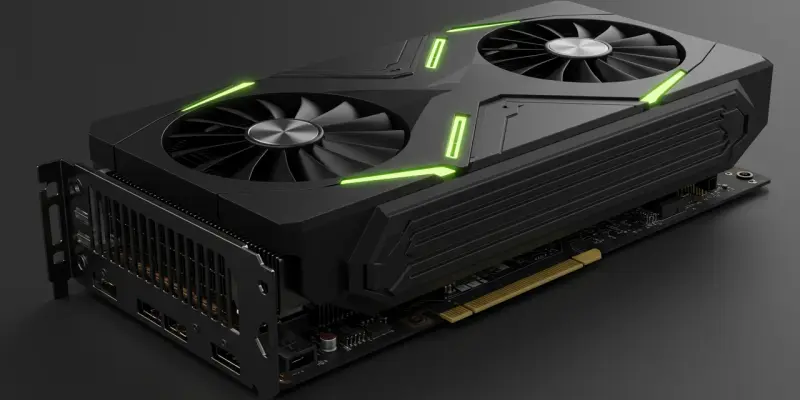
Gigabyte Unveils Thunderbolt 5 AORUS RTX 5090 AI Box

Article Highlights
Off On

Gigabyte’s latest technological revelation has disrupted the gaming landscape with the launch of its groundbreaking AORUS RTX 5090 AI Box, an external GPU that harnesses the power of Thunderbolt 5 for exceptional performance. Introduced at Computex, the AORUS RTX 5090 is a monumental leap for desktop-level gaming enthusiasts. This offering stands out with its pre-installed RTX 5090, a component that boasts unparalleled processing capability with 21,760 CUDA Cores. It leverages a WaterForce AIO cooling system to ensure optimal temperatures and prevent any potential throttling due to heat. The incorporation of Thunderbolt 5 provides an astounding 80 Gbps of bandwidth. This is complemented by advanced connectivity options such as USB4 2.0, USB 3.2 Gen 3 ports, and Power Delivery 3.0 support, which facilitates charging for various devices.

An Unmatched Gaming and AI Performance Experience

Targeting individuals striving for gaming excellence and advanced AI processing, the AORUS RTX 5090 AI Box comes equipped with multiple display outputs. These include three DisplayPorts, a single HDMI 2.1b, and an RJ45 Ethernet port to ensure stable internet connectivity. This powerful setup is designed for users who demand top-tier performance for both gaming and AI tasks. Its performance levels are outstanding, with capabilities that exceed 3000 AI TOPS, thereby outclassing NVIDIA’s AI TOP ATOM DGX Spark Box. Its state-of-the-art specifications justify a retail price between $3,000 and $4,000, marking it as a high-end choice for tech enthusiasts who are particular about their hardware. Gigabyte’s AORUS RTX 5090 sets a new standard by effectively utilizing external GPU technology. It’s an essential tool for those seeking superior gaming performance and advanced AI processing. This innovation is poised to redefine what users expect, setting fresh benchmarks in both gaming and artificial intelligence technology.

Explore more

Hotels Must Rethink Recruitment to Attract Top Talent

With decades of experience guiding organizations through technological and cultural transformations, HRTech expert Ling-Yi Tsai has become a vital voice in the conversation around modern talent strategy. Specializing in the integration of analytics and technology across the entire employee lifecycle, she offers a sharp, data-driven perspective on why the hospitality industry’s traditional recruitment models are failing and what it takes

Trend Analysis: AI Disruption in Hiring

In a profound paradox of the modern era, the very artificial intelligence designed to connect and streamline our world is now systematically eroding the foundational trust of the hiring process. The advent of powerful generative AI has rendered traditional application materials, such as resumes and cover letters, into increasingly unreliable artifacts, compelling a fundamental and costly overhaul of recruitment methodologies.

Is AI Sparking a Hiring Race to the Bottom?

Submitting over 900 job applications only to face a wall of algorithmic silence has become an unsettlingly common narrative in the modern professional’s quest for employment. This staggering volume, once a sign of extreme dedication, now highlights a fundamental shift in the hiring landscape. The proliferation of Artificial Intelligence in recruitment, designed to streamline and simplify the process, has instead

Is Intel About to Reclaim the Laptop Crown?

A recently surfaced benchmark report has sent tremors through the tech industry, suggesting the long-established narrative of AMD’s mobile CPU dominance might be on the verge of a dramatic rewrite. For several product generations, the market has followed a predictable script: AMD’s Ryzen processors set the bar for performance and efficiency, while Intel worked diligently to close the gap. Now,

Trend Analysis: Hybrid Chiplet Processors

The long-reigning era of the monolithic chip, where a processor’s entire identity was etched into a single piece of silicon, is definitively drawing to a close, making way for a future built on modular, interconnected components. This fundamental shift toward hybrid chiplet technology represents more than just a new design philosophy; it is the industry’s strategic answer to the slowing