

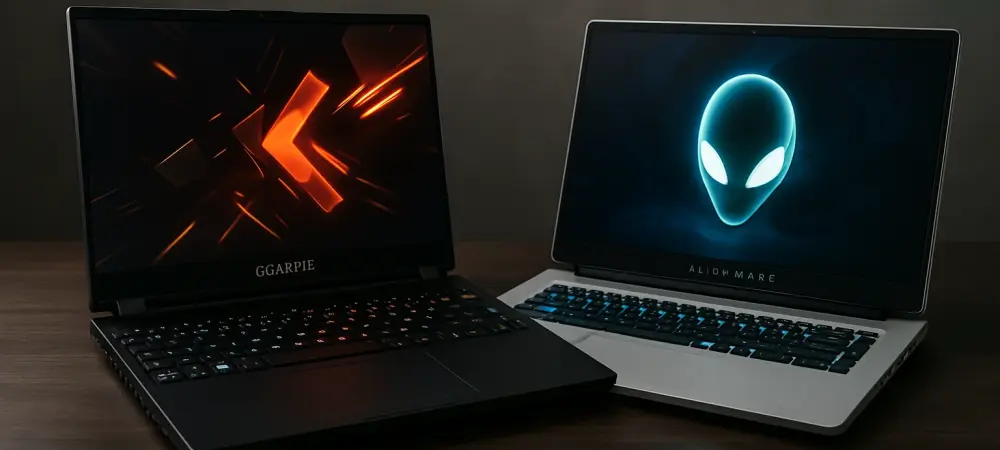
In the ever-evolving world of gaming laptops, where performance and portability often clash, choosing the right machine can feel like navigating a battlefield of specs and trade-offs. With gamers and professionals alike demanding devices that balance raw power with practical design, two contenders stand out in the 16-inch category: the Gigabyte A16 Pro and the Alienware 16 Area-51. These laptops target enthusiasts who crave high-end gaming at 1600p resolutions and creators tackling intensive workloads like video editing. This comparison dives deep into their strengths and limitations, offering clarity on which device might claim victory for specific user needs in a market where every detail—from GPU power to battery life—can make or break the experience.
Introduction to Gaming Laptops and Brand Overview
Gaming laptops have become indispensable tools, not just for entertainment but also for professional tasks, bridging the gap between desktop power and mobile convenience. The Gigabyte A16 Pro and Alienware 16 Area-51 exemplify this trend, delivering robust hardware in portable packages aimed at gamers, content creators, and workstation users. Both devices cater to those seeking immersive 16-inch displays with high refresh rates, ensuring smooth visuals whether in competitive play or detailed design work.
Gigabyte has carved a niche with value-driven designs, focusing on versatility to appeal to a broad audience. The A16 Pro reflects this ethos, offering solid performance at competitive pricing, often enhanced by discounts that make it a practical choice for budget-conscious buyers. Its approach prioritizes functionality over flash, targeting users who need a reliable all-rounder.
Alienware, a name synonymous with premium gaming, takes a different tack with the 16 Area-51. Known for pushing boundaries with top-tier components and striking aesthetics, this laptop is crafted for those willing to invest in uncompromised performance. Its reputation rests on delivering cutting-edge technology, often at a higher cost, appealing to enthusiasts who demand the best in power and build quality.
Head-to-Head Comparison of Key Features
Design and Build Quality
When it comes to design, the Gigabyte A16 Pro offers a pragmatic build that balances portability with utility. Weighing in at 2.3 kg, it features a plastic chassis that keeps weight down while maintaining decent durability, suitable for daily carry. Its 16-inch 165 Hz display, capable of laying flat at 180 degrees, adds flexibility for unique setups or collaborative viewing, though its cooling fans can get noticeably loud under load, and port selection feels dated with a sluggish 5 Gbps USB-C connection.
In contrast, the Alienware 16 Area-51 leans toward a premium aesthetic with higher-quality materials, though this comes at the cost of a bulkier frame that sacrifices some portability. Also sporting a 16-inch 165 Hz screen, it matches the A16 Pro in visual fluidity but offers a more refined user experience with superior keyboard comfort and potentially quieter cooling systems. Its design exudes a luxury feel, likely including a more modern array of ports to support diverse connectivity needs.
A notable distinction lies in user-centric elements. While the A16 Pro’s keyboard provides adequate 1.7 mm key travel with customizable RGB lighting, it lacks a numeric keypad and can heat up during intense sessions. The Area-51, expected to prioritize ergonomics, may counter with better thermal management and additional layout features, making prolonged use more comfortable for gamers and professionals alike.
Hardware Specifications and Performance
Diving into hardware, the Gigabyte A16 Pro is powered by an Intel Core i7 240H CPU, paired with GPU options like the RTX 5080, capped at 115W Total Graphics Power (TGP), or the RTX 5070 Ti. With 32GB of RAM and a 1TB SSD, it delivers strong 1600p gaming performance, often hitting above 60 fps in demanding titles with settings optimized. For workstation tasks like video editing, it holds up well, though thermal throttling of the CPU can limit sustained output under heavy loads.
The Alienware 16 Area-51, on the other hand, is anticipated to feature top-end processors, possibly the latest high-performance Intel or AMD chips, alongside GPU options reaching up to the RTX 5090 with higher TGP limits. This setup promises superior frame rates and efficiency, potentially outpacing the A16 Pro by a significant margin in both gaming and professional applications. Its thermal design is also likely optimized to handle these powerful components with less compromise.
Comparing their capabilities, the A16 Pro offers a respectable edge over similarly priced competitors with lower-tier GPUs, thanks to features like 16GB VRAM on the RTX 5080. However, the Area-51’s uncapped power and advanced hardware are tailored for users seeking peak performance without bottlenecks, making it better suited for future-proofing against increasingly demanding software, albeit with a probable increase in heat and power draw during extended sessions.
Battery Life and Portability
Battery life is a critical factor for users on the move, and the Gigabyte A16 Pro equips a 76Wh battery, achieving around 10 hours under light workloads like browsing, but dropping to under an hour for gaming. Its support for 90W USB-C charging adds flexibility, allowing productivity without the main power adapter, though performance dips significantly in power-intensive tasks when unplugged.
The Alienware 16 Area-51 is expected to house a larger battery capacity to sustain its high-end components, potentially offering extended runtime for mixed workloads compared to the A16 Pro. However, its heavier build may offset any gains in battery efficiency, making it less ideal for frequent travel. Charging solutions are likely to include robust power delivery options, ensuring quick top-ups even under demanding conditions.
Portability remains a differentiating aspect, with the A16 Pro’s lighter 2.3 kg frame making it more feasible for daily commutes or campus use. The Area-51, while powerful, could challenge users with its bulkier design, catering more to stationary setups or occasional transport rather than constant mobility, highlighting a trade-off between power and ease of carry.
Challenges and Limitations of Each Model
Every laptop has its Achilles’ heel, and for the Gigabyte A16 Pro, several constraints impact its appeal. The capped 115W TGP on its RTX 5080 GPU limits peak gaming performance, placing it below what the hardware could achieve without restrictions. Additionally, noisy fans during intensive tasks and an outdated 5 Gbps USB-C port hinder user comfort and connectivity, while battery life falters under heavy workloads, restricting its suitability for prolonged unplugged use.
The Alienware 16 Area-51, despite its premium positioning, isn’t without flaws. Its heftier build diminishes portability, a significant drawback for users needing a laptop for frequent travel or on-the-go work. Pricing is another hurdle, as the cost of cutting-edge components often places it out of reach for budget-conscious buyers, and thermal challenges with top-tier hardware might lead to performance throttling or discomfort during long sessions if cooling isn’t perfectly tuned.
These limitations shape how each device fits into specific user scenarios. The A16 Pro’s drawbacks may deter enthusiasts craving maximum GPU power or silent operation, while still serving well for versatile, cost-effective needs. Conversely, the Area-51’s issues with weight and cost could alienate casual users or those with tight budgets, yet its raw power remains unmatched for dedicated gamers or professionals prioritizing performance over practicality.
Final Verdict and Recommendation
After dissecting the Gigabyte A16 Pro and Alienware 16 Area-51 across design, performance, and practicality, distinct strengths and weaknesses emerged for each. The A16 Pro stood out as a value-driven option, delivering commendable 1600p gaming and workstation capabilities at a competitive price, especially when discounted, though hampered by GPU caps and noisy cooling. The Area-51, with its premium build and superior hardware potential, catered to high-end demands but at the expense of portability and affordability. For budget-conscious buyers or those seeking a versatile machine for mixed use, the Gigabyte A16 Pro proved a sensible choice, particularly if secured at a reduced price. It balanced portability and power effectively for students or creators needing a reliable all-rounder. Meanwhile, the Alienware 16 Area-51 shone for users prioritizing uncompromised performance, ideal for dedicated gamers or professionals willing to invest in top-tier specs despite the higher cost and bulkier frame.
Looking ahead, potential buyers should weigh their primary needs—be it cost efficiency or raw power—and consider timing purchases around sales for the A16 Pro to maximize value. Exploring retailer offers or trade-in programs could ease the financial burden of the Area-51. Ultimately, testing both devices in person for comfort and performance, if possible, alongside evaluating upcoming software demands from 2025 onward, will ensure a decision that aligns with long-term goals in gaming or professional productivity.