

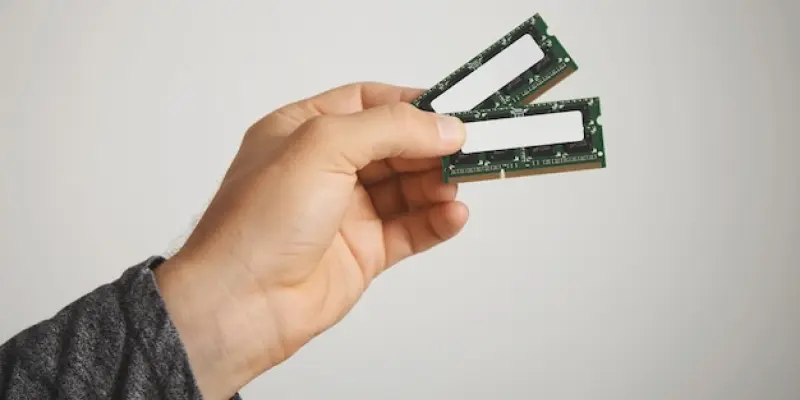
In a groundbreaking collaboration, Germany’s Ferroelectric Memory Co. (FMC) and Neumonda have joined forces to develop a new type of memory known as DRAM+. This innovative memory technology seeks to combine the high-speed performance of dynamic random access memory (DRAM) with the non-volatile data retention characteristics of solid-state drives (SSDs). The DRAM+ memory employs ferroelectric hafnium oxide (HfO₂) instead of the conventional lead zirconate titanate (PZT) used in previous ferroelectric random-access memory (FeRAM) technologies, allowing the memory to retain data even when power is off. Hafnium oxide’s compatibility with CMOS processes, its scalability to below 10nm, and seamless integration with existing semiconductor manufacturing methods address significant limitations posed by previous materials like PZT, which had capacity and cost issues. The expected result is a memory with impressive density and performance, potentially reaching from gigabit to gigabyte ranges. This advancement represents a significant leap in memory technology, with far-reaching applications across various sectors such as artificial intelligence, automotive, consumer electronics, industrial, and medical fields.
Advanced Memory Technology
FMC is leveraging the unique ferroelectric properties of hafnium oxide to transform traditional DRAM capacitors into low-power, non-volatile storage devices that do not compromise performance. This novel approach could revolutionize the memory market by offering high-speed storage capabilities combined with the ability to retain data during power interruptions. The development of DRAM+ marks a significant milestone, as it addresses the power consumption and volatility issues associated with DRAM while also providing robust data retention and reliability akin to SSDs.
Collaborating with Neumonda has been pivotal for FMC in advancing their DRAM+ technology. Neumonda brings to the table its extensive experience in semiconductor memory production and state-of-the-art testing systems such as Rhinoe, Octopus, and Raptor. These systems are designed to provide independent, low-cost, and energy-efficient memory testing with detailed analyses that conventional testing equipment cannot achieve. This partnership ensures that DRAM+ memory will not only meet high-performance standards but also undergo rigorous testing to guarantee its reliability and efficiency. The development of DRAM+ has the potential to shape the future of various industries that rely on cutting-edge memory technology. For example, in the automotive sector, where reliability and speed are critical, DRAM+ memory could enhance the performance of in-vehicle infotainment systems, advanced driver-assistance systems, and other critical applications. Similarly, in the realm of artificial intelligence, swift data processing and retention are paramount, and DRAM+ could provide significant benefits to AI-driven applications and services.
Revival of European Semiconductor Manufacturing
This partnership extends beyond technological innovation; it signifies a major effort to revive and localize semiconductor manufacturing in Europe. Over recent years, Europe, and Germany, in particular, faced challenges in maintaining a profitable semiconductor manufacturing industry, especially in the production of commodity memory. Neumonda’s mission to resuscitate semiconductor memory production aligns perfectly with FMC’s objectives of bringing advanced memory technology to the European market. The collaboration endeavors to rebuild a robust local ecosystem for cutting-edge memory design and testing. This initiative is poised to enhance Europe’s competitive stance in the global semiconductor industry by fostering innovation and technological advancement. By localizing production and development, FMC and Neumonda aim to reduce reliance on external supply chains, which can lead to increased resilience and stability in the face of global market fluctuations. Neumonda’s expertise in creating advanced testing environments provides FMC with the tools necessary to push the boundaries of current memory technologies. Access to systems like Rhinoe, Octopus, and Raptor not only facilitates the development of DRAM+ but also ensures that it meets stringent quality and performance benchmarks. This comprehensive approach to design, development, and testing positions Germany as a significant player in the high-stakes global memory market.
FMC’s commitment to utilizing the ferroelectric properties of hafnium oxide exemplifies the innovative spirit driving the partnership. By developing memory solutions that are both high-performance and non-volatile, FMC and Neumonda are setting new standards in the industry. This focus on integrating advanced materials with cutting-edge testing methodologies could very well define the next generation of memory technologies.
Conclusion
Germany’s Ferroelectric Memory Co. (FMC) and Neumonda have embarked on an innovative project to create a new memory type called DRAM+. This cutting-edge technology aims to merge the high-speed performance of dynamic random access memory (DRAM) with the non-volatile data retention of solid-state drives (SSDs). Unlike preceding ferroelectric random-access memory (FeRAM) technologies that utilized lead zirconate titanate (PZT), DRAM+ employs ferroelectric hafnium oxide (HfO₂). This allows the memory to preserve data even when power is off. Hafnium oxide’s compatibility with CMOS processes, its ability to scale below 10nm, and easy integration with current semiconductor manufacturing techniques overcome the limitations of previous materials like PZT, which had issues with capacity and cost. The result is expected to be memory with impressive density and performance, potentially ranging from gigabits to gigabytes. This groundbreaking advancement in memory technology could have significant applications in sectors such as artificial intelligence, automotive, consumer electronics, industrial, and medical fields.