

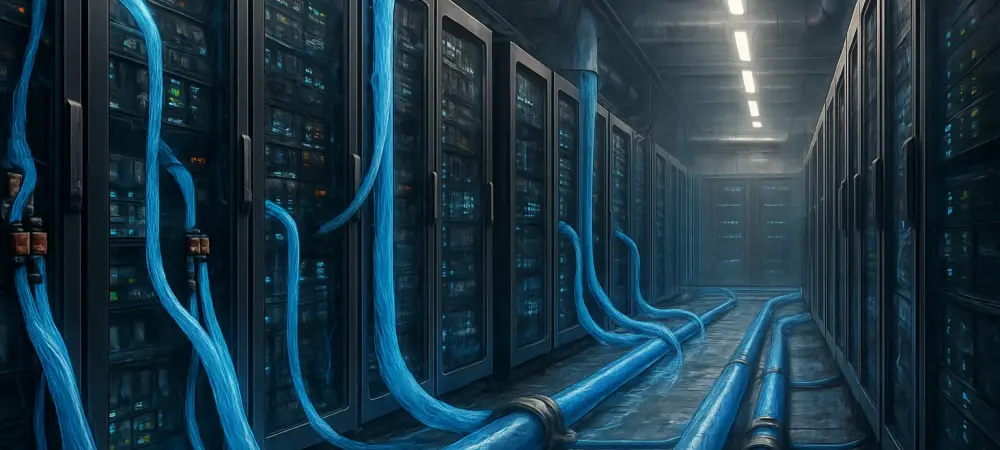
Setting the Stage for a Cooling Revolution
As data centers worldwide grapple with the escalating demands of artificial intelligence and high-compute workloads, a staggering statistic emerges: cooling systems account for nearly 40% of total energy consumption in these facilities. This immense energy drain poses not only operational challenges but also significant environmental concerns, pushing the industry toward sustainable solutions. With global data center energy use projected to double in the coming years, the urgency to innovate in thermal management has never been greater. This market analysis delves into the transformative trends in data center cooling, spotlighting pioneering contributions from industry leaders Gates and GF. It examines how their sustainable liquid cooling technologies are reshaping market dynamics and offers insights into future growth trajectories.
Market Trends and Innovations Shaping Liquid Cooling
Rising Demand for Efficiency Amid AI Expansion
The data center cooling market is experiencing a seismic shift driven by the rapid adoption of AI technologies, which require densely packed, heat-intensive server configurations. Traditional air cooling methods are increasingly inadequate, leading to a surge in demand for liquid cooling systems that offer superior heat dissipation. Market data indicates that liquid cooling adoption has grown by over 20% annually since 2025, with projections suggesting it could dominate new data center builds by the end of the decade. This trend reflects a broader push for energy efficiency as operators face mounting pressure to reduce carbon footprints amid tightening environmental regulations.
Gates’ Component-Level Breakthroughs
A key player in this evolving landscape, Gates, based in Colorado, has captured market attention with its Data Master Eco hose, a halogen-free solution tailored for liquid cooling systems. This product not only prioritizes environmental sustainability but also slashes manufacturing energy use by 75% compared to conventional processes, eliminating reliance on natural gas, water, and steam. The result is a lighter, more efficient component that reduces operational costs for data center operators. While adoption challenges persist due to entrenched industry preferences for traditional materials, Gates’ innovation positions it as a frontrunner in addressing the thermal needs of AI-driven infrastructure, potentially capturing a significant share of the component market.
GF’s System-Wide Cooling Solutions
Complementing component-level advancements, GF, a Swiss piping systems specialist, is redefining scalability with its LiquidCore solution, an integrated polymer-based piping system. Designed to streamline coolant flow from distribution units to server racks, this prefabricated system reduces installation time and enhances customization for diverse data center layouts. Market analysts note that such holistic approaches are gaining traction, especially among hyperscale operators seeking to manage complex cooling demands. Despite higher upfront costs, GF’s focus on durability and efficiency taps into a growing segment of the market prioritizing long-term sustainability over short-term savings, setting a benchmark for system-level innovation.
Market Projections and Emerging Opportunities
Forecasting Growth in Liquid Cooling Adoption
Looking ahead, the data center cooling market is poised for robust expansion, with liquid cooling expected to account for over 50% of new installations by 2027. This forecast hinges on escalating AI workloads and the global push for net-zero emissions, which are driving investments in green technologies. Regions with stringent energy policies, such as Europe, are likely to lead adoption rates, while emerging markets in Asia-Pacific may see slower uptake due to cost constraints. Nevertheless, the overall trajectory suggests a market ripe for disruption, with sustainable cooling solutions becoming a core competitive differentiator for technology providers.
Navigating Challenges and Market Barriers
Despite optimistic projections, the market faces notable hurdles, including the perception that liquid cooling systems are prohibitively expensive. This misconception often overlooks the long-term energy and maintenance savings these systems offer, a point that industry players must address through education and pilot programs. Additionally, regional disparities in energy costs and infrastructure readiness create uneven adoption patterns, requiring tailored strategies for market penetration. Companies that can balance innovation with affordability will likely gain an edge, particularly as hybrid cooling systems—combining air and liquid methods—emerge as a transitional solution for cost-conscious operators.
Untapped Potential in Material and Technology Integration
Beyond current trends, there lies significant untapped potential in integrating advanced materials and coolant technologies into liquid cooling systems. Innovations in eco-friendly fluids and lightweight composites could further reduce environmental impact while enhancing performance, opening new avenues for market growth. Lifecycle assessments of cooling equipment also warrant greater focus, as they provide critical insights into true sustainability metrics. As the market evolves, strategic partnerships between component manufacturers like Gates and system providers like GF could accelerate the development of comprehensive solutions, addressing both technical and ecological demands of modern data centers.
Reflecting on Market Insights and Strategic Pathways
Looking back on this analysis, the strides made by Gates and GF underscore a pivotal shift in the data center cooling market, where sustainability and performance have become intertwined priorities. Their innovations—ranging from energy-efficient hoses to scalable piping systems—highlight how targeted solutions can address the industry’s most pressing challenges. The market’s trajectory points to a future dominated by liquid cooling, driven by AI expansion and environmental imperatives. For stakeholders, the path forward involves strategic investments in pilot projects to test these technologies within existing infrastructures, minimizing risk while maximizing learning. Collaborations with manufacturers for customized solutions offer a practical way to scale adoption, while training programs for technical staff ensure seamless integration and maintenance. Ultimately, the industry stands at a crossroads, where embracing sustainable cooling innovations becomes not just a competitive advantage, but a necessary step to safeguard the digital economy’s backbone against the heat of tomorrow’s challenges.