

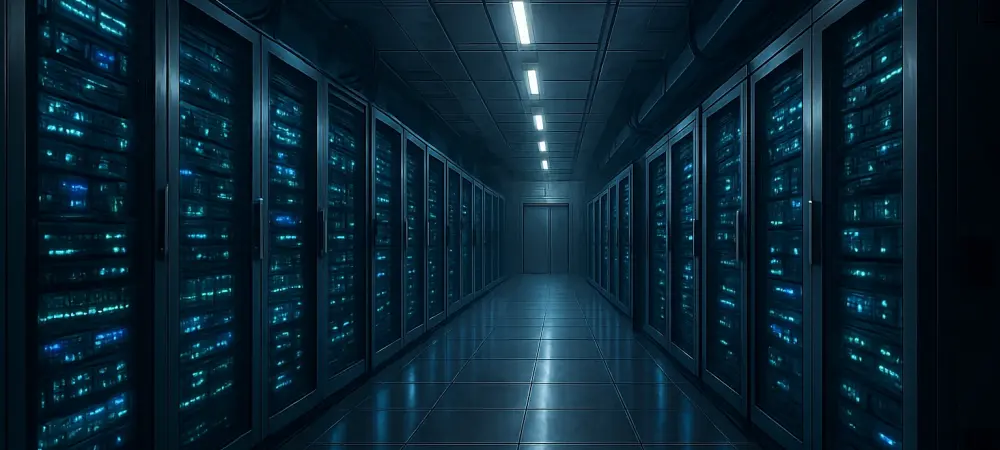
In an era where digital demand surges at an unprecedented pace, data centers stand as the silent engines of modern life, powering everything from streaming platforms to artificial intelligence breakthroughs, yet with technology evolving faster than construction cranes can keep up, the challenge of building facilities to withstand the unknowns of tomorrow looms large. The stakes have never been higher, as a single misstep in design can lead to millions in losses or catastrophic downtime. This exploration uncovers the innovative strategies reshaping data center design, offering a roadmap for resilience in a relentless digital age.
The Urgency of Designing for an Unpredictable Tomorrow
Data centers are no longer mere storage hubs; they are the backbone of a world increasingly reliant on instantaneous data access. The challenge lies in the breakneck speed of change—artificial intelligence workloads and cloud computing demands shift almost daily, rendering yesterday’s blueprints obsolete before they’re even implemented. Building for the future isn’t just a lofty goal; it’s a necessity when the risk of falling behind looms large, threatening operational stability and financial viability.
The concept of future-proofing emerges as the linchpin in this high-stakes game. It’s about crafting infrastructure that doesn’t just react to change but anticipates it, ensuring adaptability without sacrificing reliability. With urban space shrinking and resource constraints tightening, the pressure to get design right from the outset has never been more intense. This discussion delves into why staying ahead of the curve is paramount for survival in the digital infrastructure landscape.
Why Data Center Design Matters More Than Ever
The explosion of digital services has transformed data centers into critical nodes that power everything from global commerce to personal entertainment. As demand skyrockets, these facilities must handle exponentially larger workloads while maintaining uninterrupted service—a task complicated by the rapid evolution of tech requirements. Falling short can mean not just delays but devastating outages that ripple across industries.
Beyond operational challenges, the scarcity of land and resources adds another layer of complexity. Urban centers, where proximity to users is key, often lack room for sprawling campuses, forcing designers to rethink traditional layouts. Meanwhile, rural expansions face their own hurdles with connectivity and power access. The balance between scalability and practicality defines the modern design dilemma, making strategic planning an indispensable tool.
This urgency underscores a broader truth: data center design is no longer a niche concern but a cornerstone of global connectivity. With projections from industry reports like those of the Uptime Institute indicating a doubling of data center capacity needs by 2027, the race to build adaptable infrastructure is on. Every decision today shapes the digital resilience of tomorrow.
Building Blocks of a Resilient Future
At the heart of future-proof design lie several foundational elements that address both immediate needs and long-term adaptability. Physical space tops the list as the most irreversible choice—securing enough room for expansion, whether through additional buildings in rural areas or vertical stacking in city hubs, is critical. Once land is locked in, retrofitting for growth becomes a costly, if not impossible, endeavor.
Access to resources like power and water forms another non-negotiable pillar. Without guaranteed availability, even the most scalable designs falter under pressure, as seen in regions facing grid shortages that have delayed major projects. Planning for these essentials from day one ensures a facility can grow without hitting insurmountable bottlenecks, a lesson drawn from real-world constraints documented by industry analysts.
Finally, the unpredictability of technology and regulations demands a departure from rigid predictions to flexible frameworks. Instead of guessing what hardware or compliance rules might dominate in a few years, designs must allow for seamless upgrades and pivots. This shift, supported by data showing over 60% of facilities struggling with outdated setups per recent Uptime Institute surveys, highlights the need to prioritize versatility over specificity in every blueprint.
Voices from the Field on Tackling Uncertainty
Industry experts offer a sobering perspective on the challenges of designing amidst constant flux. Madeleine Kudritzki of the Uptime Institute captures the sentiment succinctly: “There’s no crystal ball to predict what’s next.” Her insights, shared during a recent webinar, point to the frustration of planning when tech cycles outpace construction schedules, pushing for a mindset of adaptability over precision.
Colleague Chris Brown echoes this view, stressing that flexibility in infrastructure is the key to avoiding downtime during unexpected shifts. Drawing from cases where facilities stumbled while retrofitting for AI-driven demands, he argues that adaptable systems allow operators to integrate new tech without risking operational collapse. These observations, rooted in decades of industry analysis, frame resilience as the new benchmark for success.
Their combined expertise paints a clear picture: static planning is a relic of the past. The focus must shift to dynamic designs that can bend without breaking, a principle evident in facilities that have successfully navigated sudden workload spikes. Such real-world lessons provide a grounded perspective, urging designers to embrace uncertainty as a constant rather than a hurdle.
Practical Steps for Scalable and Robust Infrastructure
Turning theory into action requires targeted strategies that balance cost, risk, and growth. Site selection stands as the first critical step—evaluating land availability and proximity to utilities can prevent future gridlocks that stall expansion. Choosing locations with surplus power capacity or renewable energy access, for instance, mitigates risks of shortages that have plagued some urban projects.
Capacity expansion offers two distinct paths, each with trade-offs to weigh. A phased approach, installing core systems upfront and adding components like generators as demand rises, spreads costs over time but risks disruptions during integration. Alternatively, a modular setup with independent capacity blocks allows safe testing before deployment, though at a higher initial expense. Deciding between these hinges on an organization’s load needs and risk appetite, as neither is universally superior.
Embedding flexibility across all systems completes the toolkit for resilience. Cooling and power setups, for example, should be designed to handle unforeseen tech upgrades, avoiding the pitfalls faced by older centers unable to support high-density computing. By adopting these tailored measures, operators can ensure uptime and scalability, crafting facilities ready for whatever challenges emerge on the horizon.
Reflecting on the Path Forward
Looking back, the journey through the evolving landscape of data center design reveals a stark reality: adaptability has become the cornerstone of survival in a digital world that refuses to stand still. The insights from industry leaders and the stark data on resource constraints paint a vivid picture of an industry at a crossroads, where every decision carries weighty consequences. The stories of facilities caught off-guard by rapid shifts stand as cautionary tales, urging a break from outdated methods.
The actionable takeaways from this exploration offer a lifeline for those tasked with building tomorrow’s infrastructure. Prioritizing space and resources from the outset, weighing the merits of phased versus modular growth, and embedding flexibility into every layer emerge as proven steps to mitigate risks. These strategies, grounded in real-world challenges, provide a clear path to navigate uncertainty with confidence.
As the digital frontier continues to expand, the focus shifts to fostering collaboration across sectors—designers, operators, and policymakers need to align on sustainable solutions that balance growth with environmental impact. Exploring innovations like edge computing integration or advanced cooling technologies promises to further refine the art of future-proofing. These next steps, built on the foundation of adaptability, ensure that data centers remain not just operational, but indispensable in an ever-changing world.