

Today, we’re thrilled to sit down with Dominic Jainy, a seasoned IT professional whose expertise spans artificial intelligence, machine learning, and blockchain. With a keen interest in how emerging technologies can transform industries, Dominic brings a unique perspective to the growing role of fuel cells as a power solution for data centers. In this conversation, we’ll dive into the mechanics of fuel cell technology, explore why data centers are turning to this innovative energy source, unpack the benefits and challenges of implementation, and discuss real-world applications by major industry players. We’ll also look ahead to the potential future of fuel cells in meeting the ever-increasing energy demands of data centers.
What are fuel cells, and how do they generate enough power to support something as energy-intensive as a data center?
Fuel cells are fascinating devices that convert chemical energy directly into electricity through a reaction, typically involving hydrogen or natural gas combined with oxygen. The process is electrochemical, meaning it doesn’t involve combustion, so it’s cleaner than traditional generators. Inside a fuel cell, hydrogen splits into protons and electrons at one electrode, the electrons travel through a circuit to create electricity, and then they recombine with oxygen at the other electrode to form water as a byproduct. For data centers, which require massive, consistent power, modern fuel cells have evolved to deliver higher outputs than in the past. While a single cell might not cut it, stacking multiple cells into systems allows them to scale up and meet those hefty demands, often rivaling or supplementing traditional power sources.
Why are data center operators increasingly considering fuel cells as a viable power solution?
Data centers are grappling with skyrocketing energy needs, especially with the rise of AI workloads and cloud computing. They’re often under pressure to ensure uptime while reducing reliance on grid power, which can be unstable or carbon-heavy. Fuel cells offer a way to generate power on-site, boosting reliability and cutting transmission losses. Plus, as sustainability becomes a core goal, operators are drawn to fuel cells because they produce no emissions during operation. They’re also modular, so you can start small and scale up as energy demands grow, which is a huge plus for facilities planning long-term expansion without massive upfront investments.
How do fuel cells contribute to the sustainability goals of data centers?
Sustainability is a big driver for adopting fuel cells. Since they don’t emit greenhouse gases during the electricity generation process, they help data centers lower their direct carbon footprint, aligning with corporate green initiatives. Beyond that, fuel cells are incredibly water-efficient compared to alternatives like nuclear power, which require significant cooling water. This is critical in regions where water scarcity is a concern. However, it’s worth noting that while the operation is clean, the production and transport of fuels like hydrogen can still carry an environmental impact, so it’s not a completely carbon-neutral solution yet.
What makes the on-site deployment of fuel cells particularly advantageous for data centers compared to other renewable sources?
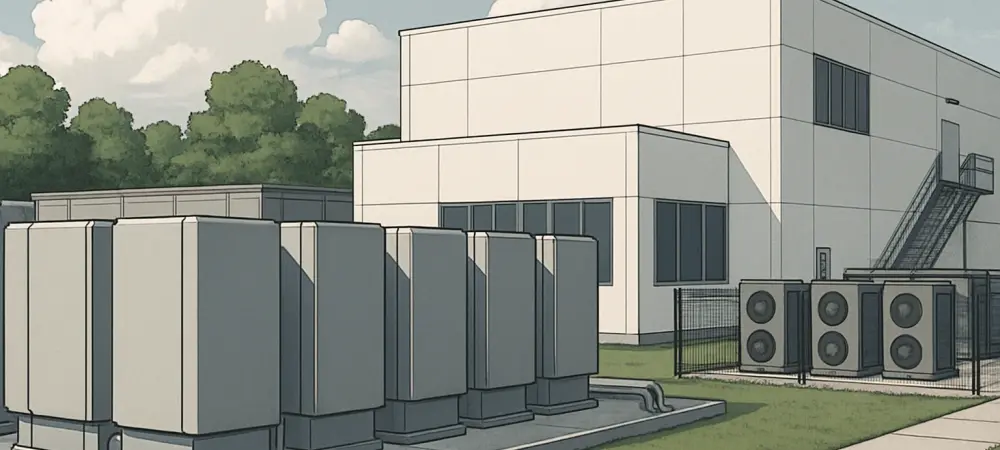
The beauty of fuel cells lies in their flexibility for on-site use. Unlike wind or hydroelectric power, which depend on specific geographic conditions, fuel cells can be installed pretty much anywhere as long as you have access to fuel. They’re compact relative to their output when scaled, so they fit well within the footprint of a data center campus. This behind-the-meter approach means operators can generate power right where it’s needed, reducing dependency on the grid and enhancing energy security. It’s a stark contrast to renewables that often require remote setups and long transmission lines, which can introduce inefficiencies or vulnerabilities.
What are some of the major hurdles data centers face when adopting fuel cell technology?
There are definitely challenges to overcome. Cost is a big one—installing fuel cell systems can run about $7 per watt, which is pricier than solar or diesel generators. While prices are dropping, it’s still a significant investment. Then there’s the issue of fuel supply, especially for hydrogen-based cells. Hydrogen isn’t as easy to source or store as natural gas, and building that infrastructure adds expense and complexity. Lastly, even though fuel cells are clean during operation, critics point out that the broader lifecycle—fuel production and transport—often involves emissions, so the sustainability argument isn’t airtight. These factors can make operators hesitate, especially if budget or greenwashing concerns are at play.
Can you share some insights into how major companies are currently integrating fuel cells into their data center operations?
Absolutely. Equinix, for instance, recently partnered with Bloom Energy to roll out fuel cells across 19 of their data centers. The focus seems to be on cutting emissions and water usage, likely using hydrogen or natural gas systems, though specifics on the tech aren’t fully public. Amazon has also worked with Bloom Energy in the past, but there’s been talk of them scaling back on some projects, possibly due to cost or logistical challenges with fuel supply. Meanwhile, companies like Microsoft and Google are in the mix too, piloting fuel cells or exploring their potential through providers like Plug Power. These initiatives show a growing interest, though it’s clear the industry is still testing the waters rather than diving in fully.
Looking ahead, what do you think needs to happen for fuel cells to become a mainstream power source for data centers?
For fuel cells to go mainstream, a few pieces need to fall into place. First, costs have to keep coming down, both for the technology itself and for installation. Advances in manufacturing and economies of scale could help there. Second, the fuel supply chain, especially for hydrogen, needs to become more robust and sustainable—think green hydrogen produced via renewable energy. Government incentives or regulations pushing for cleaner energy could also accelerate adoption. Finally, data center operators need more success stories and data to prove fuel cells can deliver reliable, cost-effective power over the long haul. If these hurdles are cleared, I think we could see fuel cells playing a much bigger role in the next decade.
What is your forecast for the role of fuel cells in the future of data center energy solutions?
I’m cautiously optimistic about fuel cells in data centers. In the near term, I see them as a complementary solution rather than a primary one, used alongside grid power and other renewables to boost reliability and meet sustainability targets. Over the next 10 to 15 years, though, as technology improves and fuel supply issues get ironed out, I believe they could become a cornerstone for on-site power generation, especially for hyperscale facilities with massive energy appetites. The push for carbon neutrality will likely drive innovation and investment in this space, potentially making fuel cells a key player in a more decentralized, resilient energy landscape for data centers.