

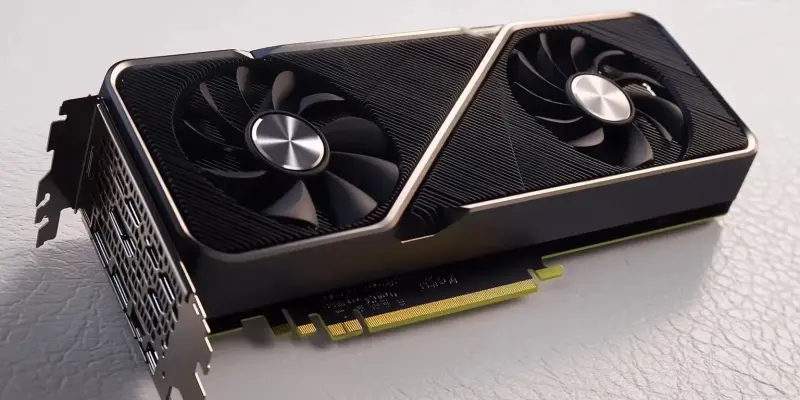
For gaming enthusiasts and tech aficionados who have been eagerly awaiting the next leap in graphics technology, the first leak of the NVIDIA GeForce RTX 5080 GPU custom model has emerged, sparking much anticipation and excitement. Most notably, the MSI GeForce RTX 5080 Gaming Trio OC Edition has captured attention with insights into the design and performance potential of next-generation gaming GPUs.
Innovative Cooling System in RTX 5080
Enhanced Cooling Technology
Unlike its predecessor, the RTX 4080 Gaming Trio, the RTX 5080 comes equipped with an enhanced cooling system designed to meet the demands of modern high-performance gaming. This sophisticated cooling mechanism, designated as the Tri Frozr 4, is complemented by Stormforce Fans, a nickel-plated copper baseplate, core pipes, and a metal backplate. The Tri Frozr 4 system represents a substantial upgrade, offering superior heat dissipation to ensure optimal performance during extended gaming sessions or intensive graphical tasks.
The Stormforce Fans incorporated in the RTX 5080 are engineered for efficiency, providing better airflow while reducing noise levels significantly. These fans contribute to maintaining the GPU’s functionality at peak performance while minimizing thermal throttling risks. Moreover, the nickel-plated copper baseplate facilitates excellent thermal conductivity, drawing heat away from the GPU cores much more effectively than previous baseplates. Adding to the overall durability and thermal management, the GPU’s core pipes are strategically positioned to maximize heat transfer and distribution.
Cooling Enhancements and Gaming Performance
The metal backplate is another critical component that not only protects the GPU but also aids in heat dissipation. By covering the back of the graphics card, it evenly distributes the heat generated from the components, ensuring even cooling across the entire system. The culmination of these cooling enhancements in the RTX 5080 means that gamers and content creators can push their hardware to the limits without fear of overheating or performance drops.
Such sophisticated cooling solutions are especially vital for maintaining stability and extending the lifespan of the GPU. The strategic combination of Stormforce Fans, the nickel-plated baseplate, core pipes, and the metal backplate indicates that MSI has significantly invested in engineering innovation to support the demanding needs of gamers and professionals. The thoughtful design ensures that the RTX 5080 not only performs exceptionally out-of-the-box but also delivers consistent performance over time.
Notable Specifications and Performance Insights
Key Specifications of the RTX 5080
The NVIDIA GeForce RTX 5080 is built with next-generation technology that promises remarkable advancements in gaming graphics. Equipped with 16 GB of GDDR7 memory, the card boasts a 256-bit bus interface, providing ample bandwidth for data transfer. This enhancement is pivotal for delivering seamless graphics and maintaining high frame rates in the latest games. Additionally, the GPU includes outputs for three DisplayPort and one HDMI connector, offering versatile display options for various gaming setups.
A key feature of the RTX 5080 is the inclusion of dedicated Ray Tracing and Tensor Cores. These cores are instrumental in providing realistic lighting, shadows, and reflections in real-time, enhancing the overall visual experience. Furthermore, the support for NVIDIA DLSS (Deep Learning Super Sampling) allows for improved graphics rendering without compromising performance. The RTX 5080 also fully supports Game Ready and NVIDIA Studio Drivers, ensuring that users have the latest updates and optimizations for the best possible performance.
Performance Insights Based on Blackwell Architecture
The RTX 5080 is based on the innovative Blackwell architecture, specifically utilizing the GB203-400-A1 GPU die. This configuration features 84 Streaming Multiprocessors (SMs) and 10,752 cores, translating to substantial computational power. However, it is essential to note that this model showcases a significant -51% reduction in cores compared to its high-end counterpart, the RTX 5090. This reduction marks a larger variation compared to the -40% difference observed between the previous RTX 4090 and RTX 4080 models, indicating notable shifts in performance metrics.
Despite these changes, the RTX 5080’s memory configuration is designed to deliver high-speed performance with its 16 GB of GDDR7 memory clocked at speeds reaching up to 32 Gbps. This setup provides a tremendous total bandwidth of 1 TB/s, enabling rapid data throughput for graphically demanding applications. Moreover, the GPU’s Total Board Power (TBP) is rated at 400W, signifying a 25% increase from previous iterations, which reflects its enhanced capabilities and potential energy demands.
Implications for the Future of Gaming Graphics
Comparisons Across the GeForce RTX 50 Lineup
Preliminary comparisons of the entire GeForce RTX 50 lineup provide valuable insights into the advances and differentiations within this new series. Spanning from the RTX 5090 to the RTX 5060, these comparisons include details such as GPU names, SM counts, core counts, clock speeds, L2 cache sizes, memory capacities and speeds, bandwidths, TBPs, power interfaces, and anticipated launch dates. These details offer a comprehensive overview of what to expect from each model, highlighting the RTX 5080’s position within the broader product range.
Performance metrics provided in these comparisons suggest that NVIDIA has strategically segmented their lineup to cater to different user needs and budgets. Enthusiasts seeking the absolute pinnacle of performance might gravitate toward the RTX 5090, while those balancing cost and capability may find the RTX 5080 an attractive proposition. This diversification within the RTX 50 lineup reinforces NVIDIA’s commitment to delivering cutting-edge graphics solutions across a wide spectrum of users.
Future Prospects for GPU Technology
For gaming enthusiasts and tech lovers eagerly awaiting the next big leap in graphics technology, the first leak of the NVIDIA GeForce RTX 5080 GPU custom model has surfaced, igniting a wave of anticipation and excitement. This leak provides a glimpse into what the future holds for next-gen gaming graphics cards, promising to push the boundaries of gaming experiences.
Taking center stage in this buzz is the MSI GeForce RTX 5080 Gaming Trio OC Edition, which has drawn significant attention. This model highlights exciting details about the design and potential performance capabilities of this highly anticipated GPU. Rumors suggest substantial improvements in both speed and graphics quality, which could revolutionize gaming and graphical applications.
The leaked information allows gamers and tech enthusiasts a preliminary look at what they can expect in terms of technological advancements. As the tech community eagerly awaits more detailed announcements, this early peek serves to build up the excitement and speculation about the future of gaming tech with the NVIDIA GeForce RTX 5080.