

Today we’re joined by Dominic Jainy, an IT professional whose work at the intersection of artificial intelligence and blockchain provides a unique perspective on digital security. With the recent FBI announcement of a 630-million-password database seized from a single hacker, the conversation around personal cybersecurity has never been more urgent.
We’ll explore the staggering scale of modern data breaches and what they mean for the average person. We’ll delve into the practical tools available for self-defense, discussing how to safely check for compromised credentials and the critical role password managers play in thwarting common attacks. We will also touch upon more advanced security layers like two-factor authentication and the future of identity protection with technologies like passkeys.
The FBI’s discovery of 630 million passwords from one hacker is shocking. Can you describe the common sources for such a massive collection, like infostealer attacks, and explain why adding 46 million new vulnerable passwords to a public database is still so critically important?
It’s a number that’s hard to even conceptualize, isn’t it? When we see a figure like 630 million passwords from one source, it’s not from a single, clean hack. It’s an aggregation. The hacker likely collected these from various sources over time—buying and trading lists on dark web marketplaces, siphoning them from Telegram channels, and deploying infostealer malware that scrapes credentials directly from infected computers. The truly critical part of this story is the 46 million new passwords. While 7.4% might sound like a small fraction of the total, it represents a massive, previously unknown attack surface. Each of those 46 million passwords is a key that criminals didn’t have widespread access to before, ready to be used in credential-stuffing attacks against countless online accounts until now.
The article recommends using the Pwned Passwords service. For readers who might be nervous about typing their password into a website, could you walk us through how that check works and explain the technical safeguards, like SHA-1 hashing, that ensure their credentials remain private and secure?
That’s a completely valid concern, and it’s a question of trust and technology. When you type your password into a service like Pwned Passwords, you aren’t actually sending your password over the internet. Instead, your browser converts your password into a unique cryptographic fingerprint called an SHA-1 hash. It’s a one-way process; you can’t reverse the hash to get the original password. Your computer then sends only a small part of this hash to the service to see if it matches any in their database of breached credentials. The service returns a list of all full hashes that start with that small part, and your own computer does the final comparison locally. This means your actual password never leaves your device, and no personally identifiable data is ever stored alongside it, making it a remarkably safe way to check your exposure.
The author, a self-described “old hacker,” strongly advocates for password managers to combat password reuse. Based on your experience, how exactly do these tools disrupt a criminal’s credential-stuffing attacks, and what are the key practical differences between a standalone app versus a browser-based manager?
From a hacker’s perspective, password reuse is the gift that keeps on giving. A credential-stuffing attack relies entirely on this behavior. An attacker takes a list of leaked email-and-password pairs from one breach and systematically tries them on hundreds of other sites—banks, social media, email—hoping you used the same key for multiple locks. A password manager completely shatters this model. It allows you to create a truly random, complex, and unique password for every single account you own, because you only have to remember one strong master password. The difference between a standalone app and a browser-based one often comes down to a philosophy of security. I, too, tend to prefer standalone apps because they create a separation between your password vault and your browser, which is the primary gateway for online attacks. However, a browser-based manager like Google’s is incredibly convenient and its ease of use encourages widespread adoption, which is a massive security win for the general public.
Beyond just storage, modern password managers have audit features like 1Password’s “WatchTower” or Proton Pass’s “Pass Monitor.” Could you give a real-world example of how these dashboards help a user proactively manage their security, from identifying weak passwords to flagging where two-factor authentication is missing?
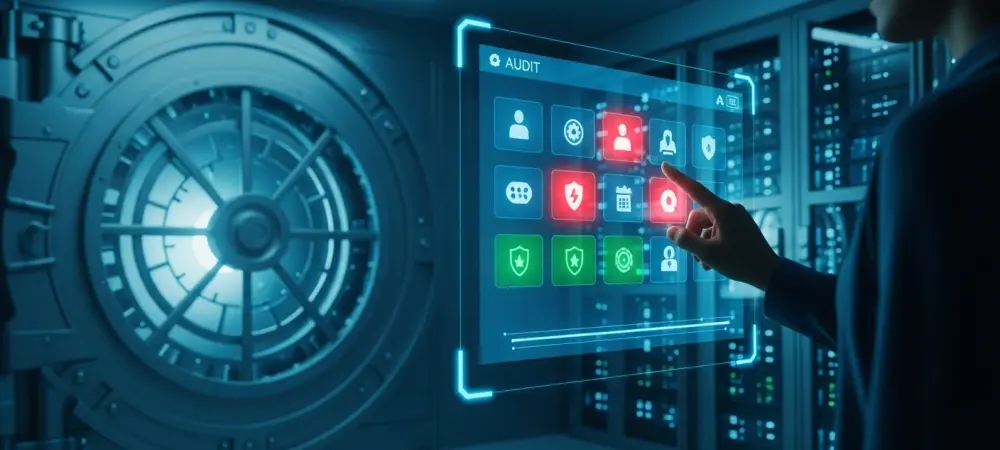
These features transform a password manager from a passive vault into an active security advisor. Imagine you open your 1Password app and the WatchTower dashboard immediately flags a big red warning. It shows you’ve reused the same password on your banking site, your email, and a small forum you signed up for years ago. Even worse, it highlights that your banking site login doesn’t have two-factor authentication enabled. Instead of being an abstract threat, it’s now an actionable list. With a single click, it can take you directly to the compromised website to change the password, and with another, it can show you all the accounts where you’re missing that critical 2FA layer. It’s like having a personal security analyst constantly reviewing your digital footprint and telling you exactly which doors you’ve left unlocked.
The text urges readers to activate two-factor authentication and passkeys. How do these technologies fundamentally change the security equation for an attacker, and could you provide a simple step-by-step for someone looking to activate 2FA for the first time on a critical account like their email?
These technologies change the game by making a stolen password nearly useless on its own. They introduce a second required factor for login—something you have, like your phone, or something you are, like your fingerprint. An attacker in another country might have your password, but they don’t have the physical phone in your pocket that receives the six-digit code. Passkeys are the next evolution, eliminating the password entirely. To activate 2FA on your email, the process is generally straightforward. First, log in and navigate to your account’s “Security” settings. Look for an option labeled “Two-Factor Authentication,” “2-Step Verification,” or “Multi-Factor Authentication.” You’ll then be prompted to choose a method, such as receiving a code via a text message, using an authenticator app, or a physical security key. Just follow the on-screen instructions to link your phone or app, and you’ve instantly raised your account’s defenses exponentially.
What is your forecast for the future of personal cybersecurity? With massive password dumps becoming more common and technologies like passkeys emerging, will the average person’s digital life become more or less secure in the next five years, and what will be the single biggest challenge they face?
My forecast is one of divergence. For the segment of the population that embraces modern tools like password managers and passkeys, their digital lives will become substantially more secure. These technologies are designed to neutralize the most common human-centric vulnerabilities. However, for those who resist these changes and continue to reuse simple passwords, their lives will become drastically less secure, as attackers’ tools and data troves only grow more sophisticated. The single biggest challenge won’t be a new type of malware or a clever hacking technique; it will be overcoming user inertia. The sheer volume of security advice can feel overwhelming, leading people to stick with what’s familiar but dangerously insecure. Convincing the average person that a few minutes spent setting up a password manager is one of the most powerful security decisions they can make will be our greatest hurdle and our most important mission.