

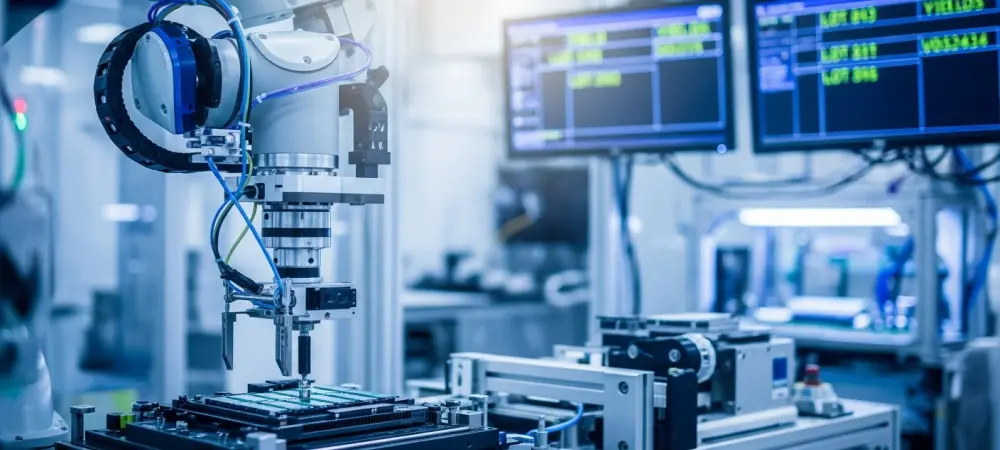
The moment a fabless semiconductor startup moves from the laboratory to the production floor, the structural integrity of its management systems is suddenly put to an extreme stress test. While early-stage development relies on the ingenuity of engineers and the agility of a small team, the transition to high-volume manufacturing introduces a level of operational complexity that spreadsheets and generic accounting software simply cannot sustain. For these specialized firms, an Enterprise Resource Planning system is no longer just a digital ledger for tracking expenses; it becomes a critical nervous system that must coordinate multi-stage outsourced manufacturing processes across global time zones. Managing the journey of a single wafer as it moves from the foundry to assembly, testing, and finally to the end customer requires a degree of precision that standard business tools are not designed to provide. This shift represents a fundamental evolution in how a company views its own data, moving away from a research-centric mindset toward a production-ready model where every unit of work-in-progress must be accounted for with absolute accuracy.
Strategic success in the semiconductor industry is often dictated by how well a company manages the inherent tension between the immediate needs of the finance department and the technical requirements of the operations team. Finance leaders are typically focused on maintaining the fiscal health of the organization, prioritizing cash flow management, burn rates, and the reporting required for the next round of venture capital funding. In their view, a lightweight accounting package might seem sufficient because it manages the general ledger effectively. However, this narrow focus often overlooks the massive “technical debt” that begins to accumulate when operations teams are forced to manually track silicon revisions, wafer lot numbers, and supplier performance metrics. When these two worlds are not synchronized through a unified platform, the resulting data silos lead to costly errors, delayed product launches, and an inability to provide accurate inventory valuations. This misalignment can become a major bottleneck, preventing a startup from responding quickly to market opportunities or shifting demand.
Building Market Credibility and Customer Trust
Securing a contract with a Tier-1 automotive or industrial customer requires far more than just a superior chip design; it demands proof of an institutionalized quality management system. As startups move their innovative products into the hands of early adopters, the focus of customer audits shifts from technical specifications to operational reliability and risk mitigation. Large-scale buyers are inherently risk-averse and will closely scrutinize a startup’s ability to provide a complete history of every unit shipped. A specialized ERP system serves as a powerful credibility tool in these negotiations, providing a “system of record” that proves the startup possesses the operational maturity to survive in a global supply chain. Without this digital foundation, a company may find itself disqualified from high-value contracts because it cannot meet the rigorous traceability standards expected by the industry.
The sustainability of a startup’s growth is directly tied to its ability to replace “tribal knowledge” with automated, repeatable processes that satisfy international standards like ISO 9001. In the early days, a few key employees might keep all the critical supplier and manufacturing data in their heads or in personal documents, but this creates a massive single-point-of-failure risk. A specialized ERP system mitigates this by enforcing consistent nomenclature, standardized part numbering, and structured communication across the entire organization. When a customer or a regulatory body requests a genealogy report, a company with a robust ERP can generate that data in seconds rather than spending days piecing together information from disparate sources. This operational discipline not only protects the company during audits but also enhances its reputation for reliability. By demonstrating that they have full control over their production data and quality metrics, fabless startups can compete on a level playing field with established industry giants, effectively using their data infrastructure as a competitive advantage in a crowded market.
Overcoming Technical Barriers in Product Structure
The semiconductor manufacturing process follows a divergent model that is fundamentally different from the “discrete” manufacturing logic found in most standard business software. In the semiconductor world, a single wafer often yields multiple different end products based on the results of binning and testing. A generic ERP system typically struggles with this “one-to-many” relationship, forcing users to create complex and error-prone manual workarounds to track inventory correctly. These systems often fail to account for the loss of material during the back-end assembly process or the varying costs associated with different performance grades of the same silicon. When a startup uses a specialized platform, these industry-specific workflows are handled natively, allowing for real-time visibility into the work-in-progress stages. This level of detail is essential for accurate cost accounting, as it ensures that the financial statements reflect the physical reality of the production floor, including the nuances of yield rates and scrap.
Eliminating manual data entry through a specialized system significantly reduces the operational risks associated with scaling a product line from low-volume prototypes to mass production. In a standard ERP, the lack of native support for wafer-level tracking often leads to a situation where the operations team maintains one set of data in a spreadsheet while the finance team maintains another in the accounting software. This fragmentation makes it nearly impossible to achieve a single version of the truth, leading to discrepancies in inventory levels and delayed financial closings. Moreover, as the complexity of the product portfolio increases—with various packaging options and temperature ratings—the number of manual transactions required to keep a generic system updated grows exponentially. A specialized solution automates these transitions, ensuring that when a lot moves from the foundry to the assembly house, the system automatically updates the inventory status and captures the relevant costs. This automation allows the engineering team to focus on innovation rather than administrative tasks, ensuring that data integrity remains high even as production volumes surge.
Strategic Implementation and Future Scalability
Successful ERP implementation for a resource-constrained startup requires a “lean-first” approach that prioritizes immediate operational needs while leaving a clear path for future expansion. Many early-stage companies make the mistake of either over-engineering their systems with expensive customizations or choosing a basic tool that they will quickly outgrow. The most effective strategy is to select a platform that offers “out-of-the-box” functionality specifically designed for the semiconductor lifecycle, focusing on essential tasks like procurement, shipping, and genealogy tracking. By implementing a system that already understands the language of foundries and test houses, a startup can go live in a fraction of the time it would take to customize a general-purpose enterprise suite. This phased approach allows the organization to establish a solid data foundation today without the need for a massive internal IT department, providing the flexibility to add more advanced features like automated forecasting or direct supplier EDI integration as the business matures.
The adoption of a specialized management platform served as a transformative milestone for many organizations that successfully navigated the shift from pre-revenue to global scale. By centralizing all manufacturing and financial data into a single, cohesive environment, these companies moved away from reactive troubleshooting toward proactive strategic planning. The focus shifted from merely surviving the current production cycle to optimizing the entire supply chain for better margins and faster time-to-market. Moving forward, startups must view their digital infrastructure as a core component of their product strategy, recognizing that the ability to manage data is just as important as the ability to design silicon. The ultimate goal was to build a transparent, data-driven organization that could adapt to the rapid shifts in the semiconductor landscape with confidence. This proactive investment ensured that when the inevitable challenges of global scaling arrived, the company possessed the structural integrity to maintain its momentum and deliver consistent value to its stakeholders and customers alike.