

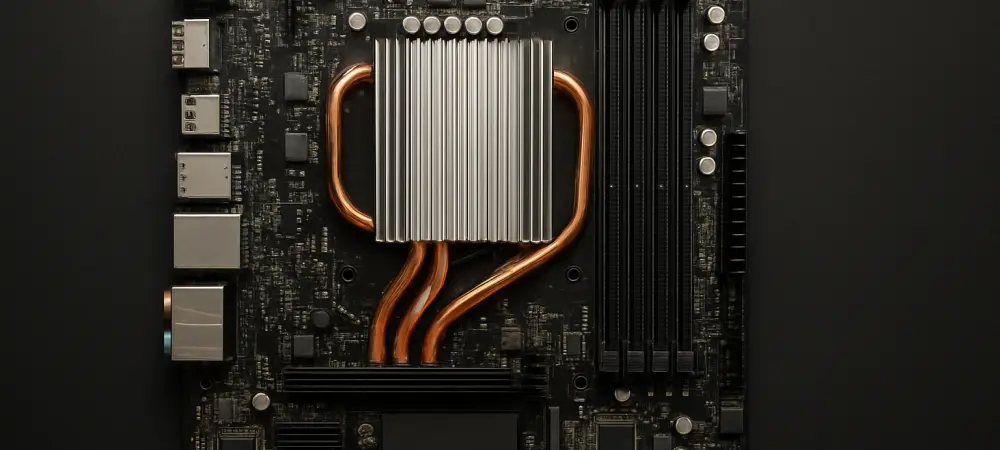
Because the Intel HRE processors used in these boards lack integrated graphics, users must factor the cost of a discrete graphics card into their final build budget. This requirement might seem like a hurdle in an era where entry-level convenience is usually taken for granted, yet the arrival of ERYING’s latest hardware on September 26, 2026, signaled a bold departure from traditional retail expectations. By repurposing Intel’s Raptor Lake embedded processors—specifically the Core i7-13798HRE and Core i5-13598HRE—the manufacturer carved out a unique space for power users who are feeling the pinch of a global tech economy defined by rising component costs. These boards represent a clever pivot for the enthusiast community, utilizing industrial-grade silicon that was originally intended for high-reliability environments like digital signage and point-of-sale systems rather than the typical home desktop. This unconventional approach allowed the company to provide high core counts and modern architecture at price points that would be otherwise impossible using standard socketed retail chips. As the market struggled with the premium prices of the latest generations, this “Mobile on Desktop” or MoDT strategy provided a high-performance escape hatch for builders who prioritized raw processing power and cost efficiency over the luxury of integrated features or traditional retail warranties. By addressing the gap between high-end industrial stability and consumer budget constraints, ERYING effectively introduced a new paradigm in how desktop PC components are sourced and assembled in the current hardware climate.
The MoDT Paradigm: Bridging Mobile Efficiency and Desktop Power
The ERYING Raptor Lake Embedded Motherboard series represents a hybrid category of hardware that has gained significant traction among niche builders and value seekers. The term MoDT refers to the practice of taking processors designed for laptops or specialized embedded systems and soldering them directly onto a full-sized or compact desktop motherboard. This engineering choice eliminated the need for the traditional Land Grid Array (LGA) socket, which in turn reduced the overall height of the cooling assembly and lowered manufacturing costs. While the average consumer is accustomed to buying a processor in a colorful box and installing it themselves, ERYING bypassed this retail overhead by sourcing “tray” versions of embedded chips. This allowed for a more streamlined production process where the processor and the board were treated as a single, cohesive unit. The resulting products offered a level of integration that mirrored high-end laptops but maintained the expansion capabilities and thermal headroom of a desktop chassis, creating a middle ground that appealed to those who wanted the efficiency of mobile architecture without the limitations of a thin-and-light laptop frame.
Furthermore, the “HRE” suffix found on these Intel chips carried specific technical weight that differentiated them from standard mobile or desktop variants. Standing for “High-performance, Real-time, Embedded,” these processors were engineered for industrial clients who demanded long-term product availability and consistent operation under varied thermal conditions. Unlike consumer chips that might see a short production life, embedded silicon is often guaranteed for a decade of availability to support critical infrastructure. ERYING’s innovation lay in taking these stable, high-reliability chips and placing them into a consumer-friendly form factor. This gave desktop users access to enterprise-grade silicon that featured robust power management and optimized thermal profiles. By integrating these specialized chips into a standard micro-ATX style footprint, the manufacturer provided a level of stability and performance density that challenged the dominance of mainstream retail brands, offering a specialized alternative for users who were less concerned with brand-name marketing and more focused on the underlying hardware capabilities.
Technical Specifications: Performance Metrics and Core Configurations
At the heart of this launch were two distinct tiers of performance that catered to different levels of processing demand. The flagship offering, the Core i7-13798HRE-D4, featured a sophisticated 14-core and 20-thread configuration. This setup utilized Intel’s hybrid architecture, which blended 6 high-performance P-cores with 8 energy-efficient E-cores to handle background tasks and multi-threaded workloads simultaneously. With a maximum boost frequency reaching up to 5.0 GHz and a generous 24 MB of L3 cache, this processor delivered a level of throughput that was once reserved only for the highest-end enthusiast workstations. Priced at approximately $200, the bundle effectively redefined the value-to-performance ratio for the mid-range segment. It provided sufficient power for complex tasks such as 4K video editing, large-scale code compilation, and modern gaming, provided the user paired it with a capable discrete graphics card. The high core density ensured that the system remained responsive even under heavy load, making it a formidable choice for users who required a versatile machine for both professional and recreational use.
For those operating on an even tighter budget, the Core i5-13598HRE-D4 offered a compelling alternative that did not sacrifice modern features. This variant provided 12 cores and 16 threads, consisting of 4 P-cores and 8 E-cores, with a boost clock that peaked at 4.8 GHz. Even with its lower price point—falling between $169 and $180—it maintained 18 MB of L3 cache, ensuring that it could still handle demanding applications with ease. One of the most significant advantages of both the i7 and i5 models was their base power rating of 55W. This was substantially lower than the 65W to 125W power draw commonly seen in standard Intel desktop chips, which translated to less heat generation and lower electricity costs over time. The reduced thermal output meant that builders could use more modest cooling solutions, further lowering the total cost of the build. This efficiency was a direct result of the chips’ mobile and embedded heritage, where power management was a critical design priority, proving that high core counts did not necessarily require excessive power consumption or bulky cooling setups.
Strategic Platform Design: Memory and Expansion Features
One of the most deliberate design choices made by ERYING was the inclusion of two DDR4 UDIMM slots rather than moving to the newer DDR5 standard. By late 2026, while DDR5 had become the dominant technology in high-end systems, its price remained a significant barrier for entry-level and mid-range builders due to ongoing manufacturing challenges and high demand for server-grade memory. By sticking with DDR4, ERYING allowed users to take advantage of a mature and highly affordable memory ecosystem. This decision was particularly beneficial for users who were upgrading from older systems, as they could often reuse their existing memory modules, further reducing the total expenditure of a new build. The ability to populate the board with up to 64GB of widely available, low-cost DDR4 RAM ensured that the system could handle memory-intensive tasks like virtualization or large data sets without the “early adopter tax” associated with the latest memory generations.
Beyond memory, the storage and expansion options on these boards were carefully balanced to provide a mix of high-speed modern standards and reliable legacy support. Each board featured a PCIe 5.0 x8 slot for discrete graphics cards. While some enthusiasts might have initially viewed the x8 lane limitation as a bottleneck, the massive bandwidth provided by the PCIe 5.0 standard meant that even mid-to-high-end GPUs could operate at or near their full potential without being constrained by the interface. For storage, the boards included one PCIe 4.0 x4 M.2 slot for ultra-fast NVMe boot drives and a secondary PCIe 3.0 slot for additional storage expansion. This dual-slot configuration allowed for a high-performance primary drive while maintaining an affordable path for secondary storage. Additionally, the presence of standard SATA ports ensured that users with traditional hard drives or older SSDs could still integrate their existing storage hardware into the new system. This blend of cutting-edge PCIe 5.0 connectivity with practical DDR4 and SATA support demonstrated a clear understanding of the budget builder’s needs, prioritizing utility and cost-effectiveness over purely aesthetic or theoretical performance metrics.
Economic Context: Navigating High Costs in the 2026 Market
The significance of a $180 motherboard-CPU bundle cannot be overstated when viewed through the lens of the 2026 economic landscape. Throughout the year, the technology sector faced persistent inflation and supply chain volatility that drove the prices of standard PC components upward. Specifically, the costs of DRAM and NAND flash memory saw periodic spikes, making it increasingly difficult for consumers to build a capable machine for under $1,000. In this environment, ERYING’s strategy of bundling the processor and motherboard together provided a much-needed financial relief valve. By selling the core of the system as a pre-assembled unit, the company eliminated the price markups typically added by retailers at each stage of the supply chain. This “direct-to-consumer” approach for industrial-grade parts allowed builders to allocate more of their budget toward other critical components, such as a higher-quality power supply or a better discrete graphics card, which was a necessity for these specific HRE chips.
This market positioning mirrored the broader industry trend of finding creative ways to maintain affordability in a high-cost era. Much like how major laptop manufacturers continued to offer DDR4-based models for their budget-oriented lines, ERYING recognized that the majority of users were more concerned with real-world performance than having the absolute latest specification on paper. By providing a “platform in a box” that significantly undercut the price of a separate retail Intel CPU and a compatible LGA1700 motherboard, ERYING effectively democratized high-core-count computing. This move was particularly impactful for students, hobbyists, and small businesses who needed modern processing power for software development or creative work but were unable to justify the expense of flagship retail platforms. The success of this launch highlighted a growing demand for hardware that prioritized functional value over modular flexibility, suggesting that many users were willing to accept certain technical trade-offs if it meant they could achieve their performance goals without overextending their finances.
Operational Considerations: The Realities of Soldered Silicon
While the value proposition of the ERYING boards was undeniable, it came with a fundamental shift in how users approached hardware maintenance and longevity. The defining characteristic of these MoDT solutions was that the CPU was soldered directly to the motherboard using a Ball Grid Array (BGA) connection. This meant that the traditional upgrade path—where a user could simply swap out an older processor for a newer one a few years down the line—was completely eliminated. For some, this was a significant drawback, as it locked the system into a specific performance tier for its entire operational life. However, for a large segment of the target audience, this was a negligible concern. Many budget-conscious builders tended to keep their systems for four to five years before performing a total platform overhaul anyway. For these users, the upfront savings and the optimized performance of a pre-integrated unit outweighed the theoretical benefits of a socketed design that they might never actually utilize.
Reliability and cooling also presented unique considerations for those adopting the ERYING platform. Because the CPU was permanently attached to the board, any failure in either the processor or the motherboard necessitated the replacement of the entire unit. This made the quality of the motherboard’s voltage regulator modules (VRMs) and power delivery systems even more critical, as they were the literal lifelines for the non-removable silicon. To mitigate these concerns, ERYING utilized heat spreaders and mounting hardware that were compatible with many standard aftermarket coolers, allowing users to install robust thermal solutions to protect their investment. Furthermore, the use of industrial-grade HRE chips provided an inherent layer of reliability, as these processors were designed from the ground up to operate in harsh environments. This fusion of industrial stability with enthusiast-level cooling options created a system that, while non-upgradeable, was exceptionally durable. It shifted the focus from the flexibility of the platform to its long-term consistency, appealing to users who wanted a “set it and forget it” solution for their computing needs.
Industry Projections: The Evolving Landscape of Value Hardware
The introduction of the ERYING Raptor Lake embedded boards represented a pivotal moment that reshaped the budget hardware segment. Industry analysts observed that the successful integration of industrial silicon into consumer products encouraged other third-party manufacturers to explore similar avenues. As a result, the market saw an increase in unique hardware bundles that utilized non-traditional supply chains to bypass the high costs of retail-boxed components. This trend promoted a more diversified ecosystem where consumers had more choices beyond the standard offerings from major motherboard brands. The shift also prompted larger manufacturers to reconsider their entry-level strategies, as they faced stiffer competition from these high-value, niche products. This era marked a transition toward a more pragmatic approach to PC building, where the utility of the hardware took precedence over the prestige of the brand name or the flexibility of the socket.
Looking forward, the persistence of DDR4 and the rise of MoDT solutions suggested that the industry was moving toward a more segmented future. Builders were advised to carefully evaluate their long-term needs before committing to a soldered platform, balancing the immediate cost savings against the lack of future modularity. The actionable recommendation for many was to utilize these boards as the foundation for dedicated machines—such as high-performance home servers, dedicated streaming boxes, or budget workstations—where the fixed performance was more than adequate for the intended task. By late 2026, the success of ERYING’s launch had already paved the way for more integrated computing solutions, proving that there was a substantial and growing market for hardware that defied traditional retail norms. This development ensured that even in a challenging economic climate, the DIY PC community remained vibrant and capable of delivering powerful computing experiences to a wide range of users through innovation and creative sourcing.