

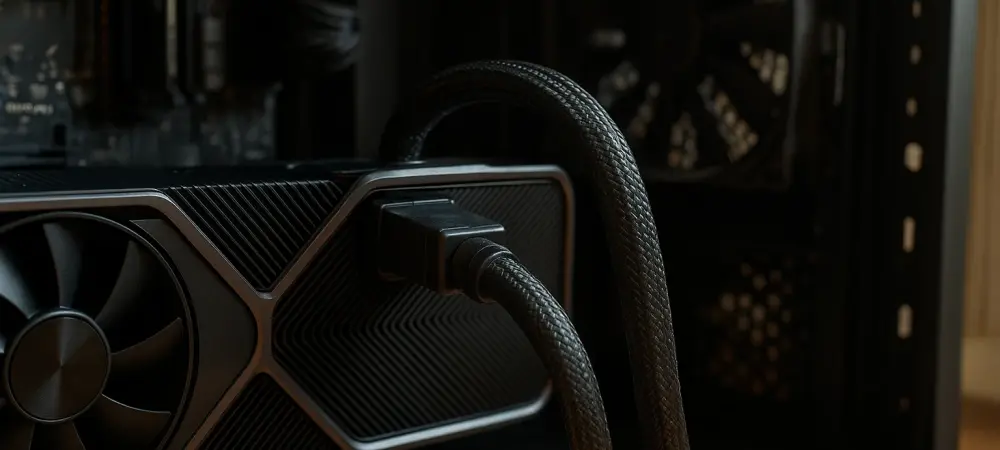
The inability of the new 12V-2×6 standard to regulate internal current distribution has left high-end systems vulnerable to fire hazards even under standard operating conditions. The launch of the Blackwell-based RTX 50-series in 2026 was widely anticipated as a monumental leap for artificial intelligence and high-fidelity gaming, representing a pinnacle of consumer graphics technology that promised to redefine the boundaries of real-time rendering. However, as the first waves of high-end units reached the hands of early adopters, a familiar and deeply concerning phenomenon began to cast a shadow over the release. Despite several years of iterative design and multiple revisions to the power delivery infrastructure, flagship models like the RTX 5090 are once again making headlines for thermal failures and melted power headers. The return of these issues has reignited a fierce debate within the tech community, as users who invested significant capital—often upwards of $5,000—now find themselves grappling with hardware that carries a tangible risk of fire. This recurring crisis suggests that the engineering solutions implemented since the original 40-series scandal have failed to address the core electrical challenges of high-wattage components, leaving the industry in a state of hardware anxiety.
Evolution of the 12V-2×6 Connector and the Seating Controversy
To rectify the high-profile seating issues of the previous generation, the industry transitioned to the 12V-2×6 connector standard, which was engineered specifically to be the definitive solution for the 2026 hardware lineup. This revised design featured a critical mechanical fail-safe: the sense pins were shortened by 1.5 millimeters, while the power terminals were lengthened by 0.25 millimeters. The logic behind this modification was straightforward and seemingly foolproof; if a cable were not fully and securely inserted into the card, the shorter sense pins would fail to make a complete electrical circuit. This would theoretically prevent the GPU from drawing any power at all, thereby eliminating the risk of high-resistance heating caused by partial connections. On paper, this was supposed to shift the responsibility of “user error” into a hardware-controlled environment where a card simply would not function unless it was safe to do so.
Despite these rigorous engineering efforts to ensure a secure physical connection, real-world data from the early months of 2026 indicates that the mechanical “fail-safe” has not brought an end to the melting phenomenon. Even in cases where enthusiasts and professional reviewers have verified that their cables were perfectly seated and locked into place, the RTX 5090 has continued to experience catastrophic thermal events. These incidents often occur within the first few weeks of operation, resulting in scorched plastic and fused pins that render both the graphics card and the power supply unit useless. The persistence of these failures suggests that while the industry successfully addressed the problem of mechanical seating, it overlooked a far more dangerous electrical reality. The focus on how the user plugs in the cable has essentially acted as a distraction from the underlying issues within the internal power-handling architecture of the GPU itself.
The Hidden Cost of Abandoning Individual Power Shunts
A technical comparison between current hardware and the older RTX 30-series reveals a significant shift in how NVIDIA manages power distribution. In the 30-series generation, the GPU architecture treated the power connector as three distinct 12V sources, with each source being monitored by its own dedicated shunt resistor. This configuration allowed the card to actively balance the electrical load across the different pairs of wires, ensuring that no single pin was ever forced to carry a disproportionate amount of current. By maintaining this equilibrium, the system could prevent any individual component from overheating, even during extreme spikes in power demand. This was a sophisticated, albeit more expensive, method of ensuring that the physical limits of the 16-pin connector were never exceeded by any single line of electricity. When the industry moved toward the 40-series and subsequently the 50-series in 2026, this granular load balancing was abandoned in favor of a “single-pool” power input method. This design choice lumps all six 12V lines into a single total power budget, which means the GPU is no longer aware of the current distribution across individual pins. Because electricity naturally follows the path of least resistance, any minor variation in contact resistance—which is inevitable in mass-produced hardware—can cause a single pin to be severely overloaded. Independent laboratory testing has documented instances where a single wire was forced to carry over 22A of current, despite each pin only being rated for approximately 9.5A. This architectural regression created a “smoking gun” scenario where a perfectly seated cable can still melt because the internal circuitry of the card is unable to prevent a single pin from carrying more than double its intended electrical capacity.
Thermal Overload in the Era of AI-Driven Performance
The electrical strain on these connectors is being pushed to a breaking point by the astronomical power requirements of modern, AI-enhanced software. The introduction of DLSS 5 has brought about unprecedented visual fidelity, but it has also introduced significant challenges for power stability. In demanding titles such as NBA 2K27, system power draw has been observed jumping from a baseline of 465W to a staggering 575W the moment these advanced AI features are engaged. This massive ceiling for power consumption leaves virtually no margin for error in a connector system that is already struggling with uneven current distribution. As the silicon demands more juice to process complex neural networks and ray-traced environments, the physical connection to the power supply has become a bottleneck that is literally melting under the pressure of modern gaming standards.
Hardware experts and prominent reviewers have utilized thermal imaging to document the alarming temperatures generated at the power interface during these peak loads. In several recorded instances, temperatures at the PSU interface reached between 150 and 175 degrees Celsius, which is well beyond the safe operating limits of the materials used in standard cable headers. These extreme thermal events are not just damaging the graphics cards; they are also taking down premium power supplies, creating a ripple effect of hardware failure that is incredibly costly for the consumer. As software developers continue to utilize every watt of available power to drive their engines, the disconnect between the capabilities of the GPU core and the limitations of its power delivery system has become the most significant point of failure in the high-end PC ecosystem.
Lessons Learned from the 2026 Power Infrastructure Crisis
The ongoing struggle with the RTX 50-series power connectors demonstrated that mechanical revisions alone were insufficient to handle the demands of 600W consumer hardware. During the height of the crisis, it was discovered that the most successful users were those who strictly adhered to a “35mm straight clearance” rule, ensuring that cables had no vertical or horizontal tension before entering the header. This practice minimized the physical stressors that often led to increased contact resistance. Furthermore, the community found that avoiding all third-party extensions, bridges, and angled adapters was a mandatory step for long-term stability, as these components introduced extra points of failure that the single-pool power architecture could not safely manage.
As the market moved toward more robust power standards, many enthusiasts turned to software-level undervolting as a primary safety measure. By manually limiting the voltage and power draw of their flagship cards, users were able to maintain a safer current distribution across the 12V-2×6 pins without suffering a noticeable loss in gaming performance. This period in hardware history served as a clear signal to manufacturers that the pursuit of raw power must be matched by a return to active, per-pin load balancing. The consensus among analysts suggested that until the industry returned to the shunt-resistor designs of previous generations, the risk of thermal degradation would remain a permanent fixture of the high-performance computing landscape. Users eventually prioritized power supply units with dedicated, native 16-pin cables over those requiring adapters, signaling a permanent shift in how PC power infrastructure was built.