

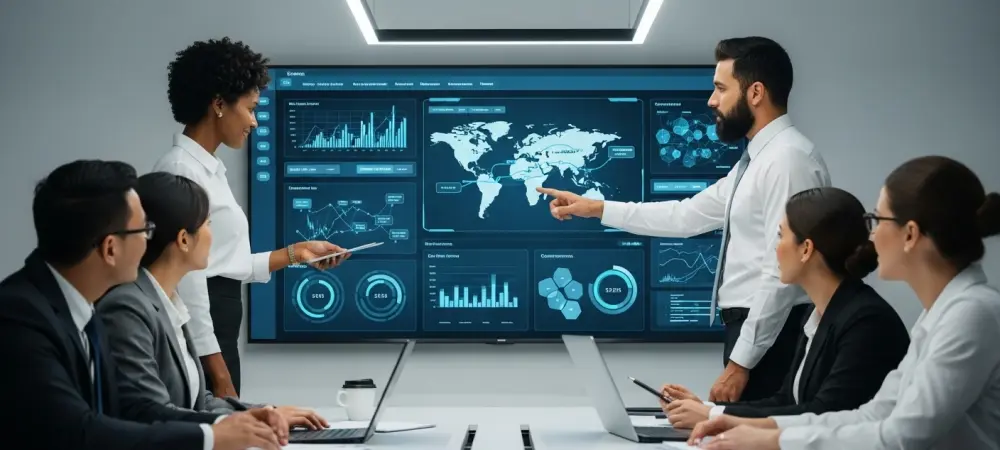
A single piece of information, from a customer order to an inventory count, can ripple through an entire organization, dictating decisions and shaping outcomes in real time. Enterprise Resource Planning (ERP) software is the technology that makes this seamless flow possible, representing a significant advancement in business management and operations. This review will explore the evolution of ERP technology, its key features, performance metrics, and the impact it has had on various applications. The purpose of this review is to provide a thorough understanding of the technology, its current capabilities, and its potential future development.
The Foundation of Modern Enterprise Operations
ERP software operates on the core principle of integrating disparate business processes—from finance and human resources to supply chain and customer relations—into a single, unified system. This consolidation eliminates data silos, creating a single source of truth that allows departments to communicate and collaborate with unprecedented efficiency. By centralizing information, organizations gain a holistic view of their operations, enabling more strategic and coordinated management.
The technology has come a long way from its origins as manufacturing resource planning (MRP) systems, which were primarily focused on inventory control and production scheduling. Over the decades, its scope has expanded dramatically to encompass virtually every facet of a business. In the modern technological landscape, ERP is not just a tool for process management; it is a critical enabler of data-driven decision-making, providing the insights necessary to optimize resources, reduce costs, and respond swiftly to market changes.
Core Modules and Key Functionality
Financial Management and Accounting
The financial module serves as the bedrock of most ERP systems, offering a comprehensive suite of tools for managing an organization’s monetary health. It automates core accounting tasks, including general ledger management, accounts payable, and accounts receivable, thereby reducing manual errors and improving accuracy. Furthermore, these modules provide robust capabilities for budgeting, forecasting, and asset management, which are essential for long-term financial planning and stability. Beyond basic bookkeeping, the finance module is instrumental in ensuring regulatory compliance and enhancing financial transparency. It generates real-time financial reports and dashboards that give stakeholders immediate visibility into key performance indicators. This allows leadership to monitor cash flow, assess profitability, and make informed decisions quickly, ensuring the organization remains financially sound and compliant with evolving standards.
Human Capital Management
The Human Capital Management (HCM) module transforms traditional administrative HR functions into a strategic tool for talent management. It streamlines essential processes like payroll processing, benefits administration, and time tracking, freeing HR professionals to focus on more value-added activities. The system centralizes employee data, making it simple to manage personnel records and ensure compliance with labor laws.
Moreover, the HCM module supports the entire employee lifecycle, from recruitment and onboarding to performance management and succession planning. By providing integrated tools for talent acquisition and employee development, it helps organizations attract, retain, and cultivate a skilled workforce. This strategic approach to human resources is vital for building a competitive advantage and fostering a productive workplace culture.
Supply Chain Management
An effective Supply Chain Management (SCM) module is crucial for businesses that deal with physical goods, as it optimizes the entire flow from procurement to delivery. It provides powerful tools for inventory management, helping companies maintain optimal stock levels to avoid both shortages and overstocking. The module also automates order processing and procurement, streamlining the purchasing cycle and strengthening supplier relationships. The true value of the SCM module lies in its ability to create a transparent and responsive supply chain. By integrating logistics, warehousing, and transportation management, it provides end-to-end visibility, allowing businesses to track goods in real time and anticipate potential disruptions. This level of control enhances efficiency, reduces operational costs, and ultimately leads to faster, more reliable delivery for the end customer.
Customer Relationship Management
The Customer Relationship Management (CRM) component within an ERP system focuses on managing and enhancing interactions with current and potential customers. It consolidates all customer data—including contact information, purchase history, and service inquiries—into a single, accessible profile. This unified view empowers sales, marketing, and customer service teams to deliver a more personalized and consistent customer experience. By integrating CRM with other business functions, ERP software creates a powerful synergy. For instance, the sales team can check real-time inventory levels before making a promise to a customer, while the service team can access a client’s full order history to resolve issues more effectively. This holistic approach not only improves customer satisfaction and loyalty but also drives revenue growth by identifying upselling and cross-selling opportunities.
Emerging Trends and Technological Innovations
The most significant trend shaping the ERP landscape is the widespread migration from on-premise systems to cloud-based, Software-as-a-Service (SaaS) solutions. This shift has democratized access to powerful ERP capabilities, offering lower upfront costs, greater scalability, and simplified maintenance. Cloud ERP allows businesses to adapt more quickly to changing demands and enables remote access, which has become indispensable in the modern work environment. Artificial intelligence (AI) and machine learning are also becoming deeply embedded within ERP platforms, transforming them from passive record-keeping systems into intelligent, proactive advisors. These technologies are used to automate routine tasks, provide predictive analytics for demand forecasting, and offer intelligent insights to guide strategic decisions. Concurrently, the growing emphasis on mobile ERP and intuitive user experience (UX) design is making these complex systems more accessible and easier to use, which boosts user adoption and overall productivity.
Industry-Specific Applications and Implementations
While ERP systems offer a standardized framework, their true power is often realized through industry-specific customization. In manufacturing, for example, ERP is tailored for shop floor control, production scheduling, and quality management. The retail industry leverages it for point-of-sale integration, inventory optimization across multiple channels, and managing complex promotional pricing.
Unique use cases highlight this adaptability even further. The food and beverage industry relies on ERP for lot traceability to ensure food safety and manage recalls effectively. In professional services and construction, project-based accounting features are essential for tracking project costs, managing resources, and ensuring profitability. These tailored implementations demonstrate that ERP is not a one-size-fits-all solution but a flexible platform that can be configured to meet the distinct challenges of any sector.
Implementation Challenges and Common Pitfalls
Despite its transformative potential, ERP adoption is fraught with challenges. The primary hurdles include the significant financial investment, lengthy and complex implementation timelines, and the daunting task of migrating legacy data into a new system. These factors can strain an organization’s resources and disrupt daily operations if not managed carefully.
Market obstacles also present considerable difficulties. Vendor lock-in can make it expensive and complicated to switch providers, while the standardized nature of many ERP systems can clash with a company’s unique, long-standing business processes. Successful mitigation strategies often involve a phased rollout to minimize disruption, alongside a comprehensive change management program to ensure employee buy-in and proficiency with the new system.
The Future Trajectory of ERP Systems
The next generation of ERP is moving toward a more flexible, composable architecture. Instead of a monolithic, all-in-one system, businesses are beginning to adopt modular ERPs, where they can select and integrate best-of-breed applications to create a solution tailored to their specific needs. This approach enhances agility and allows companies to innovate more rapidly without being constrained by a single vendor.
Potential breakthroughs will likely arise from deeper integration with emerging technologies. The Internet of Things (IoT) will enable real-time asset tracking and predictive maintenance by feeding data directly from equipment into the ERP. Meanwhile, blockchain technology holds the promise of creating immutable, transparent records for enhanced supply chain security and traceability. These advancements point toward a future where ERP systems power highly automated, intelligent enterprises.
Final Assessment and Strategic Recommendations
In summary, the role of Enterprise Resource Planning software as the central nervous system for modern businesses was firmly established. Its ability to unify disparate functions, streamline operations, and provide data-driven insights made it an indispensable asset for organizations aiming to compete in a complex digital economy. The evolution from on-premise to cloud-based models, coupled with the integration of AI and mobile capabilities, further solidified its value.
The overall assessment of ERP’s state was that of a mature but continually evolving technology. The challenges of implementation and cost remained significant barriers, yet the strategic benefits—including enhanced efficiency, greater visibility, and improved decision-making—far outweighed the drawbacks for those who navigated the adoption process successfully. The organizations that effectively leveraged their ERP systems found themselves better equipped to drive digital transformation and secure a lasting competitive advantage.