

Ling-Yi Tsai is a seasoned expert in HR technology and organizational change, renowned for her ability to blend data-driven HR analytics with human-centric workplace design. With decades of experience navigating the complexities of recruitment and talent management, she has become a leading voice in optimizing physical office environments to foster mental well-being and peak performance. In this conversation, we explore the evolving landscape of office acoustics and the critical need for “quiet zones” in a world increasingly dominated by the distractions of open-office layouts.
Workplace noise often functions as a major stressor that kills productivity. How do you measure the specific impact of auditory distractions on your team’s output, and what early warning signs indicate that an open-office layout is hindering mental well-being?
To truly understand the toll of noise, we look at both performance data and the physiological state of the workforce. A pivotal 2024 Jabra study highlighted that workplace noise is not merely an inconvenience but a significant stressor that actively kills productivity. When an open-office layout begins to fail, you will notice employees constantly wearing heavy noise-canceling headphones or seeking refuge in empty hallways just to find a moment of peace. These early warning signs often manifest as increased irritability, frequent errors in deep-focus tasks, and a palpable sense of mental fatigue by mid-afternoon. By treating auditory health as a core metric, we can see that when the ambient “buzz” becomes a constant roar, the brain’s ability to filter distractions is overwhelmed, leading to a measurable decline in high-level output.
Successful businesses are increasingly treating quiet zones as a core metric for performance. What physical barriers or layout changes effectively mimic the silence of a home office, and how do you ensure these areas remain strictly for high-level, uninterrupted tasks?
Transitioning back to the office requires us to replicate the sanctuary-like focus employees found in their home environments. This involves moving beyond simple “quiet please” signage and investing in physical barriers that prevent sound from traveling across floors and echoing through ceilings. To ensure these zones remain sacred, we design them to be visually distinct—perhaps with different lighting or specialized furniture layouts—to signal that chatter is strictly prohibited. It is about creating an integrated wellness space where employees can retreat for those high-level tasks that demand deep, uninterrupted thought. By making these areas feel like a legitimate alternative to a private study, we reinforce the idea that focused work is a priority rather than an afterthought.
Standard building materials like natural wood or traditional ceilings often reflect sound rather than absorb it. When redesigning a space, what specific acoustic furniture or specialized solutions should leaders prioritize to dampen footsteps and ambient buzz without sacrificing office aesthetics?
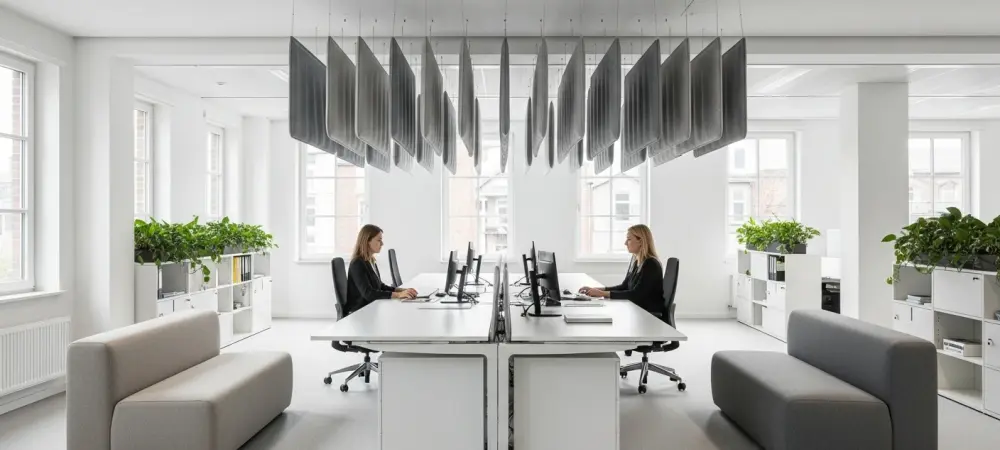
While natural wood and high ceilings offer a beautiful, modern aesthetic, they are often the primary culprits in creating a hollow, echoing environment. To combat this, leaders should prioritize sound-absorbing furniture and specialized solutions from experts like RPG Acoustical Systems that are specifically engineered to trap ambient noise. These modern materials can mimic the look of traditional finishes while providing the soft, dampening effect needed to silence heavy footsteps and the constant hum of office equipment. Instead of choosing between beauty and function, we can integrate acoustic panels and textured fabrics that actually enhance the visual appeal of the space. It is a people-first approach that recognizes that the tactile and auditory feel of a room is just as important as its visual design.
Beyond physical changes, fostering focus requires a cultural shift where quiet is viewed as integral to success. How can leaders coach naturally louder departments to lower their noise levels, and what specific steps help send a message that respecting shared silence is a collective responsibility?
Driving meaningful change in office culture requires more than just a renovation; it demands a shift in how we value each other’s concentration. Leaders can coach more boisterous departments by encouraging them to utilize collaborative zones for their high-energy discussions while respecting the designated silence of focus areas. We can lean into leadership literature and internal workshops to help teams understand that maintaining a low noise profile is an act of professional courtesy and a contributor to collective success. By consistently messaging that quiet is essential for mental well-being, we foster an environment where employees feel empowered to hold each other accountable for the noise they create. Ultimately, when the entire organization treats silence as a shared asset, performance levels naturally rise as the cognitive load of filtering distractions is lifted.
What is your forecast for workspace design?
I predict that the future of workspace design will move away from the “one-size-fits-all” open-office model and toward highly segmented, specialized environments that prioritize acoustic privacy as much as visual transparency. We will see a surge in the adoption of sound-absorbing materials and integrated wellness metrics, where the quality of the auditory environment is treated as a key performance indicator. Successful organizations will stop viewing the office as just a place to “show up” and instead design it as a high-performance tool tailored for deep work. As the line between remote and in-office work continues to blur, the offices that thrive will be those that provide a superior sensory experience, allowing employees to think and perform at their absolute highest abilities.