

The strategic alliance forged between the Abu Dhabi National Oil Company, OpenAI, and G42 represents a seismic shift in how industrial giants harness the sheer computational power of agentic systems to redefine operational efficiency. This collaboration moves beyond the implementation of static algorithms, signaling the rise of a dynamic orchestration layer that synchronizes diverse autonomous agents.
This technological evolution emerged from a necessity to unify vast, disparate data streams into a cohesive intelligence network. By transitioning from isolated predictive models to interconnected orchestration, the system allows for a more fluid exchange of information across various operational silos. This shift toward autonomy ensures that the complex demands of modern energy production are met with unprecedented speed and precision.
The Dawn of Agentic Intelligence in Energy Operations
The introduction of this technology centers on the integration of “OpenAI Frontier,” a sophisticated framework designed to act as the primary conductor for autonomous agents. This model does not simply process data but actively manages the relationship between technical oilfield telemetry and high-level commercial strategies. It represents a fundamental change in how energy firms perceive the role of artificial intelligence in daily workflows.
The core principles of this system rely on the seamless coordination of digital entities that can reason and execute tasks independently. This context is vital as the industry moves away from reactive maintenance toward proactive, agent-driven management. The partnership provides the necessary scale and technical depth to move these concepts from experimental phases into full-scale industrial reality.
Technical Architecture: Core Capabilities
The ENERGYai Framework and Frontier Orchestration
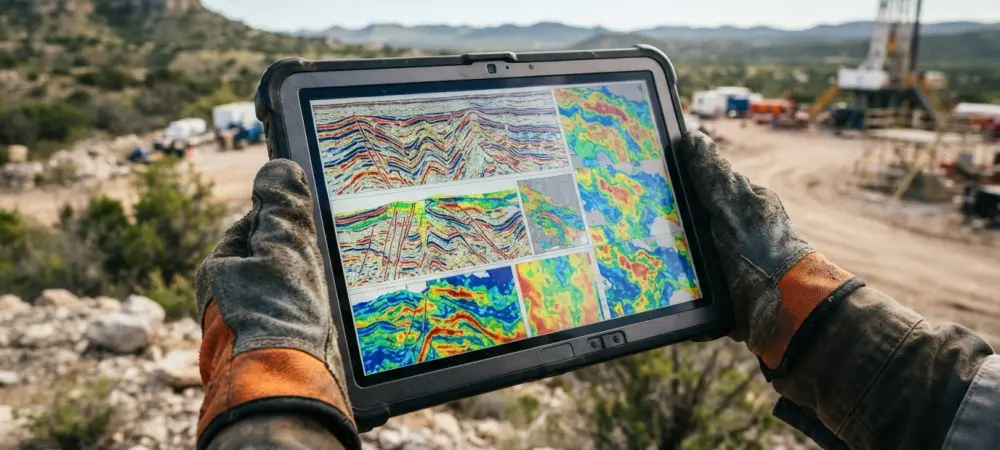
At the heart of this architecture lies the ENERGYai framework, a massive 70-billion-parameter model built upon five decades of deep historical data. This foundation provides the system with a unique longitudinal perspective, allowing it to interpret complex seismic patterns and reservoir behaviors with extreme accuracy. It serves as the bedrock upon which the more agile OpenAI agents operate.
The orchestration layer acts as the brain, directing specific agents to handle diverse tasks from geological analysis to supply chain logistics. By leveraging such a high-parameter count, the system can simulate millions of variables simultaneously, ensuring that the foundational intelligence layer remains robust against market volatility.
Sovereign Infrastructure: Data Localization
A critical component of this deployment is G42’s sovereign AI infrastructure, which ensures that all sensitive datasets remain within localized control. This localized approach is essential for maintaining the security protocols required by national energy sectors while still utilizing high-performance computing capabilities. It provides a secure sandbox for the deployment of advanced logic without exposing proprietary data.
Furthermore, this infrastructure supports the massive computational loads required for real-time agentic reasoning. By keeping data processing within a sovereign framework, the system avoids the latency and security risks associated with public cloud environments. This structural choice highlights the unique blend of global innovation and regional data stewardship.
Latest Developments in Energy-Specific AI Models
The shift toward agentic systems has recently seen the transition into “OpenAI Frontier,” which bridges the gap between field-level sensors and boardroom decisions. Unlike previous versions that required manual data entry, these agents now pull directly from technical telemetry to suggest capital allocation strategies. This development effectively turns raw physical data into actionable financial intelligence.
Moreover, the latest iterations focus on cross-functional reasoning, where an agent in drilling can inform the trading desk about potential volume changes. This interconnectedness allows for a more holistic view of the energy lifecycle, ensuring that technical oilfield realities are always aligned with market demands. This level of integration was previously impossible with fragmented, legacy AI tools.
Real-World Applications: Industrial Impact
Automated Field Master Planning
The application of AI agents in subsurface management has revolutionized field master planning by merging facilities and economic data into a single stream. This automated process has reduced development planning cycles from several months to a few hours, allowing for rapid pivots in strategy. It empowers engineers to explore multiple scenarios without the traditional burden of manual data reconciliation.
Beyond speed, this application improves the accuracy of infrastructure placement and reservoir depletion strategies. By analyzing subsurface complexities alongside construction costs, the agents identify the most efficient paths to production. This leads to significant capital savings and a much faster return on investment for complex offshore and onshore projects.
Real-Time Resource Valuation and Trading
Another unique use case is the real-time valuation of oil reserves while they are still in the ground. By connecting production agents with logistics and trading platforms, the system can continuously forecast the financial value of every barrel based on current market conditions. This allows the company to optimize its response to global price fluctuations instantly.
This interconnectedness ensures that refining and logistics are always synchronized with actual production output. If a delay occurs at the wellhead, the trading agents automatically adjust their market positions to mitigate financial risk. Such agility creates a competitive advantage that traditional, manual valuation methods simply cannot match in a fast-paced global economy.
Challenges and Structural Constraints
Data Integrity and Human Oversight
Despite the advancements, ensuring the accuracy of seismic and reservoir data remains a primary technical hurdle. High-stakes environments require a “human-in-the-loop” framework to oversee the most consequential decisions made by autonomous agents. This oversight prevents the risks associated with fully autonomous decision-making in unpredictable geological conditions.
The complexity of interpreting older, legacy data formats can also introduce noise into the learning models. Maintaining data integrity requires constant validation by domain experts to ensure the AI does not hallucinate geological features. This balance between automation and human expertise is crucial for maintaining safety and reliability in field operations.
Regulatory and Market Obstacles
Deploying sovereign AI within a globalized market presents significant regulatory challenges regarding data privacy and international trade. Integrating these advanced agents into existing legacy infrastructure often requires extensive modifications to hardware and software protocols. These structural constraints can slow down the deployment of agentic systems in regions with older technological foundations.
Additionally, navigating the diverse legal landscapes of international energy markets requires the system to be highly adaptable. Each jurisdiction has its own set of rules for data localization and algorithmic transparency, making a one-size-fits-all approach difficult. Overcoming these obstacles is necessary for the widespread expansion of agentic intelligence across global energy grids.
The Future Trajectory of Autonomous Energy Systems
The trajectory of this technology points toward a future of fully autonomous energy lifecycles where human intervention becomes increasingly strategic rather than operational. We can expect significant breakthroughs in subsurface imaging that allow agents to “see” reservoirs with near-perfect clarity. This will further reduce the uncertainty inherent in exploration and production. From 2026 to 2030, the expansion of agentic AI will likely touch every aspect of the global energy grid, from renewable integration to carbon capture. These systems will play a pivotal role in managing the transition to a more diversified energy mix. The long-term impact will be a more resilient and efficient global energy security framework driven by intelligent automation.
Conclusion: Strategic Assessment
The review of agentic intelligence in the energy sector demonstrated that the transition from passive insights to active optimization was a defining milestone. The deployment of the OpenAI Frontier platform successfully bridged the gap between raw field telemetry and high-level commercial decision-making. Stakeholders observed that the reduction in planning cycles from months to hours provided a substantial competitive edge in volatile markets.
Industry leaders acknowledged that the integration of sovereign infrastructure addressed critical concerns regarding data security and localized control. The transition toward autonomous field master planning and real-time resource valuation proved that interconnected AI agents could redefine operational benchmarks. Ultimately, the partnership between ADNOC, OpenAI, and G42 established a blueprint for the future of industrial intelligence.