

Dominic Jainy brings a wealth of specialized knowledge to the discussion of Asia’s shifting digital landscape. As companies race to meet the skyrocketing demand for artificial intelligence, the physical requirements for data centers are undergoing a radical transformation from simple storage hubs to high-density powerhouses. Today, we explore the strategic expansion into Greater Osaka, a move that signals a new era for Japanese tech capacity through the lens of infrastructure logistics, liquid cooling innovations, and the power of local partnerships.
What factors made Kyotanabe the ideal site for a massive 200MW, 1.4 million-square-foot campus, and what does it take to navigate the logistical hurdles of a project this size in Japan?
Selecting Kyotanabe was a strategic decision to secure a footprint of 130,000 square meters that could support a staggering 200MW of capacity. In a mountainous and densely populated country like Japan, finding a contiguous 1.4 million-square-foot space near a major hub like Osaka is a rare feat that requires perfect alignment between land availability and power grid access. The primary logistical challenge involves more than just construction; it is about coordinating the massive scale of groundwork required to support such heavy, AI-focused infrastructure. There is a profound sense of responsibility when breaking ground on a project of this magnitude, knowing that every square meter must be optimized to meet the intense demands of modern cloud services.
With the initial phase delivering 28MW and incorporating specialized liquid cooling, how do these technical specifications redefine our understanding of data center design compared to older hyperscale facilities?
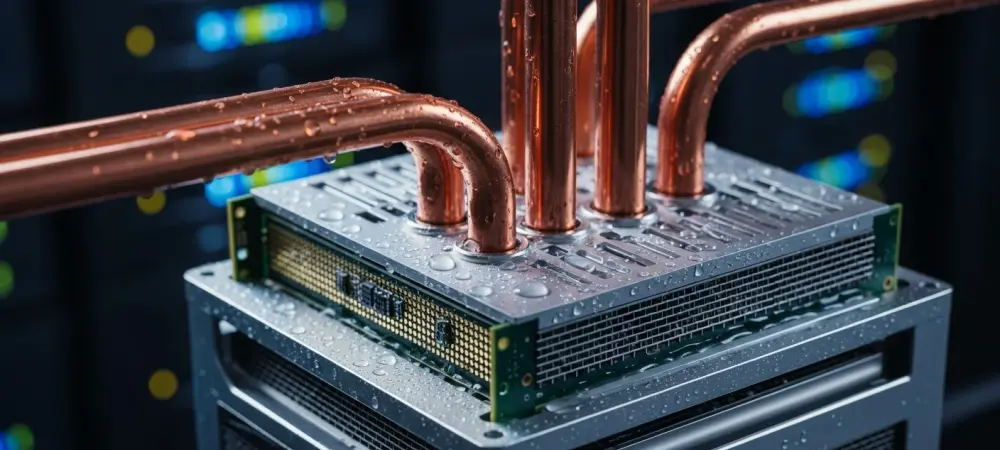
Traditional hyperscale builds often rely on air cooling, but this first 28MW phase is built for a new reality where liquid cooling is no longer optional. When you walk through a facility designed for AI, you notice the shift from sprawling, lower-density racks to tightly packed, high-heat environments that require direct-to-chip or immersion cooling solutions. To handle the next wave of AI adoption, we have had to rethink everything from floor loading capacity to the way we manage power density at the rack level. It is a sensory transition as well—the hum of massive fans is being replaced by the quiet, efficient flow of liquid, reflecting a more sophisticated approach to thermal management.
How do collaborations with local players like Kagoya Asset Management and Keihan Real Estate catalyze a 350MW regional pipeline, and how does the Yawata project reinforce the broader Osaka digital landscape?
Scaling a regional pipeline to 350MW would be nearly impossible without the deep local roots and real estate expertise provided by partners like Kagoya Asset Management and Keihan Real Estate. These partnerships allow us to move with the speed and precision required in the Kansai region, navigating local regulations and community expectations with much greater ease. The secondary project in Yawata, with its initial 36MW phase, acts as a critical node that complements the Kyotanabe campus by providing geographic diversity and redundant capacity. Together, these sites create a robust, interconnected digital ecosystem that gives businesses the confidence to deploy their most ambitious AI projects right here in Greater Osaka.
Given the first phases are set for 2028, what critical milestones must be achieved for a successful launch, and how has the shift to international build-to-suit projects reshaped your APAC market strategy?
Reaching that first-quarter 2028 deadline requires a relentless focus on power procurement and the seamless integration of high-performance cooling systems before the structures are even finalized. The transition from our 2009 roots—focused on small-scale US centers—to managing 80 data centers across 50 global markets has fundamentally changed how we enter a market like APAC. We no longer just build speculative shells; we engage in massive build-to-suit projects that are tailored to the precise specifications of global hyperscalers from day one. This shift brings a sense of grander scale and urgency, as we are now responsible for the backbone of entire national digital transformations across countries like Malaysia, India, and Japan.
What is your forecast for the evolution of AI-ready data center infrastructure in Japan?
I expect Japan to become the primary epicenter for specialized AI hardware deployments in Asia over the next decade. As the country moves toward its 2028 operational targets, we will see a rapid departure from generic data storage toward facilities that function more like high-performance computing labs. The integration of 350MW of new capacity in the Osaka region alone suggests that Japan will not just follow global trends, but will lead in setting the standards for how liquid-cooled, high-density infrastructure can be integrated into urban environments. It is a thrilling prospect to watch the landscape transform from traditional IT silos into a unified, AI-driven engine for the entire region.