

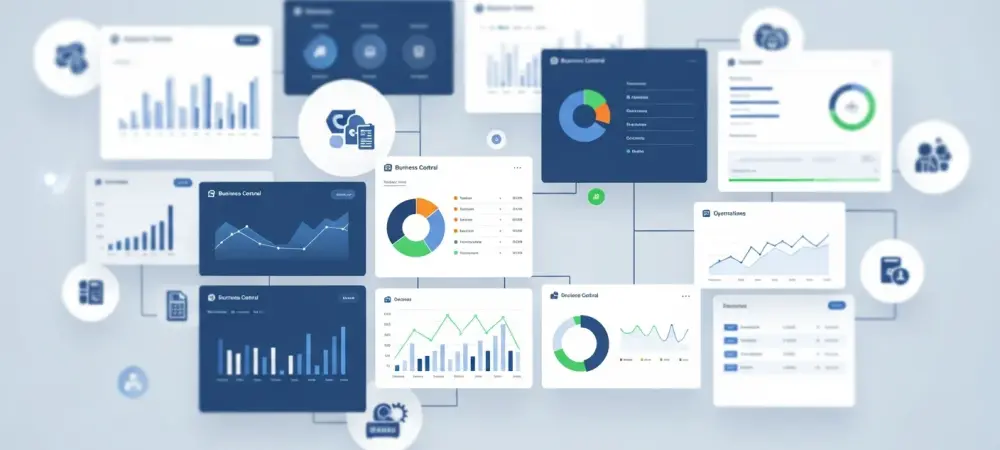
The rapid obsolescence of isolated financial software has forced modern enterprises to seek a unified digital nervous system capable of orchestrating complex global operations in real time. Dynamics 365 Business Central represents a significant advancement in the enterprise resource planning (ERP) sector, moving beyond the traditional role of a back-office accounting tool. This review will explore the evolution of the technology, its key features, performance metrics, and the impact it has had on various applications. The purpose of this review is to provide a thorough understanding of the technology, its current capabilities, and its potential future development. By consolidating disparate data streams into a single source of truth, the platform aims to eliminate the friction that typically plagues growing organizations.
Evolution of the Unified Cloud ERP Landscape
Modern business management has undergone a radical transformation since the transition from localized server rooms to the expansive Microsoft Azure cloud. Business Central emerged from the legacy Microsoft Dynamics NAV (Navision) architecture, inheriting a decade of robust functionality while shedding the rigidity of on-premise maintenance. This transition was not merely a change in hosting but a fundamental shift in how software interacts with the user. The core principles of the platform focus on an all-in-one business management solution that prioritizes accessibility and interoperability, allowing users to move fluidly between financial records and productivity tools like Excel or Teams without losing contextual data.
The relevance of this evolution in the broader technological landscape cannot be overstated, specifically regarding its role in the digital transformation of small to mid-sized businesses (SMBs). By leveraging the Microsoft Azure ecosystem, Business Central provides smaller entities with the same level of security and computational power previously reserved for Fortune 500 companies. This democratization of high-level ERP functionality allows businesses to scale rapidly without the traditional “growing pains” of outgrowing their software. The emergence of this cloud-native architecture marked the end of the era where software updates were dreaded multi-month projects, replaced instead by a cycle of continuous improvement.
Core Architecture and Functional Capabilities
Subscription-Based Licensing and User Tiers
The financial accessibility of the platform is dictated by a multi-tiered subscription model designed to align software costs with actual organizational needs. The primary licensing models include the Essentials and Premium tiers, which serve as the foundation for user access. The Essentials tier covers core business requirements such as financial management, sales, and supply chain, while the Premium tier introduces specialized modules for manufacturing and service management. This distinction ensures that a professional services firm does not pay for complex shop-floor scheduling tools it will never use, while a manufacturing plant can access deep production insights within the same environment.
Beyond the primary tiers, the ecosystem utilizes Team Member and Device licenses to optimize cost-efficiency for light users and shared environments. Team Member licenses are particularly effective for employees who only need to perform basic tasks like entering timecards or approving expenses, preventing the waste associated with full-price seats. In warehouse or retail settings, Device licenses allow multiple shifts of workers to access the system through a single terminal, such as a ruggedized scanner or a point-of-sale station. This flexibility in licensing allows an organization to create a bespoke cost structure that reflects its physical and digital footprint.
Integrated Business Modules and Performance
The technical performance of Business Central is most visible in its integrated functional components, including Financial Management, Supply Chain, and Project Operations. These modules are not merely connected; they are part of a unified data schema that ensures a transaction in the warehouse immediately updates the general ledger and the sales forecast. This seamless data flow reduces the risk of human error and eliminates the need for manual reconciliations between departments. In real-world usage, this means that a project manager can see the real-time financial impact of a materials delay without waiting for a month-end report.
Technical benchmarks indicate that the platform handles high-volume transactions with impressive stability, even during peak periods like seasonal sales or financial year-ends. The system architecture leverages Azure’s elastic scaling to maintain responsiveness, ensuring that complex calculations, such as multi-currency consolidations or automated demand planning, do not cause performance bottlenecks. For the end user, this translates to a snappier interface and faster reporting, which are critical when making data-driven decisions under pressure. The integration with Power BI further extends these capabilities, turning raw operational data into interactive visual narratives that can be shared across the leadership team.
Emerging Trends in Intelligent Automation
The current landscape of enterprise software is being redefined by the integration of Microsoft Copilot and AI agents within Business Central. These developments represent a shift from reactive data entry to proactive business intelligence. AI agents are now capable of monitoring inventory levels and automatically drafting purchase orders or identifying anomalies in financial records before they become significant issues. This level of automation reduces the cognitive load on employees, allowing them to focus on strategic analysis rather than rote administrative tasks. The expansion of these features signifies a move toward a “self-driving” ERP experience where the system anticipates needs based on historical patterns.
Industry behaviors are also shifting toward consumption-based billing for AI-driven workloads and high-volume automated processing. As businesses lean more heavily on machine learning models for forecasting and automated customer service, the traditional flat-rate subscription model is being supplemented by metered usage for intensive AI tasks. This trend reflects a broader move toward “pay-for-value” in the software industry, where companies pay for the specific computational power required to run sophisticated simulations or process millions of automated line items. This model provides transparency in costs while ensuring that businesses can access cutting-edge tools without a massive upfront commitment.
Real-World Applications and Industry Verticality
Business Central has proven its versatility across diverse sectors such as manufacturing, distribution, and professional services, where it is deployed to solve specific operational challenges. In the manufacturing sector, the platform manages everything from bill of materials (BOM) to capacity planning, ensuring that production lines remain efficient. Distributors utilize the system’s advanced warehouse management features to optimize pick-and-pack operations and manage complex global supply chains. By providing industry-specific functionality within a standard framework, the software reduces the need for expensive custom-coded solutions that often become technical debt.
Unique use cases, such as multi-entity financial consolidation and cross-border e-commerce integrations, highlight the system’s global capabilities. For companies operating across multiple countries, the platform handles different tax jurisdictions, currencies, and local reporting requirements with ease. This is particularly valuable for e-commerce businesses that must synchronize inventory and sales data across various international marketplaces while maintaining a centralized view of their financial health. The ability to consolidate these complex data points into a single dashboard allows executives to maintain oversight of global operations without diving into dozens of local accounting systems.
Implementation Hurdles and Technical Challenges
Despite its strengths, the technology faces challenges, including the high upfront investment requirements and the complexities of migrating legacy data. Moving from an older, disjointed system to a modern ERP is a significant undertaking that requires careful planning and resource allocation. Organizations often struggle with data hygiene, as decades of inconsistent records must be cleaned and mapped to the new architecture before migration can occur. This technical debt often acts as a barrier to entry for smaller firms that lack the internal expertise to manage a large-scale digital overhaul.
The “Scope Creep” phenomenon remains a persistent risk during deployment, where the project’s requirements expand beyond the initial plan, leading to delays and budget overruns. To mitigate these deployment risks, Microsoft and its partner network have leaned into rapid implementation methodologies and “templated” deployments. These approaches prioritize out-of-the-box functionality over extensive customization, allowing businesses to go live faster and realize value more quickly. However, finding the balance between standard processes and the unique needs of a specific business remains a delicate task for implementation consultants.
Future Outlook and Scalability Projections
The trajectory of Business Central points toward a deeper integration with the Microsoft 365 stack, potentially leading to fully autonomous financial reporting. Imagine a scenario where the system not only records transactions but also analyzes them in the context of emails, calendar events, and Teams conversations to provide a comprehensive view of business health. This convergence of productivity and operational data will likely make the ERP an invisible yet omnipresent layer of the modern workplace. The potential for autonomous reporting means that “closing the books” could become a continuous, automated process rather than a stressful monthly event.
Future developments in low-code extensibility via the Power Platform will further empower non-technical users to tailor the ERP to their specific needs. By using “drag-and-drop” tools to build custom apps or automated workflows, businesses can extend the functionality of Business Central without writing a single line of code. This shift toward democratization will likely reduce the long-term impact of metered billing on the ERP market, as companies become more efficient in how they utilize their digital resources. The ability to scale vertically and horizontally within a single ecosystem positions the platform as a long-term solution for businesses with ambitious growth targets.
Final Assessment and Strategic Summary
Successful adoption of this technology hinges on a strategic approach to partner selection and a clear-eyed understanding of the 1.5–2.5× implementation-to-licensing cost ratio. This ratio is a critical benchmark for budgeting, as the software itself is only one component of a successful digital transformation. The real value is unlocked through the expertise of consultants who can align the software’s capabilities with the unique operational workflows of the business. Organizations that viewed the deployment as a one-time IT project often struggled, whereas those that treated it as a continuous evolution of their business processes saw the highest returns on investment.
The current state of the technology reflected a robust, AI-ready platform that effectively bridged the gap between basic accounting and high-level enterprise management. It offered a compelling alternative to more expensive, enterprise-level competitors by providing a comparable feature set with greater flexibility and a more intuitive user experience. For modern SMBs, the impact on efficiency and growth was clear; the platform allowed them to compete on a global stage by providing the data transparency and operational agility required in a fast-paced market. Ultimately, the transition to this unified cloud environment proved to be a decisive factor in the long-term resilience of many organizations.