

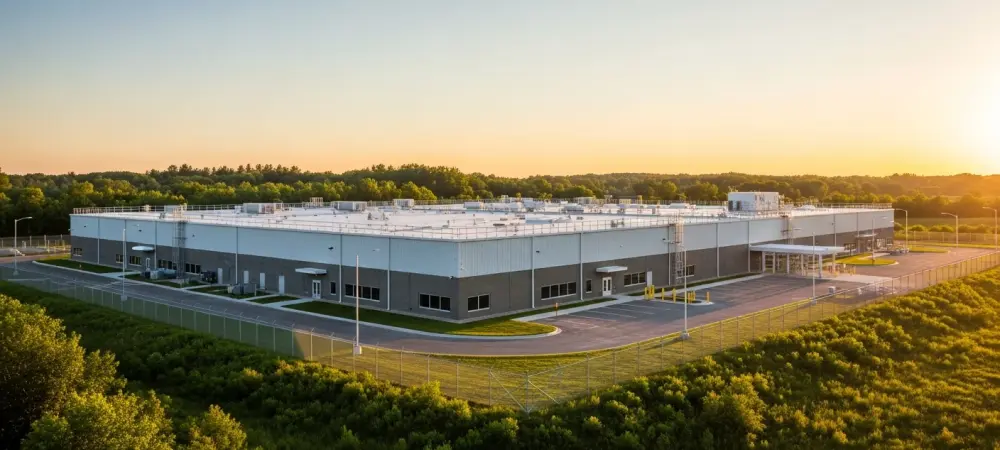
The rhythmic swaying of golden cornstalks across the historic Hustler Farm in Mississauga may soon be replaced by the rhythmic whir of industrial cooling fans and high-capacity servers. Prologis, a dominant force in global logistics, has submitted a formal proposal to redevelop 39 acres of agricultural land at 7564 Tenth Line West, signaling a radical shift for a landscape that has remained largely unchanged since the 19th century. This initiative is more than a simple construction project; it represents a profound collision between Ontario’s deep-rooted agrarian heritage and the high-speed digital infrastructure required to power a modern, AI-driven economy.
Why Industrial Giants Are Trading Warehouses for Cloud Infrastructure
The explosive growth of Artificial Intelligence and cloud computing has triggered an urgent demand for “digital warehouses,” prompting traditional real estate titans like Prologis to aggressively pivot their business models. While vacancy rates for standard industrial storage fluctuate, the hunger for data processing centers remains essentially insatiable. Mississauga has quickly become a primary theater for this transition, already serving as a strategic hub for major players like Compass and eStruxture. For companies like Prologis, converting fertile land into high-density technological powerhouses offers significantly higher long-term financial yield than traditional distribution facilities.
Deconstructing the Hustler Farm Redevelopment Proposal
The planned transformation of the Hustler property is a sophisticated project that attempts to balance industrial utility with the preservation of local history. Central to the design is a massive 220,015-square-foot, two-story data center engineered to house the hardware that powers modern internet services and machine learning. Alongside this digital anchor, the plan includes two single-story distribution centers, allowing Prologis to maintain its core competency in moving physical goods.
Interestingly, the redevelopment does not imply the total erasure of the site’s 1820s legacy. The Hustler family intends to retain the original farmhouse and continue active livestock operations on a portion of the land, creating a striking juxtaposition of 19th-century farming and 21st-century technology. This project contributes to Prologis’s massive global power commitment, as the firm aims to double its current capacity to 10GW within the next decade.
The Strategic Advantage of the Mississauga Corridor
Industry analysts frequently cite the Toronto-Mississauga region as one of the most critical and resilient data markets in North America. The proximity to Toronto’s financial district, an existing robust fiber-optic backbone, and a relatively stable power grid make this specific Ontario site far more valuable for data processing than for traditional agriculture. As urban sprawl reaches its geographic limits, the “highest and best use” for suburban land is increasingly shifting toward the digital infrastructure that supports remote work and the current AI revolution.
Navigating the Approval and Implementation Process
The progression of this project followed a rigid regulatory and logistical framework. The first major hurdle involved the Mississauga City Council’s review of land-use applications to transition the property from agricultural to industrial-commercial zoning. Developers had to coordinate closely with local utilities to ensure the massive energy requirements of such a facility would not compromise the stability of the local residential grid.
Prologis also implemented specific setback and design protocols to ensure the data center did not physically or visually infringe upon the retained historic farmhouse. To address community concerns, the project included advanced strategies to minimize noise pollution and thermal output near residential zones. Stakeholders shifted their focus toward long-term sustainability, ensuring that the integration of high-tech infrastructure respected the environmental constraints of the surrounding area while securing the region’s position in the global digital economy.