

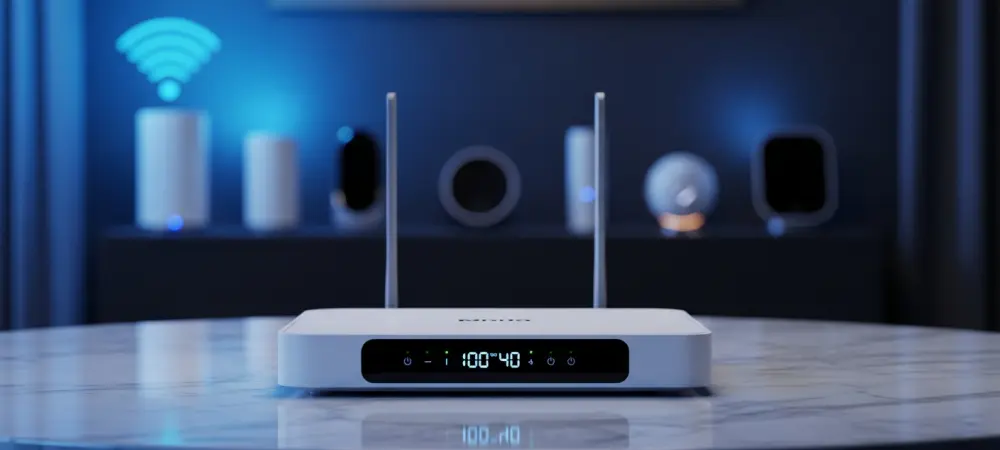
The rapid transition toward the Wi-Fi 7 standard has forced many networking manufacturers to choose between delivering high-end performance and maintaining a price point that remains accessible to the average consumer. As households increasingly demand higher bandwidth for 8K streaming, immersive virtual reality, and complex smart home ecosystems, the Devolo BE6500 has arrived as a potential solution for those looking to enter the 6GHz era without an exorbitant financial commitment. By adopting a modular philosophy, the device is designed to serve as either a standalone primary router or a node within a larger mesh network, offering a level of versatility that is becoming more common in the modern marketplace. However, this push for affordability necessitates certain technical compromises that may fundamentally alter how a user experiences the advantages of the latest wireless protocols. While the promise of reduced latency and increased throughput is a significant draw, the practical execution of these features often depends on the underlying hardware architecture and the software tools provided to manage it effectively.
The current state of networking hardware in 2026 suggests that consumers are no longer satisfied with mere connectivity; they require stability across a growing number of personal and professional devices. The BE6500 enters this landscape by positioning itself as a bridge between legacy technology and the ultra-wide bands of the future. This strategic positioning allows it to cater to users who are curious about the 6GHz spectrum but are not yet ready to invest in enterprise-grade equipment. The challenge for Devolo lies in proving that a more economical approach to Wi-Fi 7 does not mean sacrificing the core utility that users expect from a high-performance router. As network traffic becomes more dense and complex, the efficiency of a router’s radio management and physical port configuration becomes a critical factor in determining whether it can sustain a modern digital lifestyle or if it will eventually become a bottleneck for high-speed internet service provider plans.
Minimalist Physical Design: Connectivity Constraints
The physical architecture of the BE6500 reflects a modern, minimalist design language that prioritizes a clean aesthetic over the traditional, antenna-heavy look often associated with high-speed routers. The compact chassis is designed to be unobtrusive, allowing it to blend seamlessly into residential environments without drawing undue attention to its technical purpose. To achieve this streamlined appearance, Devolo utilized internal antennas and a single multi-colored LED indicator to communicate the device’s operational status. This design choice certainly appeals to users who find the aggressive styling of gaming routers off-putting, but it also leads to the removal of several physical features that many power users consider essential. For instance, the absence of a dedicated hardware power button means that any physical rebooting requires the user to unplug the power cable directly, which can be inconvenient if the device is tucked away in a media cabinet or behind furniture. Furthermore, the lack of a USB port is a notable omission that limits the router’s utility as a central hub for local file sharing or network printing. In many modern households, the ability to connect an external hard drive directly to the router for basic network-attached storage or automated backups is a valued convenience that is missing here. The back of the device reveals a selection of ports that further complicates its value for high-demand users. While the inclusion of a 2.5Gbits/sec port is a welcome addition for those with multi-gigabit fiber connections, the remaining three LAN ports are restricted to standard Gigabit speeds. By failing to provide a more balanced array of high-speed ports, the router may struggle to fully distribute the massive bandwidth capabilities that are the hallmark of the Wi-Fi 7 standard to all connected hardware.
The Trade-offs: Switchable Radio Systems
One of the most defining characteristics of the BE6500 is its switchable dual-band radio system, which stands in stark contrast to the tri-band configurations found in more expensive Wi-Fi 7 hardware. To keep the manufacturing costs low, Devolo implemented a design where the router can only operate two radios simultaneously. This means that users are presented with a binary choice: they can either utilize the traditional 2.4GHz and 5GHz bands or swap the 5GHz radio for the ultra-fast 6GHz Wi-Fi 7 band. This decision creates a significant dilemma for households that possess a diverse mix of hardware. If the 6GHz band is activated to take advantage of the latest flagship smartphones and laptops, any devices that depend on the 5GHz spectrum—such as older smart televisions, streaming sticks, or gaming consoles—are automatically relegated to the 2.4GHz band. Given that 2.4GHz is often congested and offers significantly lower speeds, this can lead to a noticeable degradation in performance for devices that are still quite capable.
The implications of this radio management system extend into real-world performance testing, where the 6GHz band does not always deliver the transformative results one might expect. In controlled environments, the 6GHz throughput of the BE6500 only marginally exceeds the speeds recorded on the 5GHz band at close range. As the distance between the device and the router increases, the 6GHz signal exhibits a faster rate of decay compared to the more robust 5GHz frequency. This suggests that the internal antenna configuration and the specific hardware implementation may not be fully optimized to exploit the unique physical properties of the higher-frequency spectrum. For users living in larger homes with thick walls, the 6GHz band might prove to be less effective than expected, potentially negating the primary reason for upgrading to a Wi-Fi 7 device in the first place. The necessity of choosing between compatibility and raw speed remains a significant hurdle for those with a broad range of connected equipment.
Administrative Shortcomings: Software and Security
The user experience provided by the BE6500’s administrative interface is another area where the focus on cost reduction is evident to the seasoned user. Whether accessed through the dedicated mobile application or a standard web browser, the interface feels functional but lacks the visual polish and intuitive flow found in ecosystems managed by competitors. While the initial setup process is straightforward and the transition between standalone router mode and mesh node mode is handled well, navigating the more granular settings can be a cumbersome experience. The menus are often structured in a way that makes finding specific configuration options more difficult than necessary, and there is a noticeable lack of advanced data visualization tools that would help users monitor their network health or identify bandwidth-heavy devices. For the average consumer, this might be a minor annoyance, but for those who prefer to have total control over their local network, the software feels underdeveloped.
Beyond the aesthetics of the interface, the router is missing several key security and management features that have become standard expectations for modern networking equipment. There is a total absence of granular Quality of Service (QoS) controls, which are vital for prioritizing latency-sensitive traffic such as online gaming or high-stakes video conferencing over background data transfers like system updates or cloud backups. Additionally, the lack of integrated parental controls, active network threat detection, and built-in VPN support makes it difficult to recommend this device for families or remote professionals who require a more robust and secure home environment. In an era where cybersecurity threats are increasingly sophisticated, the omission of these protective layers places a heavier burden on the user to secure their own devices individually. This lack of a comprehensive software suite suggests that Devolo prioritized hardware affordability at the expense of a fully featured and secure administrative ecosystem.
Value Proposition: Mesh Scalability and Competition
Devolo’s modular design philosophy remains a strong selling point for the BE6500, particularly for users who prefer an incremental approach to building their home network. The ability to start with a single router and easily add more units to create a seamless mesh system is a user-friendly feature that aligns with current market trends. However, the dual-band nature of the device introduces specific challenges when it is used in a mesh configuration. Because the router lacks a dedicated third radio for wireless backhaul, the nodes must share their available bandwidth to communicate with each other while simultaneously serving client devices. This shared bandwidth can lead to a significant reduction in overall network speeds, especially when multiple hops are involved. To maintain peak performance in a mesh setup, users are effectively forced to use physical Ethernet cables for backhaul, which may not be feasible in many residential layouts where the goal of a mesh system is to avoid extensive wiring.
When viewed within the broader context of the 2026 networking market, the BE6500 occupies a somewhat precarious position between budget-friendly alternatives and more capable mid-range options. It faces intense competition from Wi-Fi 7 models that provide better range on the 5GHz band and more sophisticated software suites, as well as tri-band models that offer 6GHz connectivity without forcing the user to abandon the 5GHz radio. While the BE6500 is undeniably fast enough for a standard household with modern internet requirements, the various trade-offs in physical connectivity, radio management, and software features suggest that it may be sacrificing too much functionality in its pursuit of a lower price. For consumers who are purely interested in the 6GHz label and do not mind the logistical hurdles of a dual-band system, it offers an entry point, but for many others, the limitations might outweigh the initial savings.
Final Considerations: Strategic Advice for Buyers
The assessment of the Devolo BE6500 highlighted a clear tension between the desire for modern wireless standards and the practical limitations of budget-oriented hardware design. It was observed that while the device successfully delivered access to the 6GHz spectrum, the requirement to choose between that and the 5GHz band created a significant barrier for users with older but still vital devices. The testing phases demonstrated that the physical port configuration became a primary bottleneck for those with high-speed wired infrastructure, while the minimalist software suite lacked the robust security and management tools necessary for a truly professional-grade home network. Consequently, the decision to adopt this hardware required a careful audit of one’s existing device ecosystem to ensure that the loss of the 5GHz radio would not negatively impact daily digital activities or critical home automation systems. Looking ahead, users who found themselves considering the BE6500 were advised to prioritize a wired Ethernet backhaul if they intended to expand the system into a multi-node mesh network. This step was essential to mitigate the bandwidth loss inherent in a dual-band mesh architecture and to ensure that the 6GHz speeds remained consistent across larger living spaces. Furthermore, for those who required advanced security or traffic prioritization, the implementation of a separate hardware firewall or a dedicated software-based VPN solution was recommended to fill the gaps left by the router’s native administrative tools. Ultimately, the choice to invest in this specific Wi-Fi 7 implementation was most logical for those in smaller environments with a primary focus on newer, 6GHz-compatible hardware. By understanding these specific technical constraints, consumers were able to make a more informed choice about whether this particular balance of cost and capability aligned with their specific networking needs.