

The Intersection of Digital Infrastructure and Urban Sustainability in West Yorkshire
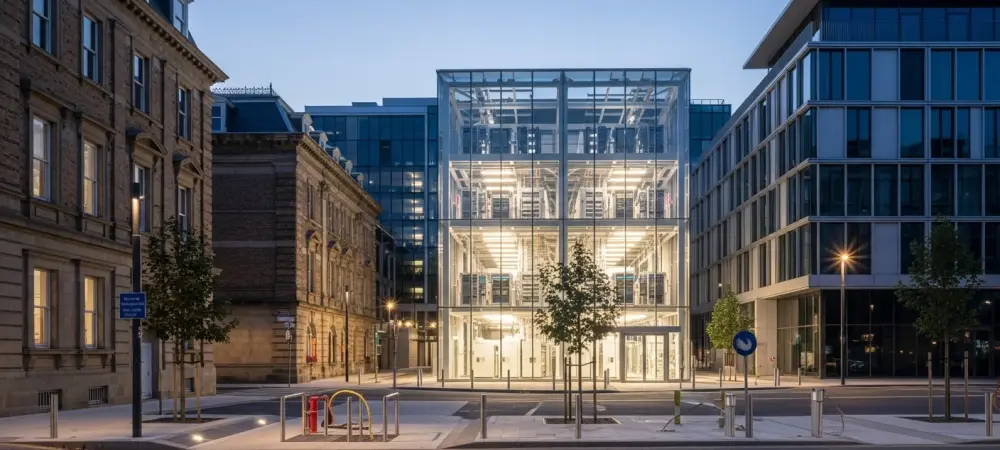
The transformation of Bradford from a historic textile hub into a modern digital furnace represents a fundamental shift in how cities view industrial byproduct. The emergence of the Bradford Edge facility marks a pivotal moment for the UK as it reconciles the massive energy demands of high-performance computing with the environmental goals of local municipalities. By embedding digital infrastructure directly into the urban fabric of West Yorkshire, the project creates a symbiotic relationship that turns a significant energy consumer into a localized asset.
Assessing the integration of high-performance computing into local energy grids reveals it to be a critical milestone for modern urban planning. This model redefines the relationship between industrial energy consumption and community benefit by ensuring that power does not just serve a digital purpose but also a physical one. The Bradford Edge project serves as a preview of how future cities might manage their digital and thermal footprints in a unified manner.
Engineering a Circular Economy for the Artificial Intelligence Era
Maximizing Thermal Efficiency Through the Concept of Using Electrons Twice
Technical experts in thermal dynamics suggest that the concept of using electrons twice is the only viable path for sustainable data growth in the current climate. The 5.6MW Bradford facility utilizes a sophisticated closed-loop cooling system to harvest high-grade thermal energy generated by AI processing. This approach effectively converts waste heat, which was historically vented into the atmosphere, into a localized resource.
While critics often question the scalability of such distributed systems compared to massive hyperscale campuses, the efficiency of this localized model offers a compelling rebuttal. By capturing heat at the source, Deep Green minimizes the energy loss associated with traditional cooling methods. This infrastructure converts a perceived liability into a functional utility that supports the surrounding community.
Integration into the Bradford Energy Network and Local Utility Grids
Strategic alignment with the Bradford Energy Network ensures that this thermal output reaches the people who need it most. Through a partnership with 1Energy, the Thornton Road energy center will act as a distribution hub for the heat generated at the Listerhills Road site. Industry standards are shifting toward a reality where data centers must act as active participants in district heating schemes to secure necessary planning permissions.
However, the success of this integration hinges on the careful synchronization of the facility launch with the 2026 activation of the heating network. Risks associated with infrastructure timelines remain a primary concern for developers and city planners alike. Ensuring that the data center and the utility grid are ready simultaneously is essential for the project to meet its promised efficiency targets.
Navigating the Geopolitics of Distributed Data Capacity and Regional Growth
The political landscape in West Yorkshire has been largely supportive, with regional leadership viewing the project as a cornerstone of their net-zero ambitions. This reception stands in stark contrast to the expansion hurdles faced by the company in international markets, such as recent project withdrawals in Michigan due to local opposition. The Bradford approval signals a growing regional pride in becoming an AI powerhouse that prioritizes local welfare.
Advocates argue that these facilities can stabilize local economies through job creation and infrastructure investment rather than purely extracting resources. By positioning the data center as a social contributor, the project challenges the assumption that digital growth must come at the expense of local environmental health. This regional backing is vital for navigating the complex geopolitics of data capacity.
The Role of Strategic Investment in Decarbonizing High-Tech Infrastructure
Financial backing from Octopus Energy has been instrumental in accelerating the deployment of 300MW of distributed capacity across Europe. This investment strategy focuses on lowering the carbon footprint of AI by decentralizing where the processing occurs. A comparative analysis of Bradford against existing pilot projects in Exmouth and Manchester shows a clear progression toward larger and more integrated urban facilities.
These earlier projects demonstrated that providing free heat to public amenities like leisure centers is both technically feasible and socially popular. This decentralized model is expected to disrupt the traditional centralized data center market by proving that environmental responsibility and high-tech performance are not mutually exclusive. Investors are increasingly looking for projects that offer this dual value proposition.
Strategic Pillars for Implementing Socially Responsible Digital Projects
Implementing socially responsible digital projects requires early and transparent engagement with local energy providers to ensure a secondary use for industrial thermal output. This collaboration allows for the design of systems that are mutually beneficial from the outset. Developers must move away from isolated designs and toward integrated solutions that reflect the energy needs of the host city.
A shift toward edge locations is also recommended to allow for shorter transmission distances between heat sources and end-users. This proximity is essential for maintaining the high temperatures required for effective district heating. By following this framework, developers can align high-performance computing needs with municipal environmental and social governance goals.
Defining the Future Standard for Green Industrial Development
Transforming industrial waste into a community asset ensured that energy-intensive sectors remained viable within a carbon-constrained economy. The Bradford Edge project established a replicable blueprint for the global transition toward net-zero digital economies. Stakeholders recognized that the future of urban infrastructure depended on the inextricable link between technological utility and public benefit.
Moving forward, the industry prioritized the integration of high-performance computing with municipal thermal needs to meet environmental targets. This shift fostered a new standard for green industrial development where technology was no longer an island of consumption. Future projects adopted these actionable strategies to ensure that the digital revolution supported, rather than burdened, the cities that hosted it.