

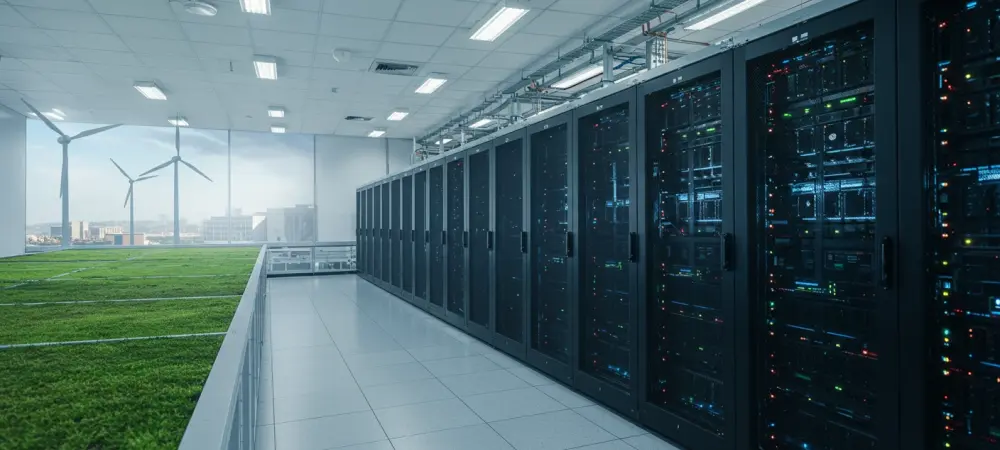
In 2025, the data center industry stands at a critical juncture, grappling with an unprecedented surge in energy demands while facing intense pressure to meet stringent environmental standards. Imagine a world where the digital backbone supporting everything from cloud computing to artificial intelligence consumes more power than entire cities, yet must shrink its carbon footprint to near zero. This paradox defines the current landscape, as operators navigate a maze of regulatory mandates and infrastructure bottlenecks. With global scrutiny intensifying, the stakes have never been higher for an industry pivotal to modern life, prompting urgent questions about how sustainability can coexist with unrelenting growth.
The Growing Environmental Footprint of Data Centers
The data center sector serves as the foundation of today’s digital economy, enabling everything from streaming services to cutting-edge generative AI applications. These facilities are indispensable, housing the servers and systems that keep businesses, governments, and individuals connected. As technology evolves, their role has expanded, becoming even more integral to emerging innovations that demand immense computational power, thus straining resources like never before.
Recent years have seen a dramatic escalation in energy consumption, with North American data centers showcasing a stark example of this trend, more than doubling their power usage in a short span. This spike reflects a broader global pattern, driven by the proliferation of data-intensive technologies. The environmental implications are profound, as the industry accounts for a significant share of greenhouse gas emissions, drawing attention from both the public and policymakers who demand accountability.
Nowhere is this scrutiny more evident than in the UK, where environmental impacts have become a focal point of debate. Regulatory bodies and communities alike are pushing for sustainable practices, urging operators to rethink energy sourcing and operational efficiency. This growing pressure underscores a universal challenge: balancing the insatiable demand for digital infrastructure with the imperative to protect the planet.
Power Consumption Trends and Sustainability Demands
Key Drivers of Energy Growth
A primary force behind the soaring energy needs of data centers is the rapid adoption of AI and other high-compute technologies. These innovations, while transformative, require vast amounts of power for training models and processing data, pushing facilities to their operational limits. As businesses increasingly rely on such tools, the strain on energy resources intensifies, creating a cycle of escalating demand.
Compounding this issue is the urgent need for sustainable energy solutions to offset the environmental toll. Operators face the daunting task of scaling infrastructure to meet technological advancements while simultaneously reducing carbon emissions. Striking this balance is no small feat, as it requires rethinking traditional power models and investing in alternatives that may not yet be fully accessible or cost-effective.
Energy Metrics and Future Projections
Current data paints a vivid picture of the industry’s trajectory, with North American power consumption serving as a benchmark for global trends. The dramatic rise in usage over recent years signals a relentless upward curve, with no immediate signs of slowing. This growth highlights the scale of the challenge, as facilities consume energy at rates comparable to industrial sectors of the past.
Looking ahead from 2025 to 2027, projections suggest that energy demands will continue to climb, potentially outpacing the availability of sustainable sources unless significant interventions occur. Aligning sustainability goals with this expansion remains a critical concern, as market dynamics may shift toward regions or providers that can offer greener solutions. The industry must adapt swiftly to avoid being caught off-guard by these evolving expectations.
Infrastructure Barriers to Compliance
One of the most pressing obstacles to environmental compliance is the delay in grid connections, particularly in the UK, where wait times for access can stretch over a decade under the existing system. Such bottlenecks hinder the ability of data centers to scale operations or transition to cleaner energy sources, creating a ripple effect that stalls progress on sustainability targets.
High industrial electricity prices further exacerbate the situation, making it economically challenging to maintain operations while pursuing green initiatives. Access to affordable, clean energy through renewable partnerships emerges as a linchpin for success, yet many operators struggle to secure such arrangements in a competitive market. This financial burden often forces difficult trade-offs between cost and compliance.
Potential solutions are on the horizon, with reforms proposed by the National Energy System Operator aiming to prioritize critical projects and cut connection delays significantly. While these changes offer hope, they are not a complete fix, and the industry must continue exploring innovative approaches to infrastructure development. Collaborative efforts between stakeholders could accelerate the adoption of scalable, sustainable systems.
Navigating the Evolving Regulatory Landscape
Environmental regulations impacting data centers are both complex and fluid, varying widely across regions while sharing a common goal of reducing ecological harm. In the UK, compliance is particularly intricate due to overlapping local and international standards that demand meticulous attention. Operators must stay abreast of these rules to avoid falling afoul of mandates that carry hefty penalties.
Adding to this complexity is the recent designation of data centers as Critical National Infrastructure under the UK’s Labour government. This status introduces additional security and resilience requirements, layering new reporting obligations atop existing environmental expectations. Managing these dual frameworks requires a sophisticated approach to compliance that integrates multiple priorities without sacrificing efficiency.
Proactive measures are essential to navigate this landscape, with robust data collection and monitoring systems serving as vital tools. By tracking performance metrics and anticipating regulatory shifts, operators can sidestep the need for expensive retrofitting later. Staying ahead of the curve not only mitigates risks but also positions facilities as leaders in a highly regulated space.
Future Outlook: Sustainability and Innovation
The trajectory of the data center industry points toward heightened accountability, with sustainability becoming a non-negotiable priority. Public and governmental pressure continues to mount, compelling operators to embed environmental considerations into every facet of their strategy. This shift signals a broader cultural change within the sector, redefining success through the lens of ecological impact.
Emerging solutions, such as advanced energy-efficient technologies and renewable energy partnerships, offer promising avenues for meeting compliance goals. Innovations in cooling systems and power management are gaining traction, reducing consumption without compromising performance. Meanwhile, strategic alliances with clean energy providers help secure the resources needed to power operations sustainably.
Industry collaboration plays a pivotal role in this evolution, with events like Data Centre Congress Europe and Data Centre Expo fostering dialogue and idea-sharing. These platforms enable operators to anticipate regulatory changes and adopt best practices from peers. By working together, the sector can build a collective resilience that addresses both current challenges and future uncertainties.
Closing Thoughts
Reflecting on the insights gathered, it is evident that data centers face formidable hurdles in aligning growth with environmental mandates. The steep rise in power consumption, coupled with grid access delays and regulatory intricacies, poses persistent threats to compliance efforts. Yet, amidst these struggles, a path forward begins to take shape through targeted reforms and innovative thinking.
Looking back, the emphasis on sustainable infrastructure stands out as a cornerstone of progress. Operators who prioritize renewable partnerships and energy-efficient technologies gain a competitive edge, setting a precedent for others to follow. These early adopters demonstrate that proactive investment can yield long-term benefits, even in a challenging environment.
As a next step, the industry is encouraged to deepen collaborative efforts, leveraging shared knowledge to tackle systemic issues like grid bottlenecks. Establishing early monitoring systems also emerges as a practical solution to stay compliant with evolving rules. Ultimately, the journey underscores that balancing digital expansion with planetary stewardship requires not just adaptation, but a bold commitment to reimagining how data centers can operate in harmony with the environment.