

The unprecedented acceleration of global digital infrastructure has forced data center developers to confront a significant barrier of community opposition that technical expertise alone cannot overcome. For several decades, these facilities operated largely in the shadows, serving as the invisible architecture of the internet while hidden away in industrial parks or rural outskirts. However, the surge in generative artificial intelligence has brought these massive structures into the public spotlight, resulting in a tenfold increase in media scrutiny and a heightened awareness of their environmental footprint. This visibility has triggered a fundamental shift in how the industry operates, as developers are no longer merely competing over processing power or low latency. Instead, they are locked in a struggle for a “social license to operate,” a conceptual permission from local residents that has become just as critical as power allocations or zoning permits. The industry’s previous focus on engineering efficiency is being replaced by a sophisticated understanding of public relations, as the backlash against resource consumption and land use intensifies across major technological hubs globally.
Institutional Fragmentation and Regulatory Uncertainty
The Industry Disconnect: Fragmented Voices and Targeted Activism
The data center sector currently struggles with a profound lack of coordination that leaves individual operators vulnerable to highly organized grassroots resistance movements. While environmental advocacy groups and local community organizations have become adept at using social media and legal challenges to stall projects, data center developers often operate in silos, lacking a unified narrative to explain their societal value. This fragmentation means that a single planning dispute in a small municipality can set a precedent that hampers development across an entire region. Without a centralized body to provide standardized communication strategies or to defend the industry’s role in the modern economy, companies are forced to reinvent their public engagement strategies for every new project. This reactive approach often fails to address the underlying fears of residents who view these facilities as extractive entities that provide few local jobs while consuming vast amounts of communal resources.
Moreover, the absence of a collective industry voice has allowed specific narratives about energy and water usage to dominate the public discourse without sufficient technical counter-arguments. Grassroots groups often employ sophisticated digital campaigns to highlight the strain that 100-megawatt facilities place on local power grids, frequently framing the issue as a choice between residential energy security and corporate computing needs. In contrast, many data center firms have historically relied on technical white papers and engineering data that do not resonate with a worried public. This communication gap has created a vacuum where misinformation can flourish, making it increasingly difficult for developers to gain the trust of local stakeholders. As these facilities become larger and more energy-intensive to support advanced AI training, the need for a cohesive, industry-wide advocacy strategy that moves beyond technical jargon has become an urgent operational necessity for maintaining the pace of infrastructure deployment.
The Regulatory Gap: Navigating National Directives and Local Constraints
A significant source of friction in the development pipeline stems from the widening disconnect between national economic goals and the realities of local planning authority. Many national governments have officially designated data centers as critical infrastructure, recognizing them as the foundation of future economic competitiveness and digital sovereignty. However, this high-level policy support rarely translates into clear guidance for the local officials who are actually responsible for reviewing zoning applications and environmental impact reports. These local councilors often find themselves overwhelmed by the technical complexity of massive infrastructure projects that have no local equivalent. Without a standardized regulatory framework or specialized support from national agencies, local authorities frequently default to a defensive posture, rejecting or delaying projects simply because they lack the tools to properly evaluate the trade-offs between national benefits and local impacts.
Furthermore, this policy vacuum forces local planners to make monumental decisions regarding grid stability and water management that should ideally be handled at a higher level of government. When a local municipality is tasked with approving a facility that will consume as much power as a small city, the burden of proof placed on the developer becomes exponentially higher. The lack of clear, top-down directives means that planning processes are often susceptible to political pressure from vocal minorities, leading to inconsistent decisions that create an environment of extreme uncertainty for investors. To bridge this gap, some regions are beginning to explore centralized planning commissions that can provide the necessary technical expertise while still respecting local interests. However, until a more integrated approach is established, the industry remains caught in a cycle of regulatory limbo where national ambition is constantly stifled by localized planning bottlenecks.
The Financial Consequences of Operational Friction
Quantifiable Setbacks: The Economic Burden of Project Delays
Public resistance is no longer a mere reputational risk but a tangible financial drain that can threaten the fundamental viability of data center investments. Recent industry data indicates that major projects are now experiencing average delays of nearly 500 days due to local objections, legal appeals, and extended public inquiry periods. In the highly competitive world of digital infrastructure, where the first company to bring capacity online often captures the most lucrative contracts, a delay of nearly a year and a half is a severe blow. These setbacks lead to ballooning construction costs as labor and material prices fluctuate, and they can even result in the total forfeiture of power reservations if the project fails to meet specific utility milestones. For many operators, the capital tied up in stalled sites represents an opportunity cost that runs into the hundreds of millions of dollars, fundamentally altering the return on investment.
These delays create a ripple effect throughout the broader technology supply chain, slowing down the deployment of new services and increasing the cost of cloud computing. When a facility in a key hub like Northern Virginia or Dublin is halted by a community protest, the resulting capacity crunch can lead to higher prices for end-users and a loss of regional competitiveness. Investors are becoming increasingly wary of markets where planning volatility is high, leading to a shift in capital toward jurisdictions that can provide more predictable development timelines. This geographic redistribution of investment highlights the fact that community acceptance is now a primary factor in site selection, outweighing traditional metrics like fiber proximity or tax incentives. Developers who fail to account for the potential costs of social friction in their initial feasibility studies often find themselves facing unsustainable financial pressure as their projects languish in the planning phase.
Strategic Engagement: Shifting Away from Defensive Development Models
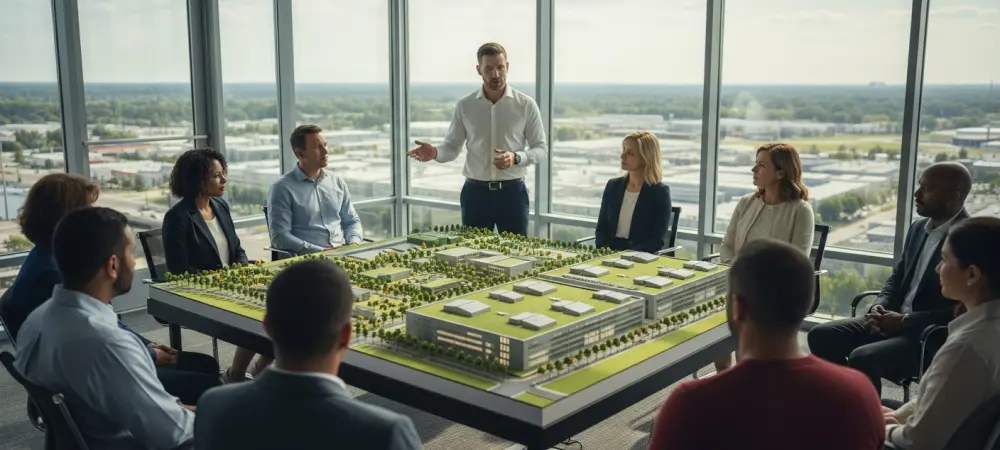
The traditional “Decide, Announce, Defend” strategy, which relied on making development decisions in private and presenting them as a finished deal, has proven to be a recipe for disaster in the current climate. Historically, developers preferred to remain anonymous for as long as possible to prevent land prices from spiking or competitors from learning their plans. However, this secrecy often backfires, as residents feel excluded from decisions that will permanently alter their local environment. When a massive data center project is announced without prior community consultation, the immediate reaction from the public is often one of suspicion and hostility. The industry is now recognizing that transparency must begin at the very inception of a project, long before a formal application is submitted.
To counter this, forward-thinking firms are adopting a more collaborative approach that involves early and frequent communication with local stakeholders. By holding town hall meetings, creating informational websites, and meeting with community leaders in the pre-planning phase, developers can identify potential points of conflict before they become deal-breakers. This proactive engagement allows for project modifications, such as adjusting the building’s footprint or adding noise-dampening landscaping, which can go a long way in soothing local concerns. Engaging the community early also provides an opportunity to educate the public on the role the facility will play in the local economy, from tax revenue generation to the support of local schools. While this process is time-consuming and requires a different set of skills than traditional engineering, it is increasingly viewed as the most effective way to de-risk a project and ensure a smoother path through the regulatory approval process.
Engineering Solutions for Long-Term Social Acceptance
Technical Mitigation: Sustainability as a Prerequisite for Planning Approval
In the current landscape, the adoption of sustainable technologies is being driven as much by the need to secure planning permits as by corporate environmental goals. Developers are increasingly opting for water-free cooling systems and advanced liquid cooling technologies specifically to neutralize the public backlash associated with heavy water consumption. In regions prone to drought or with strained municipal water supplies, a project that promises to use zero water for cooling is much more likely to receive local support than one that relies on traditional evaporative methods. Even if these waterless systems come with higher capital costs or slightly lower energy efficiency, the trade-off is considered worthwhile because it removes one of the most potent arguments used by opposition groups. Sustainability has transitioned from a marketing buzzword to a tactical tool used to navigate the complexities of modern zoning and environmental regulations.
This shift toward “uncontroversial” engineering also extends to how data centers interact with the local energy landscape. Operators are moving beyond simple power purchase agreements for renewable energy and are now investing in onsite generation, battery storage, and even district heating schemes. By capturing the waste heat generated by servers and piping it to nearby homes or greenhouses, a data center can demonstrate a clear, tangible benefit to the local community. This type of circular economy approach transforms the facility from a passive energy consumer into an active participant in the local utility network. Projects that include these types of integrated energy solutions are finding a much more favorable reception from both regulators and residents, as they offer a visible contribution to local sustainability targets. As environmental standards continue to tighten, the ability to engineer projects that minimize their burden on local resources will remain a defining characteristic of successful developments.
Structured Partnership: The Integration of Binding Social Charters
As the industry matures, there is a growing move toward formalizing community relations through the use of Social Charters and legally binding Community Benefit Agreements. For too long, the data center sector relied on superficial gestures, such as small donations to local charities or the occasional sponsorship of a youth sports team, which were often viewed as “tokenism” by cynical residents. Today, communities are demanding more substantial and enforceable commitments that ensure the facility provides long-term value to the area. A Social Charter establishes a set of principles that govern the data center’s behavior as a neighbor, covering everything from noise management and light pollution to local hiring targets and educational partnerships. These documents serve as a roadmap for the ongoing relationship between the operator and the community, ensuring that the developer remains accountable long after the construction phase is complete.
The most advanced form of this partnership involves the Community Benefit Agreement (CBA), which is a contract signed between the developer and a coalition of community groups. These agreements are legally enforceable and often include specific, measurable outcomes, such as the funding of a new community center, the preservation of local wetlands, or the provision of high-speed internet to underserved areas. By entering into a CBA, a data center operator provides the transparency and certainty that many residents feel is lacking in the standard planning process. This level of commitment helps to rebuild the trust that has been eroded by years of poor communication and secretive development. For the operator, a CBA provides a level of protection against future litigation and public protests, creating a more stable environment for long-term operations. This evolution toward formal, legally recognized partnerships represents the next frontier in the quest for a sustainable social license.
Establishing a Sustainable Blueprint for Future Growth
The data center industry recognized that the path forward required a total abandonment of the adversarial tactics that characterized the previous decade of expansion. Operators established a new standard where transparency and community engagement were integrated into the earliest stages of the development lifecycle, moving away from a culture of secrecy. They prioritized the deployment of resource-efficient technologies that actively mitigated local environmental concerns, ensuring that projects were built with the support, rather than the resistance, of their neighbors. This strategic pivot ensured that the massive infrastructure required for the artificial intelligence era was not just technically capable but socially viable as well. Organizations found that by treating local communities as genuine partners and signing binding agreements, they were able to dramatically reduce the planning delays that once threatened their growth. Moving forward, the industry embraced its role as a responsible steward of local resources, proving that the digital future can coexist harmoniously with the physical needs of the communities that host it.