

The integration of 4K-QAM allows the DAP-E3620 to pack significant amounts of data into each signal, effectively increasing transmission rates for data-heavy enterprise networks. This specific advancement is a cornerstone of the new BE3600 Wi-Fi 7 series, which addresses the intensifying congestion found in modern professional environments. As digital transformation accelerates, the demand for reliable, high-capacity wireless infrastructure has become a non-negotiable requirement for institutions ranging from sprawling university campuses to high-density hospitality venues. By moving beyond the limitations of previous wireless generations, these access points facilitate a more fluid exchange of information, supporting everything from real-time cloud collaboration to massive Internet of Things (IoT) sensor arrays. This launch signifies a shift toward more resilient network architectures that prioritize low latency and high throughput, ensuring that the increasing volume of connected devices does not compromise the overall user experience or productivity.
Performance Optimization: Leveraging Wi-Fi 7 Advancements
The DAP-E3620 Series utilizes Multi-Link Operation (MLO) to fundamentally change how devices interact with available frequency bands. Unlike older systems that forced a connection onto a single band, MLO enables simultaneous data transmission across multiple frequencies, which drastically reduces latency and improves reliability in interference-prone settings. This capability is complemented by Multi-RU technology, which optimizes spectral efficiency by allowing multiple resource units to be assigned to a single user. In a busy office environment where dozens of employees are accessing cloud-based industrial services or participating in high-definition video conferencing, these technical refinements prevent the “bottleneck” effect common in legacy Wi-Fi 5 or 6 setups. By intelligently managing how data packets are distributed across the airwaves, the system maintains a consistent flow of information even when the network is under heavy load, providing a seamless experience for users.
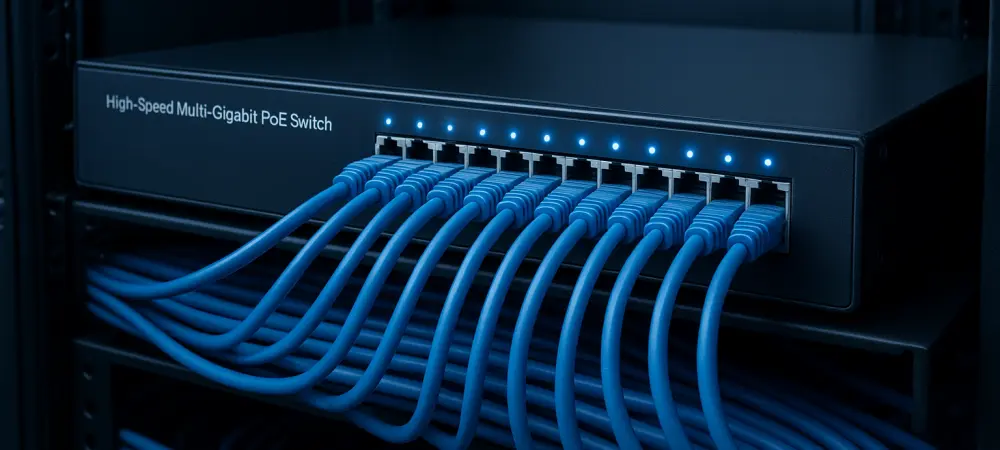
To fully realize the potential of Wi-Fi 7, D-Link has engineered these access points to integrate tightly with advanced wired backhaul solutions. The DAP-E3620 works in tandem with the DMS-1250 Series 2.5Gbps Multi-Gigabit Ethernet PoE switches to ensure that the internal wired infrastructure does not restrict wireless performance. Transitioning from standard 1Gbps ports to 2.5Gbps connectivity is essential for handling the massive data streams generated by the newest wireless standards. Furthermore, the inclusion of Power over Ethernet (PoE) functionality simplifies the logistical challenges associated with large-scale hardware deployments. This approach allows administrators to install access points in optimal ceiling or wall positions without needing dedicated electrical outlets nearby, reducing both labor costs and installation complexity. The resulting synergy between high-speed wireless output and robust wired input creates a comprehensive networking ecosystem built to handle the rigorous demands of modern corporate data traffic.
Deployment Versatility: Solutions for Every Environment
Flexibility in hardware design remains a critical factor for enterprise adoption, as different architectural layouts require specific mounting and coverage solutions. The DAP-E3620 Series addresses this through three distinct form factors tailored for various physical environments. The ceiling-mount model is specifically engineered to provide broad, omnidirectional coverage, making it the ideal choice for open-plan offices, large lecture halls, and expansive retail spaces. Conversely, the wall-plate variant offers a more discreet and localized connectivity option, which is particularly beneficial for the hospitality and healthcare sectors where per-room isolation is necessary. For organizations needing to extend their high-speed network beyond the building’s interior, a ruggedized outdoor model ensures that connectivity remains consistent across campus walkways or public squares. This multi-pronged hardware strategy allows IT managers to maintain a unified network standard across their entire property, regardless of the specific environmental challenges.
Beyond physical installation, these access points provide strategic benefits for multi-dwelling units and hybrid work environments. By supporting sophisticated traffic isolation and secure guest networking, the series allows for a “room-in-a-box” configuration that maintains high privacy standards. In a hotel or apartment setting, this means that individual tenants or guests can enjoy high-speed Wi-Fi without their data interfering with or being visible to others on the same physical infrastructure. This level of segmentation is also vital for educational institutions, where separate networks for administrative tasks, faculty research, and student recreation must coexist on the same hardware. By providing the necessary bandwidth to support these diverse needs simultaneously, the DAP-E3620 Series ensures that productivity remains high while security risks are minimized. The ability to handle high-density environments without performance degradation makes this series a vital tool for any organization managing a large and varied user base.
Management and Security: A Proactive Strategic Approach
Centralized control is a hallmark of the DAP-E3620 Series, facilitated through the Nuclias management platform. This system offers IT administrators a choice between cloud-based, software-defined, or on-premises management, providing the flexibility needed to match specific corporate governance and security policies. Through a single dashboard, technicians can monitor real-time network health, deploy firmware updates across hundreds of devices, and troubleshoot connectivity issues without having to be physically present at the site. This centralized oversight is particularly advantageous for organizations with geographically dispersed locations, such as retail chains or satellite offices, as it allows for a lean IT team to maintain high operational standards. The platform’s ability to provide granular insights into network usage and performance helps administrators make data-driven decisions about future expansions, ensuring that the infrastructure grows in lockstep with the organization’s actual connectivity requirements. Robust security protocols were deeply embedded within the DAP-E3620 framework to defend against the sophisticated cyber threats prevalent in the modern digital landscape. Advanced authentication methods ensured that only authorized users and devices could gain access to the core network, while continuous monitoring helped detect and mitigate potential intrusions before they caused significant damage. This proactive approach to security was essential for protecting sensitive corporate data and maintaining compliance with evolving privacy regulations. As enterprises planned for the next several years of technological growth, the focus on building a secure and scalable foundation became more relevant than ever. Organizations were encouraged to evaluate their existing legacy hardware and implement a phased migration to Wi-Fi 7 to avoid the performance plateaus associated with older standards. By prioritizing hardware that combined high-speed throughput with rigorous security, businesses took the necessary steps to future-proof their operations and support the next generation of digital services.