

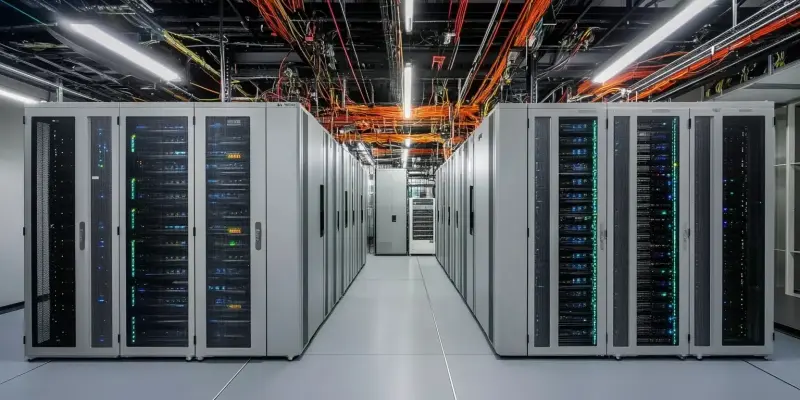
The rapid evolution of digital infrastructure has made it imperative for power generation and data center industries to collaborate more effectively. Traditionally, these sectors have operated within distinct domains characterized by unique operational styles, working cultures, and planning horizons. The energy sector, mainly composed of decades-old national utilities, functions under strict regulation with significantly extended project lead times. Conversely, the data center industry thrives in a fast-paced environment, showcasing agility and attracting substantial investments due to the unprecedented demand for digital infrastructure.
Over the past few years, the surge in digital infrastructure demand has raised concerns about the limited availability of transmissible and affordable power, posing a potential threat to the expansion scale of data centers. Cases in Singapore, Ireland, and Amsterdam exemplify these risks, underscoring the necessity for synergy between the two industries. Dame Dawn Childs, with a multifaceted background and experience in both sectors, offers valuable insights into harmonizing these industries to devise power supply solutions beneficial to both parties and society at large.
Understanding the Strategic Speed Difference
Childs recognizes “strategic speed” as the most significant distinction between the two industries. The heavily regulated power sector deals with project delivery timelines that stretch over five to ten years, while the data center sector operates on vastly shorter timelines, often completing projects in under two years. This rapid pace is especially crucial for AI centers where a planning horizon of three to four years is already considered extensive. The considerable infrastructure required for data centers to attain critical mass in any location further contributes to their agility.
Childs suggests a balancing act where both industries can meet halfway to address this disparity in strategic speed. She proposes that big tech companies should consider extending their planning cycles beyond the conventional two to five years. At the same time, utility suppliers should aim to shorten their planning horizons and move away from designing entire grid networks from scratch, their usual practice. By concentrating on smaller, distributed solutions rather than attempting to overhaul whole grid networks, utility companies could gradually align with the data center sector’s agility. This approach would not only enhance collaboration but also shift the perception of data centers from being a part of the problem to becoming a part of the solution.
Regionalization of Power Generation
Changing the culture of an individual company, much less an entire industry, presents significant challenges. However, Childs points to an alternative approach that involves the regionalization of power generation. This strategy entails situating data centers in areas rich with energy resources. The trend of “chasing power” is already becoming evident, particularly in the US, where data centers are being built near nuclear facilities or in power-surplus regions like Texas. Childs advocates for expanding this regional approach globally. For example, Scotland’s vast renewable power could serve as a model for the UK. This paradigm shift requires the energy sector to revamp its strategy, focusing on regional power planning first and then scaling up nationally, as opposed to the traditional model of national planning and local distribution.
Childs also debunks the misconception that data centers can instantly transition to entirely sustainable power sources. Achieving 100% renewable energy in the short term is impractical without depending on base-load solutions such as gas or nuclear power. Moreover, since electricity is a universal commodity distributed through nationwide grids, monopolizing all available renewable power for data centers could inadvertently compel consumers to rely on non-renewable energy sources. Childs highlights the importance of acknowledging gas as a transitional resource and emphasizes the need to collaborate with grid providers to drive society’s green transition more effectively.
Data Centers as Enablers of the Green Transition
The sustainability conversation requires a dramatic reframe, with data centers being viewed as enablers of the green transition rather than obstacles. By investing in renewable energy projects through power purchase agreements (PPAs), data centers contribute to developing green infrastructure that individual consumers may struggle to afford, thus facilitating a broader transition to renewable energy. This strategic investment positions data centers favorably within the renewable energy landscape, alleviating some pressures on the national grid while promoting sustainable practices.
Dame Dawn Childs’ illustrious career lends her a unique perspective on bridging the gap between the power generation and data center industries. A qualified mechanical engineer, she spent 23 years in the Royal Air Force before breaking ground as the first female Head of Engineering at major international airports, including Gatwick. She also established a central engineering function at Merlin Entertainments, the largest theme park operator in the UK. Her diverse experience across sectors like military, civil aviation, theme parks, power, and data centers uniquely positions her to navigate and connect these industries effectively.
Leadership and Diversity in STEM
Childs acknowledges that entering new industries involves certain challenges but emphasizes the importance of universal principles like engineering management and leadership. Transitioning from military to civilian life required significant adjustments, while engineering in the theme park sector presented entirely new problems. Her foundational engineering knowledge and leadership skills helped her adapt and succeed in these varied fields.
She is a strong advocate for diversity in STEM fields, working to increase female representation in engineering. In her career, she’s seen progress in the UK, with women in engineering roles increasing from 7% in the 1980s to over 16% by the early 2020s. Nevertheless, she recognizes ongoing challenges, especially heightened post-COVID setbacks. She calls for flexible work policies that cater to individual roles to retain talent effectively.
Childs addresses talent shortages in the data center industry, urging those considering a career shift not to be intimidated. She pursued opportunities whenever she felt her career was stagnating, highlighting the importance of seeking new challenges.
Her diverse career equips her to help Pure Data Centres tackle power challenges and foster collaboration between the power and data center industries. As these sectors converge, aligning communication and fostering mutual understanding become crucial, challenging traditional work philosophies.
Recently, Dame Dawn Childs spoke at the first Datacloud Energy & ESG event in Brussels, emphasizing the need for collaboration between the power and digital infrastructure sectors. The discussion highlighted the critical need for coordinated efforts to meet the growing demand for digital infrastructure, considering strategic alignment, regional factors, and the impact of diverse leadership in creating solutions beneficial for society as a whole.