

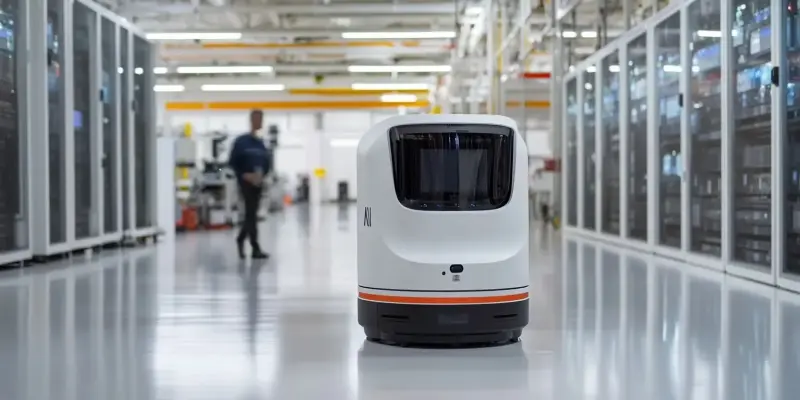
In the realm of modern technology, the rapid development and deployment of advanced technologies such as artificial intelligence (AI), cloud computing, and big data have created an insatiable demand for robust and efficient data center infrastructures. The remarkable efforts of tech giants like Meta, Google, and Microsoft have been pivotal in shaping this landscape, as their investments and innovations continue to propel the AI revolution forward. The importance of data centers in this ecosystem cannot be overstated, as they are the backbone supporting critical applications and services. With the global data center market on a steep upward trajectory, expected to reach a staggering $343.6 billion by 2030, it’s evident that these facilities are the engine driving technological progress.
Major Investments by Tech Giants
AWS’s $35 Billion Commitment
Amazon Web Services (AWS) has made significant strides in fortifying its data center capabilities with a mammoth commitment of $35 billion towards the establishment of new data centers in Virginia by 2040. This major investment underscores AWS’s strategy to expand its infrastructure in key regions, ensuring that it can support the growing demands for AI and cloud services. These new data centers will not only enhance AWS’s service delivery but also position Virginia as a crucial hub for digital innovation and job creation. The sheer scale of this investment reflects the escalating need for advanced data processing, storage, and transmission solutions capable of supporting next-generation technologies.
The technical advancements facilitated by AWS’s new data centers are multifaceted. They are designed to handle massive volumes of data generated by AI applications, provide seamless cloud services, and support emerging technologies such as edge computing. Edge computing, in particular, benefits significantly from these infrastructural upgrades, as it requires data processing to occur close to end users for latency-sensitive applications like autonomous vehicles and smart cities. By enhancing its data center network, AWS is prepared to meet the needs of a rapidly evolving digital ecosystem and contribute to the operational efficiency and innovation potential of its clients.
Google Cloud’s Expansion across Asia-Pacific and Europe
Google Cloud’s strategic focus on expanding its data center footprint in the Asia-Pacific and European regions demonstrates its commitment to supporting the global digital economy. With a series of new data centers being launched in these areas, Google aims to provide localized solutions that address region-specific needs while promoting global connectivity. This expansion aligns with the company’s broader vision of enabling widespread adoption of AI, big data, and cloud computing technologies through accessible and efficient infrastructure. By investing in these regions, Google is not only enhancing its service capabilities but also fostering innovation and economic growth on a local scale.
The Asia-Pacific region, known for its rapid digital transformation and high demand for advanced technologies, is a prime area for Google’s expansion. Establishing more data centers in locations like Singapore, Tokyo, and Melbourne allows Google Cloud to deliver low-latency, high-performance cloud services tailored to the specific requirements of these markets. Similarly, Google’s investments in Europe focus on key technological hubs, ensuring compliance with stringent data privacy regulations while pushing the envelope on service delivery. These strategic expansions support enterprises in their digital transformation journeys, offering scalable, reliable, and secure infrastructure to drive innovation.
Enhancing Computational Power and Storage
Role of Edge Computing in AI Workloads
One of the most significant areas of focus for tech giants in bolstering their data centers is the integration and enhancement of edge computing capabilities. Edge computing addresses the critical need for real-time data processing and decision-making, especially in latency-sensitive applications such as autonomous vehicles, smart cities, and Internet of Things (IoT) devices. By decentralizing data processing and moving it closer to the source, edge computing minimizes latency, reduces bandwidth usage, and improves overall efficiency. This paradigm shift is crucial for supporting AI workloads that require immediate responses and cannot afford the delays associated with traditional centralized data processing.
The implementation of edge computing within data centers enables more effective handling of large-scale AI operations. For instance, autonomous vehicles rely on instantaneous data analysis to make life-critical decisions, necessitating ultra-low latency and robust computational power. This is achieved by integrating edge nodes within data centers, which process and analyze data locally before transmitting relevant information to central servers. Smart cities, too, benefit from edge computing by enabling real-time monitoring and management of urban infrastructure, enhancing public safety, traffic management, and environmental monitoring. Thus, edge computing stands as a cornerstone of modern data center strategies aimed at optimizing the performance and responsiveness of AI-driven applications.
Sustainability and Energy Efficiency
As tech giants ramp up their data center operations, sustainability and energy efficiency have emerged as paramount concerns. Leading companies like Google, AWS, and Meta are actively investing in cutting-edge technologies and renewable energy sources to minimize their environmental footprint. Google’s ambitious goal to operate carbon-free data centers by 2030 exemplifies this commitment, highlighting efforts to integrate renewable energy sources such as wind, solar, and hydropower into their operations. Additionally, AWS is expanding its renewable energy initiatives globally, focusing on sustainable practices that reduce dependence on fossil fuels and enhance energy efficiency.
Innovations in cooling technologies and AI-driven monitoring tools are also playing a pivotal role in enhancing the sustainability of data centers. These advancements help optimize energy usage, mitigate heat generation, and maintain operational efficiency. One noteworthy example is the adoption of liquid cooling systems, which use liquid rather than air to dissipate heat from servers, significantly improving cooling efficiency and reducing energy consumption. AI-driven monitoring tools, on the other hand, enable real-time analysis and adjustment of power usage, ensuring optimal performance while minimizing waste. Through these efforts, tech giants are not only meeting the growing demand for data processing and storage but also setting new standards for environmental stewardship in the digital age.
Expanding Data Center Infrastructure for AI
Meta’s AI and Metaverse Ambitions
Meta’s expansion of its data center infrastructure is a testament to its ambitious goals in the realms of AI and the metaverse. With substantial investments in Denmark and Iowa, Meta is fortifying its capacity to support the complex computational demands of AI development and immersive virtual worlds. The construction of the AI Research SuperCluster (RSC) is a pivotal component of this strategy, providing the computational power required to train sophisticated AI models and advance the capabilities of the metaverse. By building such state-of-the-art facilities, Meta is positioning itself at the forefront of the AI revolution, enabling breakthroughs in machine learning, natural language processing, and augmented reality.
The AI Research SuperCluster is designed to be one of the most powerful AI supercomputers globally, capable of performing quintillions of operations per second. This immense computational capability is vital for training large AI models that can understand language, recognize images, and generate human-like responses. Furthermore, the RSC supports Meta’s vision of the metaverse by enabling the development of technologies that can seamlessly blend the physical and digital worlds. This includes creating realistic virtual environments, enhancing user interactions, and improving the overall immersion experience. Meta’s data center investments are thus instrumental in driving innovations that will shape the future of AI and digital experiences.
Google’s Stargate Expansion Initiative
Google’s Stargate Expansion Initiative marks another significant step in the company’s efforts to enhance its data center infrastructure. By focusing on the expansion and modernization of existing facilities, Google aims to bolster its computational power and storage capacity to meet the growing demands of AI and big data applications. The Stargate Initiative includes the deployment of advanced hardware and software solutions designed to maximize efficiency and performance.
In today’s tech-savvy world, the rapid advancement and implementation of cutting-edge technologies like artificial intelligence (AI), cloud computing, and big data have generated an immense demand for strong and efficient data center infrastructures. The significant contributions of tech behemoths such as Meta, Google, and Microsoft have been instrumental in sculpting this landscape. Their relentless investments and groundbreaking innovations continue to fuel the AI revolution. The crucial role of data centers in this environment is undeniable, serving as the backbone for essential applications and services. As the global data center market is on a sharp rise, it’s anticipated to hit a whopping $343.6 billion by 2030, making it clear that these facilities are the driving force behind technological advancement. This projected growth underscores the critical need for state-of-the-art data centers to support the expanding array of digital services and applications, further emphasizing their indispensable role in our rapidly evolving technological landscape.