

Selecting the right computational backbone has moved beyond simple hardware procurement to become a strategic pivot point that determines the scalability and cost-efficiency of modern artificial intelligence. The Cloud GPU represents a paradigm shift where organizations no longer buy silicon but instead lease massive, virtualized parallel-processing power. This model has democratized access to high-performance computing, allowing even small research teams to utilize the same hardware used by global technology leaders. At its core, the technology relies on the ability to split complex mathematical tasks into thousands of smaller threads, executed simultaneously across vast arrays of cores. This infrastructure has evolved from simple graphics acceleration to a sophisticated ecosystem of specialized accelerators designed specifically for tensor operations and transformer architectures.
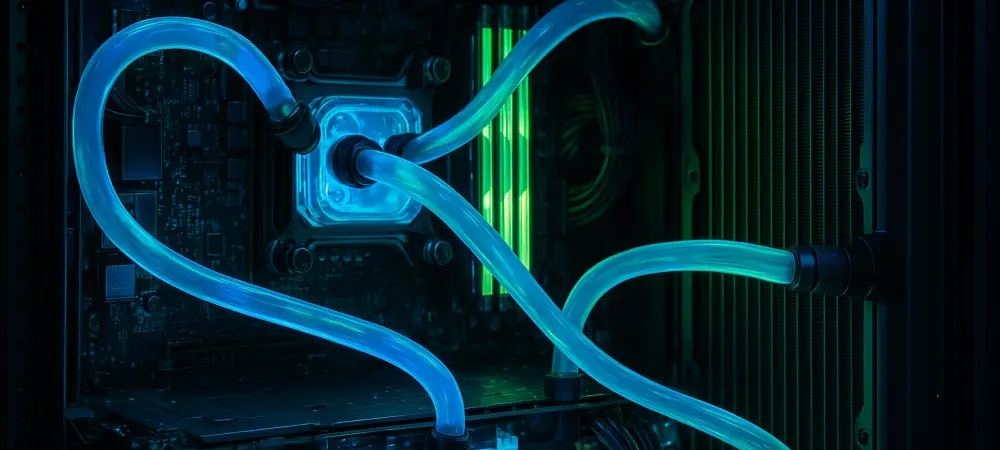
The relevance of this technology in the current landscape cannot be overstated, as it provides the essential oxygen for the generative AI explosion. However, the shift to cloud infrastructure is not merely about convenience; it is about the fundamental modernization of how data is processed. By offloading these intensive workloads to specialized data centers, enterprises can leverage massive economies of scale and liquid cooling systems that would be impossible to maintain in a standard office environment. This transition has turned raw compute power into a utility, similar to electricity, where availability and throughput are the primary metrics of success.
The Evolution and Principles of Cloud GPU Infrastructure
The journey of the cloud GPU began with the virtualization of consumer-grade hardware, but it has since matured into a dedicated tier of enterprise silicon. These systems are built on the principle of multi-tenancy, where advanced hypervisors allow multiple users to share physical resources without compromising security or performance. This orchestration layer is critical because it ensures that the massive throughput of a single unit can be partitioned or aggregated depending on the specific needs of the workload. Consequently, the technology has moved away from rigid server configurations toward a more fluid, software-defined hardware model.
In the current environment, the emergence of the cloud GPU was a direct response to the plateauing of single-core CPU performance. As deep learning models grew from millions to trillions of parameters, the need for a different kind of processor became apparent. Modern cloud GPUs utilize specialized cores, such as Tensor Cores, which are optimized for the matrix multiplications that underpin modern neural networks. This context of specialized acceleration has redefined the broader technological landscape, making real-time large language model interaction a physical reality.
Essential Components of GPU Performance
GPU Memory and Bandwidth Architecture
Memory architecture serves as the primary gatekeeper of performance in any accelerated computing environment. The transition from GDDR6 to High Bandwidth Memory, specifically HBM3e, has significantly raised the ceiling for how much data a processor can ingest at once. This is particularly vital for inference tasks where the entire weight of a model must be accessed repeatedly. Without sufficient bandwidth, even the fastest processor remains idle while waiting for data to arrive from the memory chips. This implementation is unique because it stacks memory dies vertically, placing them in the same package as the GPU to minimize distance and maximize speed.
Furthermore, the total capacity of this memory determines the maximum size of the model that can be run on a single instance. When a model exceeds this capacity, it must be split across multiple GPUs, which introduces latency and complexity. Therefore, selecting a card like the H100 with its 141GB of HBM3e is often a decision driven by the need to handle massive context windows or high-resolution images without the overhead of multi-GPU synchronization. In contrast, for smaller fine-tuning tasks, the use of more traditional GDDR memory remains a cost-effective alternative that still provides sufficient throughput for non-transformer-based workloads.
High-Speed Interconnects and Scalability
Individual GPU performance is only half of the equation; the other half is how these units communicate within a cluster. Technologies such as NVLink and InfiniBand provide the high-speed fabric required to treat hundreds of GPUs as a single, massive computer. This interconnectivity is what allows for the distributed training of foundation models, where gradients must be synchronized across a network in milliseconds. Without these high-speed bridges, the network itself becomes a bottleneck, negating the advantages of the underlying silicon.
Scalability in the cloud environment is achieved through this modular architecture, allowing a user to scale from a single L40S instance to a cluster of thousands of B200 units seamlessly. This implementation is unique because it abstracts the physical networking layers, giving developers a unified memory space to work with. Moreover, the shift toward non-blocking fabrics ensures that data can flow between any two points in a data center with minimal hop counts. This level of interconnectivity is why cloud-based clusters often outperform on-premises solutions that lack the specialized networking infrastructure.
Emerging Trends in Accelerated Computing
The most significant trend currently influencing the industry is the arrival of the Blackwell architecture, which emphasizes energy efficiency and integrated systems over raw clock speeds. These new units are designed to work within a liquid-cooled rack ecosystem that significantly reduces the carbon footprint per TFLOPS. This shift matters because as the demand for compute increases, the environmental and economic cost of power has become a limiting factor for many organizations. The focus has moved toward “useful work per watt,” where the hardware is optimized for the specific data types used in modern AI.
Additionally, there is a visible move toward custom silicon where cloud providers develop their own internal accelerators to supplement standard GPU offerings. This diversification allows for more competitive pricing and better optimization for specific cloud-native workflows. Industry behavior is also shifting toward serverless GPU computing, where the underlying hardware is hidden entirely, and users pay only for the seconds of compute time used. This trend is making high-performance computing accessible to a wider range of developers who may not have the expertise to manage virtual machine instances.
Real-World Applications Across Industries
In the healthcare sector, the deployment of cloud GPUs has revolutionized medical imaging and drug discovery. By utilizing high-bandwidth clusters, researchers can now simulate the molecular interactions of potential new medicines in a fraction of the time required by traditional methods. This application is unique because it requires both massive memory for complex 3D models and high-speed interconnects for collaborative research across different geographic locations. The cloud provides the necessary burst capacity to handle these intense computational spikes without requiring a permanent investment in hardware.
The manufacturing industry has also found a notable use case in the creation of industrial digital twins. Companies use cloud-based rendering and simulation to create high-fidelity virtual replicas of entire factories, allowing them to test layouts and workflows before a single piece of equipment is moved. This implementation relies on the real-time ray-tracing capabilities of modern architectures like the RTX 6000 Ada. By running these simulations in the cloud, teams can collaborate in a shared virtual space, regardless of their physical location, proving that the technology is a catalyst for the convergence of the digital and physical worlds.
Technical Hurdles and Market Constraints
Despite the rapid advancements, the technology faces a significant hurdle in the form of “data gravity,” where the cost and time required to move massive datasets into the cloud can outweigh the speed of the GPUs themselves. This creates a friction point for industries with strict data residency requirements or those operating in regions with limited high-speed internet connectivity. Ongoing development efforts in edge-to-cloud integration aim to mitigate this by performing initial processing locally before sending refined data to the massive cloud clusters for final analysis.
Market constraints also include the volatile supply chain for specialized memory and rare-earth elements required for high-end processors. This has led to fluctuating availability and pricing, making it difficult for some enterprises to plan long-term computational budgets. Furthermore, the sheer power density required by the latest generation of GPUs is outstripping the capacity of many older data centers. This infrastructure gap necessitates expensive upgrades to power delivery and cooling systems, which can slow the rollout of new hardware in certain geographic markets.
The Future of Cloud-Based Hardware
The outlook for accelerated computing from 2026 to 2028 suggests a move toward more heterogeneous environments where GPUs work alongside specialized AI units and even early-stage quantum processors. This synergy will likely allow for a new class of “hyper-intelligent” applications that can reason across multiple modalities in real-time. We can expect breakthroughs in photonic interconnects, which use light instead of electricity to move data between chips, potentially eliminating the heat and latency issues associated with traditional copper wiring.
Long-term, the cloud GPU will likely disappear into the background as a transparent utility, much like the processors in a smartphone. The distinction between local and remote compute will blur, as high-speed 6G networks and beyond provide the low latency required for seamless offloading. This will enable a future where even the most modest device can access the power of a supercomputer on demand. The impact on society will be profound, as the cost of intelligence continues to drop, enabling personalized AI assistants and real-time global translation to become standard features of daily life.
Assessment and Final Verdict
The evaluation of the current cloud GPU market revealed that the technology reached a state of maturity where accessibility and flexibility finally matched the raw power of the hardware. The transition away from purchasing physical equipment toward a consumption-based model proved to be the correct path for the industry, as it fostered rapid innovation and reduced the barrier to entry for complex AI projects. The review showed that while raw performance metrics like TFLOPS remained important, the true value resided in the integration of memory bandwidth and interconnect speed. This holistic approach to system design allowed for more efficient scaling than ever before.
The most effective implementations were those that correctly matched the specific GPU architecture to the nature of the workload, such as using high-memory Hopper cards for large-scale training while utilizing Blackwell units for efficient, high-volume inference. Organizations that adopted a modular strategy found they could significantly reduce costs without sacrificing results. Ultimately, the cloud GPU became the indispensable foundation of the digital economy, providing the necessary horsepower to transform data into actionable intelligence. The industry successfully overcame the initial hurdles of virtualization, setting the stage for a new era of decentralized, high-performance computing.