

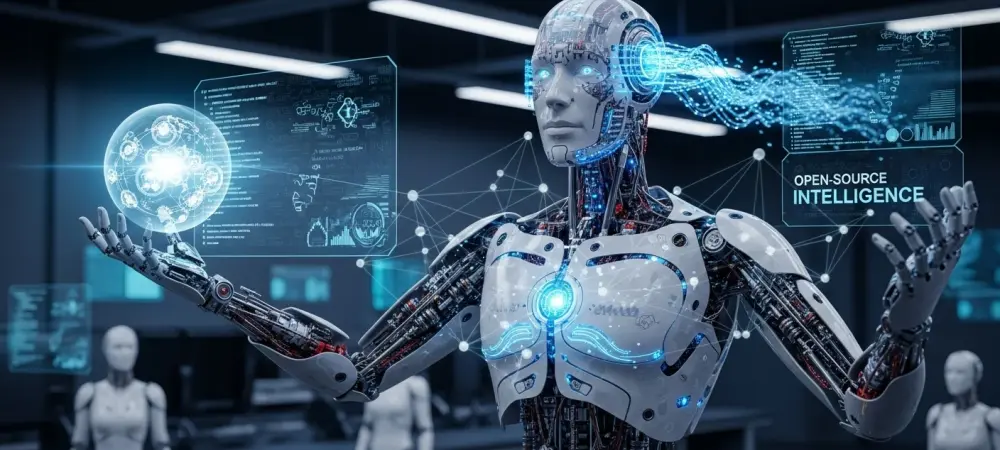
Imagine a world where robots can seamlessly adapt to any environment, tackling unpredictable challenges with the same ease as humans navigating a busy street or solving a sudden problem. This vision, once confined to science fiction, is now inching closer to reality thanks to a groundbreaking innovation from China. X Square Robot, a pioneering tech startup, has unveiled Wall-OSS, an open-source small foundational model for embodied intelligence that promises to redefine the capabilities of robots. Designed to address the long-standing hurdle of generalized robotic intelligence, Wall-OSS equips machines with the ability to think and act dynamically in real-world scenarios. By making this advanced technology freely accessible to developers globally, X Square Robot is not only pushing the boundaries of robotics but also fostering a collaborative ecosystem. This development has sparked immense excitement in the tech community, signaling a potential turning point in how robots integrate into everyday life and industries across the globe.
Overcoming Robotics’ Greatest Barrier
The field of robotics has made remarkable strides, with machines demonstrating impressive feats like running, assembling products, or performing acrobatic maneuvers in controlled settings. Yet, a critical limitation persists: robots often struggle to adapt when faced with unfamiliar or chaotic environments, such as maneuvering through a crowded space or responding to unexpected obstacles. Wall-OSS emerges as a transformative solution, acting as an “embodied brain” that enables robots to generalize their skills across diverse forms and situations. By leveraging continuous reasoning and adaptive motor control, this model empowers robots to handle the complexities of real-world tasks with greater flexibility. This advancement represents a significant step forward, addressing a core challenge that has hindered the broader adoption of robots in dynamic, unpredictable settings and paving the way for more versatile machines.
Beyond merely reacting to stimuli, Wall-OSS equips robots with the capacity to learn from varied experiences and apply that knowledge to new contexts. Unlike traditional robotic systems that rely on pre-programmed responses, this model fosters a deeper level of understanding, allowing machines to navigate challenges that deviate from their initial training. For instance, a robot powered by Wall-OSS could adjust its approach when encountering an unforeseen layout in a home or workplace, demonstrating a level of problem-solving previously unattainable. The implications of this are profound, as it moves robotics closer to achieving true autonomy, where machines can operate independently in environments that mirror the unpredictability of human life. This shift could redefine the role of robots, making them indispensable partners in settings that demand adaptability and quick thinking.
The Technical Edge of Wall-OSS
At the heart of Wall-OSS lies a sophisticated technical framework that sets it apart from conventional robotic models. Trained on billions of Vision-Language-Action samples, which blend real-world robotic data with generative simulations, the model integrates perception, instructions, and physical movement into a cohesive system. Its architecture, featuring a shared attention layer paired with task-specific processing networks, enables robots to process complex inputs like visual cues and verbal commands before translating them into precise actions. This structure allows for proactive planning through step-by-step reasoning, ensuring that robots can anticipate outcomes and reduce errors before executing tasks. Such innovation marks Wall-OSS as a cornerstone for developing smarter, more dependable robotic systems.
Equally impressive is how Wall-OSS enhances robotic decision-making through advanced simulation capabilities. By employing Chain of Thought reasoning, the model enables robots to mentally map out multiple scenarios before taking action, akin to a chess player strategizing several moves ahead. This predictive approach minimizes mistakes in high-stakes or intricate tasks, such as handling delicate objects or navigating cluttered spaces. Furthermore, the vast training dataset ensures that the model remains robust across a wide array of environments, from industrial floors to domestic settings. The result is a robotic intelligence that not only responds to immediate conditions but also evolves with exposure to new challenges, offering a glimpse into a future where robots can continuously improve their performance without constant reprogramming or oversight.
Breaking Barriers with Open-Source Innovation
One of the most striking features of Wall-OSS is its open-source nature, a decision by X Square Robot to democratize access to cutting-edge embodied AI. Hosted on widely used platforms like GitHub and Hugging Face, this model invites developers from around the world to explore, adapt, and enhance its capabilities for their unique projects. This approach mirrors pivotal moments in AI history when open frameworks catalyzed rapid advancements by fostering collective creativity. By removing the financial and technical barriers often associated with advanced robotics, Wall-OSS empowers a global community to drive innovation at an unprecedented pace, potentially outstripping the progress of isolated, proprietary systems.
The open-source release of Wall-OSS also cultivates a collaborative ecosystem that benefits both developers and end-users. Programmers can tailor the model to specific needs, whether for niche industrial applications or personalized home assistants, while contributing improvements back to the shared platform. This cycle of input and enhancement accelerates the refinement of the technology, ensuring that it evolves to meet diverse demands. Additionally, the accessibility of such a powerful tool lowers the entry threshold for smaller companies and independent innovators, leveling the playing field in a field often dominated by large corporations. The potential for widespread experimentation with Wall-OSS could spark a wave of novel robotic solutions, reshaping industries and inspiring breakthroughs that might otherwise remain out of reach.
Demonstrating Potential Through Quanta X2
The real-world viability of Wall-OSS comes to life through X Square Robot’s Quanta X2, a humanoid robot that showcases the model’s practical applications. With highly dexterous hands, versatile arm movements, and integrated tools, Quanta X2 excels at complex tasks ranging from household chores to nuanced communication through gestures. This robot serves as a tangible proof of concept, illustrating how Wall-OSS can transform abstract intelligence into actionable skills that benefit everyday scenarios. From tidying a living space to assisting in service-oriented roles, Quanta X2 highlights the model’s capacity to bridge the gap between theoretical research and functional deployment, offering a compelling vision of robotics’ immediate future.
Beyond its technical feats, Quanta X2 underscores the adaptability of Wall-OSS in diverse operational contexts. The robot’s ability to perform intricate actions with precision demonstrates how the underlying model can be applied to a spectrum of robotic designs, not limited to a single form or purpose. This versatility suggests that Wall-OSS-powered robots could soon become commonplace in settings as varied as hospitality venues, healthcare facilities, or manufacturing plants. By embodying the principles of generalized intelligence, Quanta X2 acts as a catalyst for broader acceptance of advanced robots, proving that such technology is not a distant dream but a present-day reality with the potential to enhance productivity and quality of life across multiple domains.
Shaping the Future of Industries and Society
The broader impact of Wall-OSS extends across numerous sectors, promising to revolutionize how robots integrate into both professional and personal spheres. Applications range from automating hotel staff duties to providing critical support in eldercare and disaster response, where adaptive robots could make a life-saving difference. With $100 million in recent funding, X Square Robot is poised to expand developer access, enrich training datasets, and introduce additional humanoid models over the coming years. This commitment to scaling the technology signals a transformative shift, positioning Wall-OSS as a foundational element in the evolution of robotics, capable of redefining operational norms in industries worldwide.
Looking ahead, the societal implications of Wall-OSS are equally compelling, as it lays the groundwork for robots to become integral to daily life. Imagine robotic assistants that not only perform routine tasks but also anticipate needs through learned behaviors, enhancing efficiency in homes and workplaces alike. The ongoing investment in this technology suggests a trajectory where robots could address pressing global challenges, from labor shortages to emergency interventions, with unmatched adaptability. As X Square Robot continues to refine and distribute Wall-OSS, the focus remains on fostering innovation that benefits humanity, ensuring that the advancements made today will pave the way for a more connected and supported tomorrow.