

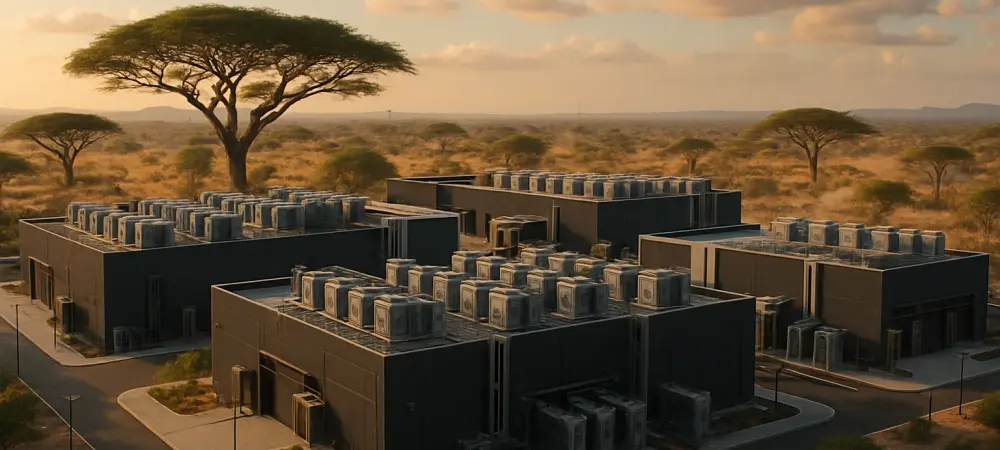
What does it take to fuel a continent’s digital awakening? In Africa, where internet usage is skyrocketing and businesses are racing to embrace artificial intelligence, the answer lies in the silent hum of data centers. These facilities are not just buildings filled with servers; they are the heartbeat of a technological transformation. At the forefront of this movement stands Cassava Technologies, a pan-African tech giant driving an unprecedented expansion of AI-ready infrastructure, starting with South Africa. This story uncovers how strategic investments and bold partnerships are positioning the continent as a global player in the digital economy.
The Backbone of Africa’s Digital Surge
Data centers have emerged as the critical foundation for Africa’s tech explosion. With internet penetration rates climbing—over 40% of the population now online according to recent studies—the demand for reliable digital infrastructure has never been higher. Cloud computing, e-commerce, and AI applications are reshaping industries, yet the continent struggles with a shortage of high-capacity facilities to support this growth. Cassava Technologies, through its Africa Data Centres (ADC) brand, is tackling this challenge head-on by building and upgrading data centers across key markets like South Africa, Egypt, Kenya, Morocco, and Nigeria.
The significance of this endeavor cannot be overstated. These centers are more than storage hubs; they enable real-time data processing for everything from mobile banking to machine learning models. Without them, Africa’s ambition to compete in the global digital arena risks stalling. Cassava’s focus on scalability and AI readiness places it at the epicenter of a shift that could redefine economic opportunities for millions across the region.
A Growing Hunger for Connectivity
The appetite for digital solutions in Africa is staggering. Businesses, governments, and hyperscalers—large-scale cloud service providers—are clamoring for infrastructure to handle vast data loads. A report from the African Union highlights that the continent’s digital economy could contribute $180 billion to GDP by 2025 if supported by adequate systems. However, the existing network of data centers falls short, often unable to meet the latency and security needs of modern applications.
Cassava Technologies recognizes this gap as both a challenge and an opportunity. By prioritizing high-capacity connectivity and cloud services, the company is addressing the immediate needs of enterprises while laying the groundwork for future innovations. Its operations in South Africa, with three active facilities, serve as a launchpad for broader expansion, ensuring that local and international firms can operate seamlessly in an increasingly connected world.
Powering Up with Strategic Alliances
Behind Cassava’s rapid growth are transformative partnerships that amplify its impact. A landmark investment from Stanlib Infrastructure Investments, a South African asset manager with $33.9 billion under management, is bolstering ADC’s facilities in Johannesburg and Cape Town. This funding targets AI-ready infrastructure, catering to the escalating demand for advanced computing power among major tech players and local businesses alike.
Equally groundbreaking is the collaboration with Nvidia, a global leader in GPU technology. Under this agreement, Cassava is integrating cutting-edge GPUs into its data centers, with 3,000 units already deployed in South Africa as of this year and plans to scale up to 12,000 across Africa by 2027. Valued at a potential $720 million, this initiative underscores a commitment to positioning Africa as a hub for AI innovation. Support from other investors like Google and the International Finance Corporation further cements Cassava’s role as a trusted leader in this space.
These alliances are not just financial boosts; they represent a shared vision for a digitally empowered continent. By combining resources and expertise, Cassava is accelerating the rollout of infrastructure that can handle the complex demands of tomorrow’s technologies, from autonomous systems to big data analytics.
Leadership Insights Driving the Vision
Key figures behind Cassava Technologies express unwavering confidence in this trajectory. Hardy Pemhiwa, president and group CEO, described the Stanlib partnership as a validation of ADC’s robust foundation, equipping the company to serve large-scale clients with cutting-edge solutions. This perspective highlights a focus on reliability and trust, essential for attracting global partners.
Andy Louw, co-head at Stanlib Infrastructure Investments, echoed this optimism, noting that data centers are pivotal to strengthening South Africa’s digital framework. Louw emphasized alignment with broader economic goals, suggesting that such investments create ripple effects beyond tech, fostering job creation and industrial growth. Together, these voices paint a picture of purposeful innovation, reinforced by Cassava’s launch of an AI business unit to stay ahead of emerging trends.
Blueprint for a Connected Continent
Cassava Technologies offers a roadmap for stakeholders eager to engage with Africa’s digital evolution. Scalability remains paramount—building infrastructure that adapts to future AI and cloud demands, as demonstrated by the Nvidia GPU integration, sets a high standard. This approach ensures that today’s investments remain relevant amid rapid technological shifts. Strategic partnerships, like the one with Stanlib, illustrate the power of pooling resources for maximum impact. Collaboration enables faster deployment and broader reach, critical in a region as vast and diverse as Africa. Additionally, a phased expansion strategy—starting with hubs like South Africa before scaling continent-wide—provides a practical model for balancing ambition with feasibility. These principles highlight how targeted efforts in data centers can unlock widespread economic and technological progress.
Reflecting on a Digital Milestone
Looking back, Cassava Technologies carved a defining path in Africa’s tech landscape through bold investments and visionary partnerships. Collaborations with Stanlib and Nvidia stood as testaments to a shared commitment to enhancing connectivity and AI capabilities, with South Africa serving as the initial proving ground. These initiatives bridged critical gaps, empowering businesses and setting a precedent for innovation.
As the journey unfolded, the focus shifted toward actionable next steps. Stakeholders were encouraged to prioritize infrastructure that anticipates future needs, ensuring Africa remains competitive globally. By fostering collaboration and adopting scalable solutions, the continent could sustain this momentum. The story of Cassava’s rise offered a clear lesson: intentional, forward-thinking investments in digital foundations were the key to unlocking Africa’s boundless potential.