

I’m thrilled to sit down with Dominic Jainy, a renowned IT professional whose deep expertise in artificial intelligence, machine learning, and blockchain offers a unique perspective on cutting-edge technologies. Today, we’re diving into the world of robotics with a focus on Unitree Robotics, a Chinese company making waves with its humanoid and quadruped robots as it gears up for a highly anticipated IPO. Our conversation explores the company’s journey, the staggering $7 billion valuation, the innovative applications of their robots, and what this all means for the future of the industry.
How did Unitree Robotics carve its path in the humanoid and quadruped robot space, and what has their journey looked like so far?
Unitree Robotics, based in Hangzhou, China, has emerged as a leader in the robotics field by focusing on both humanoid and quadruped designs. They started with a vision to make advanced robotics accessible, blending cutting-edge tech with practical applications. Their journey reflects a commitment to innovation, growing from a startup to a major player in just a few years. They’ve prioritized versatile robots that cater to diverse needs, which has helped them build a strong foothold in the market.
What would you say is the most significant milestone for Unitree Robotics to date?
I’d point to their achievement of unicorn status in their June fundraising round, where they hit a valuation of over $1.3 billion. That’s a huge leap, showing not just investor confidence but also their ability to scale and deliver. Plus, being profitable since 2020 with annual revenue surpassing 1 billion yuan is no small feat for a robotics company in such a competitive space.
Turning to their upcoming IPO, can you shed light on what preparations are underway for the filing expected between October and December 2025?
From what’s been shared, Unitree is in the process of getting all their financials and operational data in order for submission to the stock exchange during that window. This involves rigorous audits, ensuring compliance with regulatory standards, and likely refining their public narrative to attract investors. It’s a meticulous process, especially for a tech firm aiming for a listing on a platform like Shanghai’s STAR market.
With a potential valuation of $7 billion, what do you think is fueling such a dramatic increase from their previous $1.3 billion mark?
The jump to $7 billion reflects the explosive interest in humanoid robotics and AI-driven automation. Investors see Unitree as a frontrunner in a market poised for massive growth, especially with high-profile backers like major Chinese tech and automotive giants. Their diverse product lineup and proven profitability since 2020 also signal stability and potential, driving up confidence and, consequently, their valuation.
Breaking down their revenue, quadruped robots make up 65% of sales. What do you think makes these robots so appealing to customers?
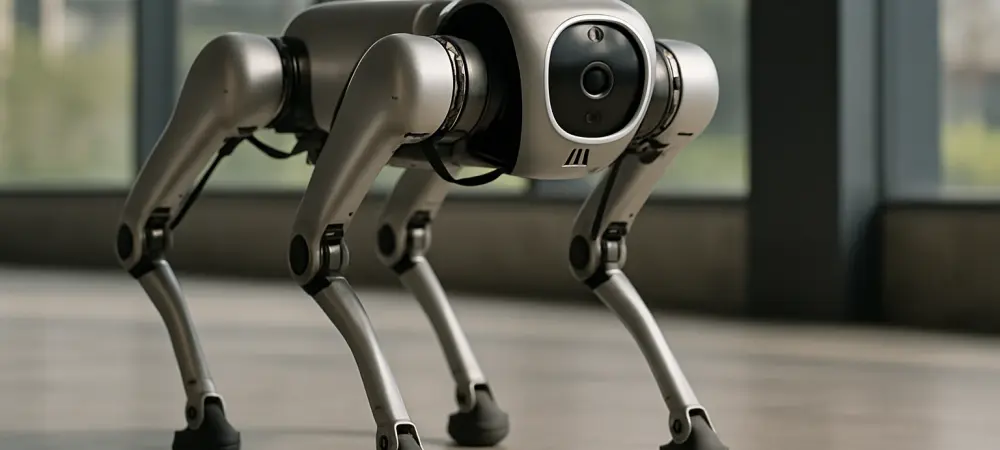
Quadruped robots are incredibly versatile, which I believe is the key to their popularity. They’re stable and adaptable to rough terrains, making them ideal for industrial uses like inspections and even firefighting, which accounts for 20% of their application. Their design mimics animal movement, offering reliability in environments where wheeled robots might struggle, and that practical edge resonates with a wide range of buyers.
Humanoid robots, contributing 30% to sales, are another big focus. What unique aspects do you think are driving demand in this segment?
Humanoid robots like Unitree’s R1 and G1 tap into both functional and imaginative appeal. They’re used in research, education, and consumer fields, often for tasks requiring human-like interaction or dexterity. Features like the R1’s ability to do handkicks and cartwheels, or integrate voice and visual inputs through large multimodal models, make them stand out. They’re not just tools; they’re a glimpse into a future of seamless human-robot collaboration.
Let’s talk about specific applications. How are Unitree’s humanoid robots being utilized in research, education, and consumer spaces?
In research and education, these robots serve as platforms for studying AI, movement, and interaction, helping institutions develop new algorithms or train students in robotics. In consumer fields, they’re often used for entertainment or as personal assistants, leveraging their ability to process voice and visual inputs. They’re essentially bridges between theoretical study and real-world application, which makes them invaluable in these sectors.
For quadruped robots, with 20% used in firefighting and inspections, can you highlight how they’re making an impact in these critical areas?
In firefighting, quadruped robots can navigate hazardous environments, carrying sensors to detect heat or toxic gases, and even deliver supplies where humans can’t safely go. For inspections, they’re deployed in hard-to-reach areas like pipelines or disaster zones, using cameras and other tools to assess damage or risks. Their ability to operate in dangerous settings without risking human lives is a game-changer, providing real-time data and support in high-stakes situations.
Focusing on a standout product, what can you tell us about the inspiration behind the R1 humanoid robot’s design and capabilities?
The R1, with its 26 degrees of freedom, was likely inspired by a desire to push the boundaries of what affordable humanoid robots can do. Priced at around $5,900, it’s designed to be accessible while showcasing advanced moves like handkicks and cartwheels. The integration of multimodal models for voice and visual processing suggests a focus on creating a robot that feels intuitive and interactive, mirroring human capabilities in a compact, cost-effective package.
Looking ahead, what is your forecast for the humanoid robot market in light of companies like Unitree leading the charge?
I see the humanoid robot market expanding rapidly over the next decade, driven by advancements in AI and machine learning that make these robots smarter and more adaptable. Companies like Unitree are setting a high bar with affordable yet sophisticated models, which will likely spur competition and innovation. We’re heading toward a future where humanoid robots are commonplace in homes, workplaces, and public spaces, transforming how we live and work, provided challenges like cost and ethical integration are addressed.