

Dominic Jainy is a seasoned IT professional whose expertise spans the complex landscapes of artificial intelligence, machine learning, and blockchain technology. With a career dedicated to understanding how hardware and software converge to solve human problems, he offers a unique perspective on the next generation of mobile computing. As we look toward the launch of the Vivo X Fold 6, the conversation shifts from simple hardware specs to the sophisticated multitasking ecosystems that are beginning to mirror the power of traditional workstations. This discussion explores the evolution of mobile productivity, focusing on how new interfaces and high-performance processors are turning foldable devices into indispensable tools for the modern professional. We delve into the mechanics of the new Atomic Workbench, the tactile nature of gesture-based controls, and the hardware requirements necessary to sustain a truly fluid, multi-app environment.
With the shift toward mobile productivity, how does the ability to run five apps simultaneously on a foldable screen redefine our expectations of a workstation in our pockets?
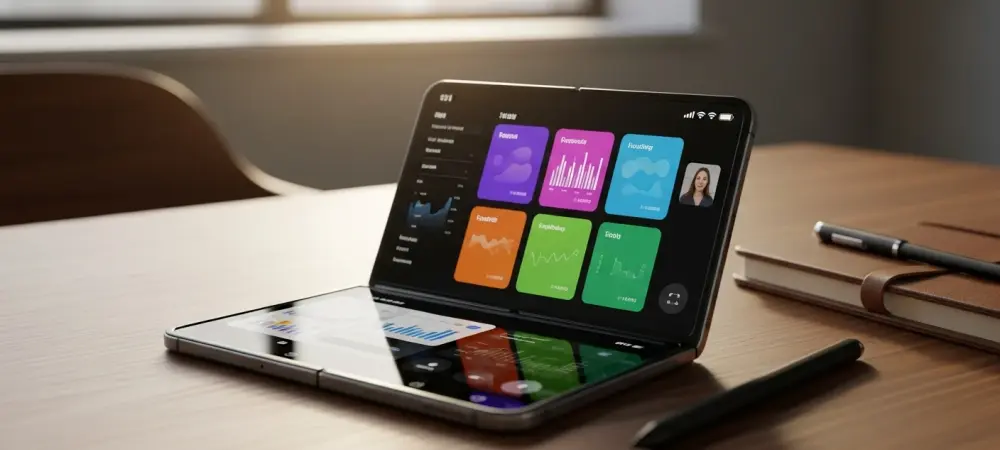
Running five applications at once on a device like the Vivo X Fold 6 is a massive leap that moves us away from the “one task at a time” limitation of traditional smartphones. The introduction of the serial mode within the Atomic Workbench platform allows for a dynamic allocation of screen real estate, making the device feel like a living, breathing desk that fits in your palm. You can practically feel the fluidity of the interface as it prioritizes active windows in the foreground while keeping others accessible, ensuring that your workflow remains uninterrupted. This isn’t just about seeing more icons; it is about the tactile experience of managing a complex project where your email, calendar, browser, and documents are all live at the same time. Powered by the MediaTek Dimensity 9500, this level of concurrency suggests that the foldable is finally shedding its image as a media-consumption toy and becoming a legitimate production powerhouse.
How do specific software innovations like OriginOS 6 Fold and the Atomic Workbench bridge the gap between traditional smartphone limitations and desktop-class multitasking?
The bridge between mobile and desktop is built on how intuitively a user can manipulate their workspace, and OriginOS 6 Fold seems to hit that mark with precision. By implementing a “one-screen four-use mode,” Vivo allows users to resize and arrange four different apps on the inner display, providing a sense of agency that mimics a multi-monitor setup. There is a satisfying, sensory response when you drag a central corner marker to adjust app sizes, or use a four-finger gesture to instantly enlarge a specific window for deep focus. The software also introduces a parallel mode, which ensures that multiple apps run independently without interfering with each other’s internal functions or stability. It transforms the screen from a static viewing area into a modular canvas, where the friction of switching between tasks is replaced by a seamless, gesture-driven flow.
Given the high-performance demands of running such complex software, what role do the underlying hardware specs play in ensuring this multitasking experience remains fluid?
You cannot have a sophisticated software experience without the raw horsepower of a high-end processor to manage the heavy lifting. The rumored inclusion of the MediaTek Dimensity 9500 is crucial here, as it provides the computational overhead required to maintain five simultaneous app threads without the stutter or lag that would ruin the user experience. Beyond the processor, the hardware suite includes a 200-megapixel primary rear camera and a 50-megapixel periscope telephoto shooter, which points toward a device designed for high-resolution content creators. Imagine capturing a massive 200-megapixel image and immediately dragging it into an editing suite while simultaneously referencing a brief in another window—this is where hardware and software synergy becomes vital. The physical components are the foundation that allows the AI-driven productivity features to operate at their full potential, ensuring the device feels responsive rather than overwhelmed.
What is your forecast for the future of foldable devices in the professional workspace?
I believe we are witnessing a pivot where the foldable device will eventually supersede the tablet and even the ultra-portable laptop for many mobile professionals. As software platforms like Atomic Workbench continue to mature, the distinction between a “mobile” app and a “desktop” application will continue to blur until the user no longer feels they are making a sacrifice by leaving their desk. By the time we see several more iterations beyond the X Fold 6, I expect gesture-based multitasking to be the industry standard, allowing users to navigate high-density data environments with simple swipes and pinches. The sheer convenience of carrying a 200-megapixel studio and a five-app workstation in a pocket is a value proposition that the enterprise market will find impossible to ignore. In the next few years, the foldable will likely become the primary computing hub for anyone who values agility as much as they value raw power.