

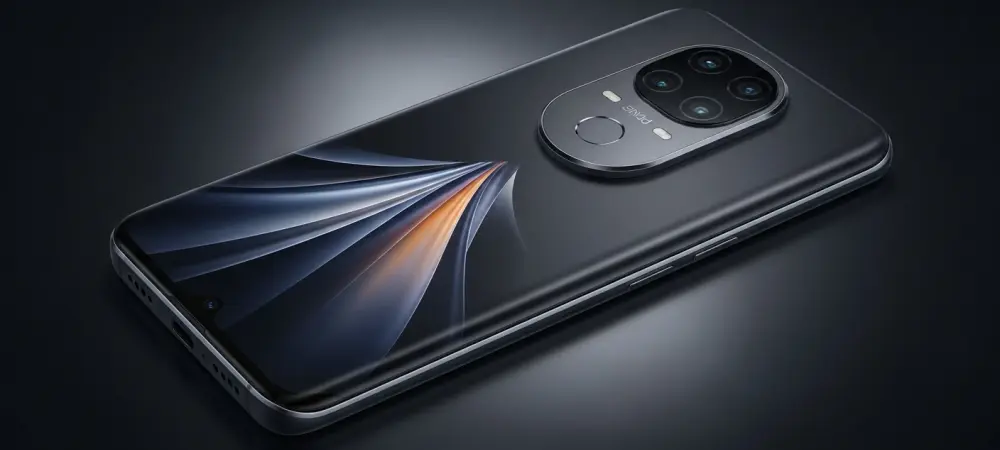
Modern sports photography remains one of the most demanding disciplines for mobile imaging technology due to the combination of high-speed player movement and complex stadium lighting. The latest flagship from Oppo, the Find X9 Ultra, seeks to challenge the long-standing dominance of professional DSLR and mirrorless cameras in environments where every millisecond counts toward the perfect action shot. Capturing the intensity of a Champions League Final requires more than just a high megapixel count; it demands a sophisticated synergy of optical zoom, rapid autofocus, and thermal management to maintain peak performance throughout a match. While smartphones have historically struggled with the distance between the stands and the pitch, recent advancements in periscope lens technology have begun to bridge the gap. The primary concern for editors is whether a consumer device can reliably produce imagery capable of front-page publication without significant blur or digital noise during high-stakes night games.
Technological Foundations of Mobile Sports Imaging
Part 1. Optical Precision and Sensor Performance
At the core of the Find X9 Ultra lies a dual-periscope telephoto system designed to offer unprecedented clarity at focal lengths typically reserved for bulky external lenses used by press photographers. By utilizing a large one-inch main sensor alongside two specialized zoom modules, the device achieves a level of light intake that was previously impossible for a mobile form factor during night matches under floodlights. These sensors are specifically tuned to handle the high-contrast environment of a major stadium, where bright LED arrays often create harsh glares or deep shadows that can confuse standard processing algorithms. The primary telephoto lens features a wider aperture than its predecessors, allowing for the faster shutter speeds essential for freezing the motion of a striker mid-kick. Consequently, the hardware provides a robust foundation that minimizes the reliance on digital cropping, which traditionally degrades the quality of sports photography taken from high angles.
Part 2. Specialized Coatings and Stabilization
Beyond the physical glass and sensors, the integration of specialized optical coatings plays a vital role in maintaining image integrity during high-stakes events like the Champions League Final. These coatings are engineered to suppress internal reflections and ghosting artifacts that occur when pointed directly toward stadium lighting rigs. By preserving the natural contrast of the scene, the device ensures that the vibrant colors of team kits and the textures of the pitch are rendered with professional accuracy. This optical clarity is further supported by an enhanced optical image stabilization system that compensates for the micro-jitters inherent in handheld shooting at long zoom ranges. When a photographer is positioned in a crowded press box, this stability allows for crisp captures of emotional reactions from players and fans alike. The hardware thus transforms a standard smartphone into a tool capable of delivering consistent results in an environment where there are no second chances to capture the shot.
Field Performance and Visual Implementation
Step 1. Intelligent Processing and Real-Time Tracking
Reliability in sports photography is also defined by the ability to maintain focus on a moving subject amidst a chaotic environment filled with multiple players and varying distances. The Find X9 Ultra implements a multi-directional phase-detection autofocus system that works in tandem with an AI-driven predictive tracking engine to anticipate player movement across the pitch. This system analyzes skeletal points in real-time to ensure that the focus remains locked on the player’s torso rather than drifting toward the background crowd or nearby referees. During high-intensity moments like a penalty shootout, the latency between the shutter press and image capture is virtually non-existent, thanks to the dedicated image signal processor. This hardware-software synergy allows the device to fire off rapid bursts of shots without the buffer clearing issues that plagued earlier models, ensuring that every pivotal moment of the final is preserved with digital precision, allowing for immediate social media distribution.
Step 2. Strategic Evaluation and Industry Integration
The evaluation of the Oppo Find X9 Ultra demonstrated that mobile devices reached a threshold where they could effectively complement professional equipment in high-stakes sporting environments. While professional photographers continued to rely on traditional long-range prime lenses for specific field angles, the smartphone provided a versatile alternative for social media broadcasting and rapid news delivery. Analysts suggested that sports organizations should integrate these advanced mobile units into their digital workflows to capture behind-the-scenes content that required more agility than traditional rigs allowed. Future strategies for media houses involved equipping field reporters with high-end mobile optics to ensure redundant coverage of every key angle during major tournaments. The success of this hardware underscored the necessity of prioritizing sensor size and thermal efficiency in mobile design to meet the rigorous demands of professional sports. Adopting such technology simplified the path from the pitch to the global audience.