

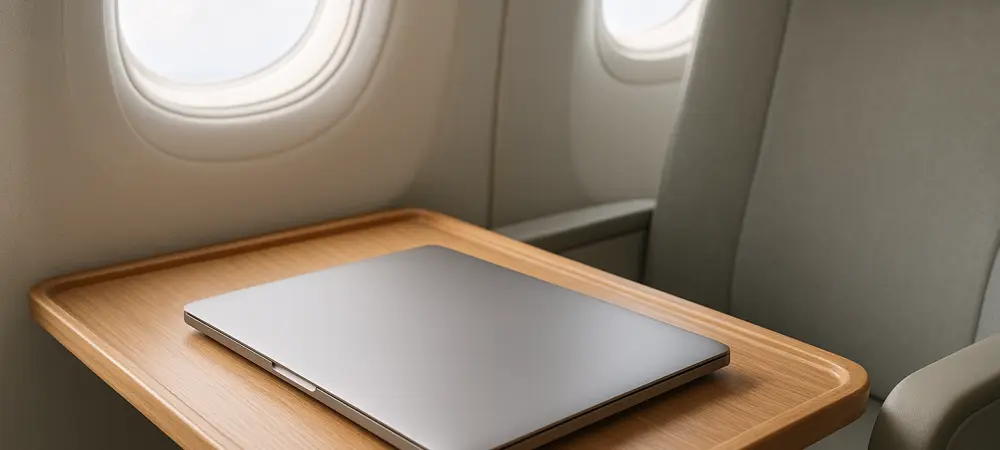
Despite its diminutive size, the X2 functions as a complete mobile hub by offering Bluetooth 5 and the latest Wi-Fi 7 standards for high-speed networking. The Japanese manufacturer Mouse Computer has engineered a device that challenges the long-standing assumption that high-performance AI processing requires a bulky chassis or a heavy power brick. By weighing in at only 981 grams, the X2 enters a competitive market where professionals are increasingly demanding the ability to run local generative AI tasks without being tethered to a desk. This 12.2-inch ultra-portable laptop represents a significant milestone in the evolution of thin-and-light engineering, packing advanced silicon into a frame that measures a mere 19mm in thickness. The demand for such hardware has spiked since the beginning of 2026, as software ecosystems pivot toward integrated neural processing. For the modern traveler, the X2 provides a blend of extreme mobility and computational depth that was once reserved for much larger workstations, making it a standout choice for those who prioritize efficiency.
Engineering the Next Generation: Hardware and Modularity
Silicon Foundations: The Power of Zen 5
At the heart of the X2 lies a suite of AMD Ryzen processors based on the Zen 5 architecture, specifically designed to handle the rigorous demands of 2026-era software environments. Users can choose between three distinct performance tiers, starting with the Ryzen 5 216 for standard productivity and moving up to the Ryzen AI 5 340, known as Krackan Point. For those requiring the absolute peak of mobile performance, the Ryzen AI 7 350 offers specialized neural processing units that accelerate local machine learning tasks significantly. This silicon strategy allows the X2 to compete directly with high-end ultrabooks using Intel’s Core Ultra series, providing a viable alternative for users who prefer AMD’s approach to multi-threaded efficiency. Each chip is optimized to balance thermal output with raw speed, ensuring that the laptop maintains its performance profile even during sustained workloads. Such capabilities are essential for real-time data analysis and on-device language model execution without lag. A notable departure from industry trends is the inclusion of an expandable memory slot, which addresses a primary criticism of modern ultra-light laptops that typically solder RAM directly to the board. While the X2 ships with a respectable 16GB of DDR5 memory, the presence of a free SODIMM slot allows owners to upgrade the total capacity to 32GB with minimal effort. This modular approach extends the functional lifespan of the device, ensuring it remains relevant as software requirements evolve between 2026 and 2028. Beyond memory, the device features a high-fidelity 1920 x 1200 resolution display that achieves full coverage of the sRGB color gamut. This makes it an attractive option for photographers and digital artists who require color accuracy while working on the move. By combining specialized AI hardware with user-accessible components, Mouse Computer has created a versatile platform that respects the user’s need for both power and future-proof adaptability in an incredibly portable form factor.
Connectivity and Endurance: Mobile Professional Tools
Maintaining productivity in varied environments requires a robust array of physical and wireless connection points, a feat the X2 achieves without necessitating external dongles. The inclusion of a dedicated Gigabit LAN port and an HDMI output is particularly impressive given the chassis’s slim profile, catering to corporate environments where wired stability is still a priority. Furthermore, the presence of a microSD slot provides a convenient solution for quick file transfers or storage expansion for media professionals. For security-conscious users, the 2MP webcam is compatible with Windows Hello for biometric authentication and features a physical privacy shutter to prevent unauthorized access. The internal 60 Wh battery is engineered for longevity, supporting up to 12.5 hours of continuous video playback or roughly 25 hours in an idle state. This endurance is critical for travelers who may spend long durations away from power outlets, ensuring that the AI-driven features of the laptop remain accessible throughout a standard transcontinental flight. The Mouse X2 established a new benchmark for how manufacturers integrated sophisticated AI capabilities into modular, sub-kilogram designs. While the initial release remained focused on the Japanese market, its success underscored a growing global appetite for ultra-portables that did not sacrifice upgradability for the sake of thinness. Prospective buyers should have monitored import channels closely, as the device’s unique combination of Ryzen AI silicon and a 12.2-inch form factor offered a distinct advantage over more restrictive competitors. Looking ahead, the industry shifted toward similar modular designs, proving that engineering constraints could be overcome with thoughtful internal layouts. Organizations seeking to equip mobile workforces prioritized devices that offered long-term utility through easy memory expansions and high-speed Wi-Fi 7 integration. The X2 served as a practical template for balancing localized processing power with the physical realities of modern travel, ultimately influencing the design language of high-end mobile computing.